The most broken law nobody thinks is real
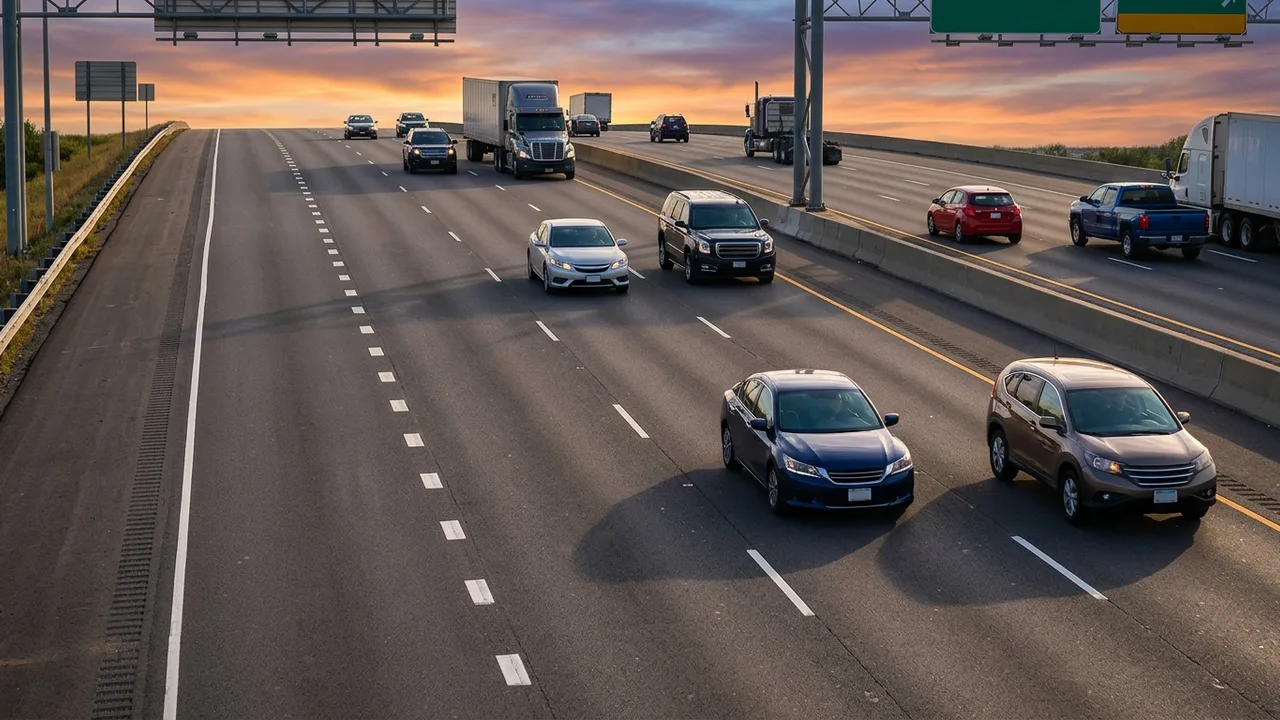
Every state has some version of a keep-right law, and most drivers treat it as folklore. It isn't. In a large group of states the left lane is legally reserved for passing and turning; in others you must yield it to faster traffic or move right if you're traveling below the "normal speed of traffic." The camping driver doing the speed limit in lane one is, in much of the country, committing an actual ticketable offense — and more importantly, manufacturing the traffic patterns that cause crashes.
The three flavors of state law
1. "Passing only" states. The strictest group: on multi-lane highways the left lane may only be used to overtake, then you return right. Several states enforce this vigorously with dedicated campaigns.
2. "Yield to faster traffic" states. You may travel in the left lane but must move right when a faster vehicle approaches — regardless of whether that vehicle is speeding. This is the detail that breaks brains: in these states, the law does not appoint you traffic marshal. The overtaker's speed is the officer's business; your duty is the lane change.
3. "Slower traffic keep right" states. The baseline everywhere: traveling below the normal speed of traffic requires using the rightmost practical lane. Even here, sustained left-lane cruising while traffic stacks behind qualifies.
Fines typically run $50–$250, with points in many states — and enforcement has trended upward as states connect lane discipline to their crash data.
Why the engineers side with the law
The safety case isn't about indulging speeders; it's about flow and predictability:
- Speed variance, not speed, drives crash rates on highways. A left-lane camper creates a rolling bottleneck — clusters of frustrated drivers, tailgating, and the weaving right-lane passes that produce side-swipes.
- Passing on the right is the symptom. When the left lane blocks, overtaking migrates into merge lanes and blind spots — exactly where trucks can't see and exits create conflicts.
- Uniform lane discipline — the European motorway model — measurably smooths flow: everyone knows where the fast traffic is, mirrors mean something, and the left lane empties itself after each pass.
The counterintuitive conclusion the data supports: a highway where everyone yields the left lane is safer at every speed than one policed by self-appointed pace cars.
Lane discipline, practiced
- Default to the middle or right lanes on 3+ lane highways; visit the left to pass, then leave.
- Check mirrors after each pass — the lane change back is part of the overtake, not optional.
- Being overtaken on the right is your signal, not their crime: you're in the wrong lane.
- Trucks and lane restrictions: many states bar heavy trucks from the far left; those rules stack with keep-right laws.
- HOV and express lanes have their own rules — continuous-access HOV lanes aren't "passing lanes," and exiting them across solid lines to let traffic by is its own violation. Keep-right logic applies to the general-purpose lanes.
The questions drivers actually ask
I'm doing the speed limit — why should I move for a speeder? Because in yield states the statute says so, and because the alternative — you regulating them via blockade — reliably produces the tailgating, brake-checking and right-side weaving that end in claims. Move right; let radar do its own job.
Does this apply in heavy traffic? No — congestion suspends the practical duty; when all lanes are at capacity, the left lane is just a lane. The law targets free-flow cruising.
What about two-lane roads? The keep-right principle governs between passes, and separate minimum-speed and "pull-out" statutes (five-plus vehicles stacked behind you triggers a duty to turn out in several states) cover the slow scenic driver.
Do trucks follow different lane rules? Frequently yes — many states restrict heavy vehicles from the leftmost lane entirely, and some post truck-specific speed limits. The practical effect for car drivers: expect trucks legally occupying lane two on three-lane roads, and plan passes accordingly rather than resenting the geometry.
Key takeaways
- Every state has a keep-right law; in many, left-lane cruising is ticketable even at the speed limit
- In "yield" states you must move right for faster traffic regardless of their speed — you are not the enforcer
- Speed variance causes highway crashes; lane discipline reduces it more than any individual's pace choice
- Pass, then return right; being overtaken on the right means you're in the wrong lane
- Fines run $50–$250 with points in many states — and enforcement campaigns are increasing
Sources & further reading
- State keep-right statute compilations (UVC §11-301 lineage)
- state DOT lane-discipline campaigns
- speed-variance crash research (Solomon-curve literature and successors)
- state fine schedules, 2026
Figures, prices and policy details were current at the last-updated date above. Automotive pricing, incentives and regulations change frequently — verify time-sensitive details against the primary sources listed below. Read our editorial policy and fact-checking standards.