Britain's two favourite motorway arguments
No motorway topics generate more certainty and less accuracy than these. Half of drivers believe middle-lane cruising is merely annoying (it's an offence); the other half believe undertaking is always illegal (it isn't). The Highway Code settles both — and has since police gained on-the-spot powers for careless driving in 2013.
Middle-lane hogging: the actual law
Rule 264: keep in the left lane unless overtaking; after overtaking, return left when safely clear. Lanes two and three are overtaking lanes, not cruising options ranked by confidence.
Remaining in the middle lane when lane one is clear is enforced as careless driving / driving without reasonable consideration — a £100 fixed penalty and three points, issued at roadside since 2013, with police forces running periodic campaigns precisely because the offence is endemic. Prosecutions escalate where hogging causes genuine obstruction.
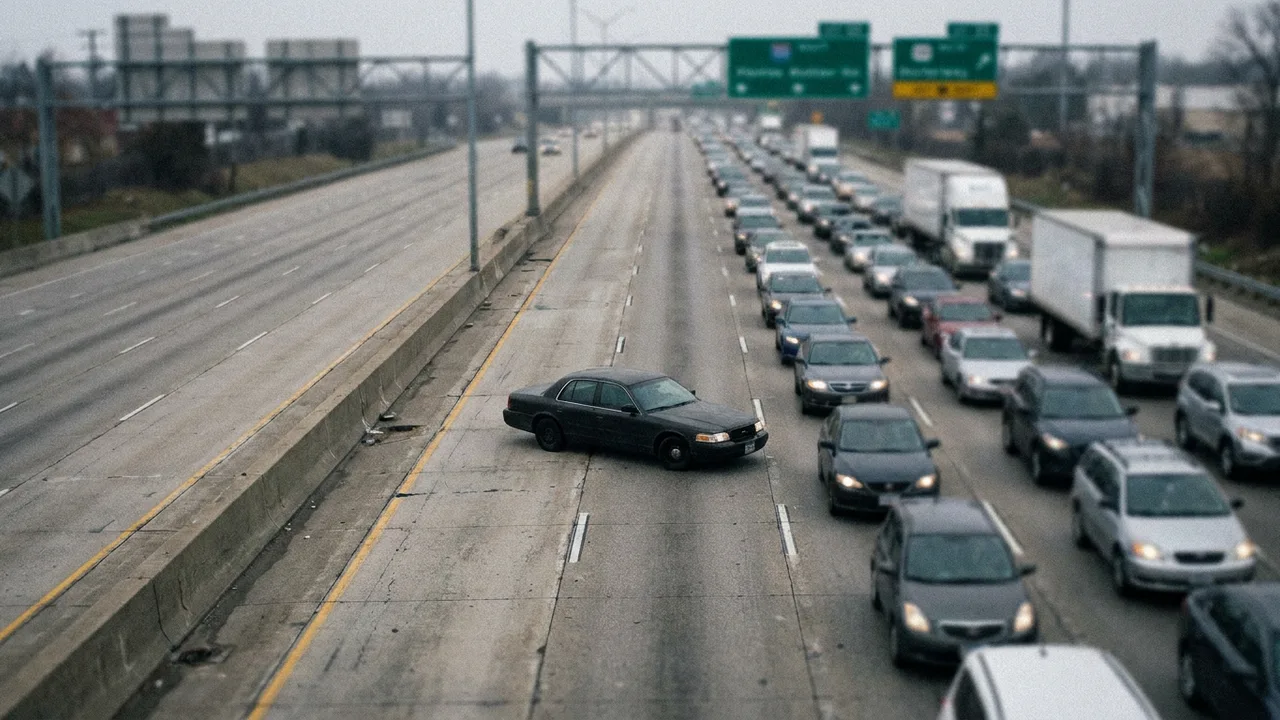
Why it matters beyond etiquette: a hogged middle lane converts a three-lane motorway into two lanes, halves practical capacity at busy times, and manufactures the frustrated bunching — tailgating, weaving, right-side stacking — that produces collisions. The empty lane one beside a middle-lane camper is wasted national infrastructure, one car at a time.
The honest edge cases: streams of HGVs in lane one justify sustained middle-lane running while passing them — the offence is staying there after the passing is done. Smart-motorway Red X closures, upcoming exits and queues all legitimately alter lane choice; "I was about to pass someone eventually" does not.
Undertaking: legal more often than believed
Passing on the left is not automatically an offence. The Code (Rule 268) prohibits weaving left to overtake — changing lanes to pass on the inside — but explicitly permits passing on the left when:
- Congestion has queues moving at different speeds and your lane happens to travel faster — staying in your lane while it flows past lane three is lawful and correct;
- Traffic is directed otherwise, or vehicles ahead are turning right;
- On one-way carriageways where signage permits.
What converts lawful left-side progress into an offence is the manoeuvre: ducking left, accelerating past, cutting back right — prosecutable as careless driving, and treated harshly when it involves the hogged-lane frustration loop (their offence doesn't license yours).
The insurance echo: collisions during genuine undertaking manoeuvres skew fault toward the undertaker, because the overtaken driver isn't expected to anticipate an inside pass. In congestion-differential cases, lane-keeping footage flips that presumption.
Lane discipline, the complete practice
- Default: lane one. Not the middle "to be ready" — lane one, always, when it's clear.
- Overtake decisively, then signal and return. The full cycle — mirror, signal, pass, mirror, signal, left — is one manoeuvre, not a lifestyle change.
- In congestion, hold your lane — lane-hopping for car-lengths is where undertaking law, insurance fault and tempers all converge.
- Approach hoggers legally: pass on the right, complete the pass, return. Flashing, tailgating and undertaking-with-attitude each hand the police a second customer.
- HGV awareness: trucks are limited and often bunched — plan overtakes of convoys as single committed passes with the speed differential to finish them.
The questions drivers actually ask
Has anyone actually been fined for middle-lane hogging? Yes — regularly since 2013, including well-publicised prosecutions with fines and points; forces publish campaign results precisely to fight the "it's not enforced" belief.
Is undertaking on a smart motorway different? Same rules — with the addition that variable limits equalise speeds; a lane travelling faster under its gantry limit in congestion remains lawful lane-keeping.
Someone's hogging — may I flash or beep to move them? The Code assigns headlight flashes one meaning (presence), and aggressive prompting edges toward careless driving itself. Overtake properly; report persistent dangerous behaviour with footage instead.
Does the same law apply on dual carriageways? Yes — Rule 264's keep-left discipline governs any multi-lane carriageway, and A-road camera vans increasingly enforce the same careless-driving standard that motorway patrols apply on the network's busiest stretches every week.
Key takeaways
- Keep left unless overtaking; return left when clear — middle-lane cruising is a £100/3-point careless-driving offence
- Undertaking is lawful when congestion makes lanes flow at different speeds; weaving left to pass is the offence
- Hogging wastes lane capacity and manufactures the bunching that causes motorway collisions
- Complete the full overtaking cycle as one manoeuvre; in queues, hold your lane
- Respond to hoggers with a lawful right-side pass, not flashes, tailgating or inside dives
Sources & further reading
- Highway Code Rules 264–268
- 2013 careless-driving fixed-penalty powers
- police force lane-discipline campaign results
- insurer fault-analysis on lane-change collisions, 2026
Figures, prices and policy details were current at the last-updated date above. Automotive pricing, incentives and regulations change frequently — verify time-sensitive details against the primary sources listed below. Read our editorial policy and fact-checking standards.