What octane actually is
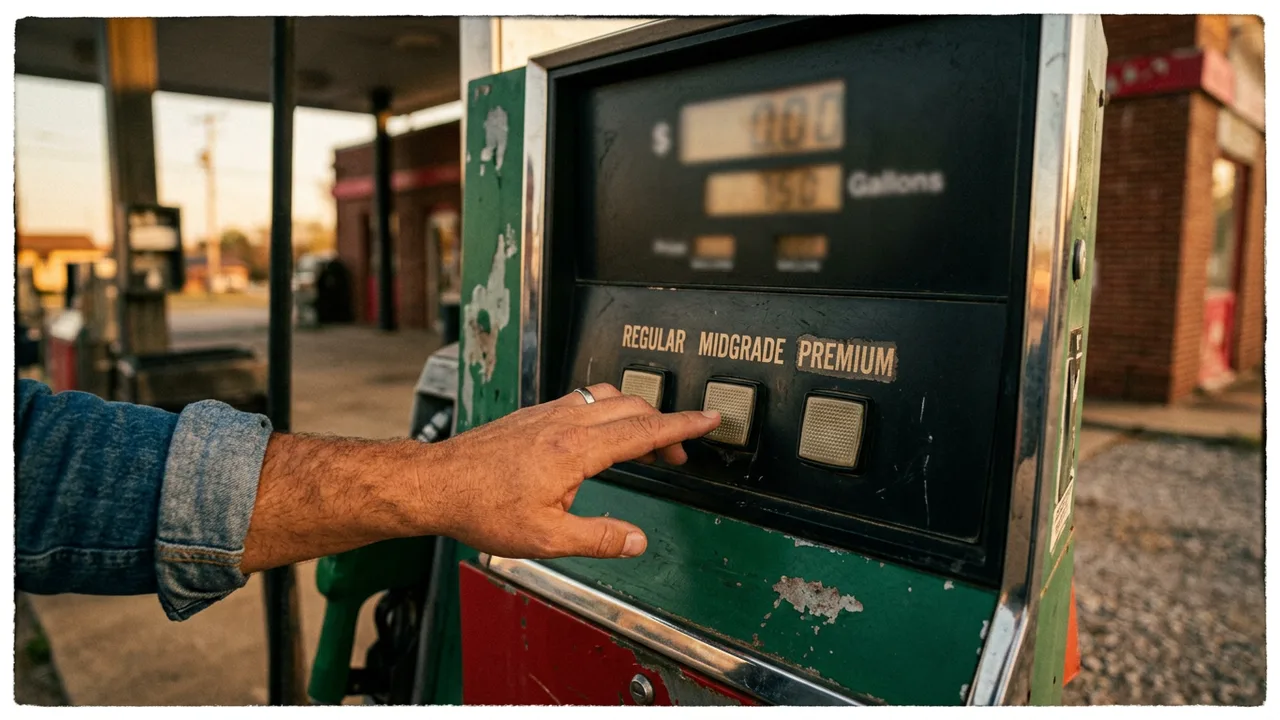
Octane rating measures one thing: a fuel's resistance to igniting before the spark plug fires. It is not a purity score, not a power additive, not "better gas." Regular (87), mid-grade (89) and premium (91–93) differ in knock resistance — the ability to withstand compression and heat without detonating early, an event called knock that can damage engines over time.
Higher-compression and turbocharged engines squeeze the fuel-air mixture harder, so some of them need higher-octane fuel to run their full ignition timing safely. That's the entire story. Everything else at the pump placard is marketing.
The three cases, and the words that matter
1. "Premium Fuel Required." The engine's compression or boost genuinely demands high octane. Modern knock sensors will protect the engine by pulling timing if you run regular, but you'll lose measurable power and efficiency, and sustained heavy load on low octane in these engines invites long-term damage. Running regular in a premium-required car to save money is a false economy that can eventually meet a repair bill with more digits than the savings.
2. "Premium Fuel Recommended." The engine is calibrated to take advantage of premium but runs safely on regular. On 87, the computer dials back timing: typically a few horsepower and a small mpg loss you may never notice in commuting. Here the math is simple: premium runs roughly 20–25% more per gallon nationally, while the efficiency gain on regular-tolerant engines is usually low single digits. For most "recommended" drivers, regular wins the wallet math — with one honest exception: sustained towing, mountain grades or track use, where heat and load make premium's knock margin worth buying.
3. Nothing specified (the vast majority). The engine was designed for 87. Premium adds no power, no cleanliness benefit worth the price, no protection. Feeding premium to an engine that neither requires nor recommends it is the most persistent $10-a-tank myth in motoring. Detergent additive packages — the thing that actually keeps injectors clean — are set by brand (look for Top Tier certification), not by octane grade. Top Tier regular cleans better than off-brand premium.
The follow-up questions everyone asks
- "Does premium give better mileage?" Only in engines calibrated to exploit it, and modestly. In an 87-octane engine: no.
- "I put regular in my premium-required car once — is it ruined?" No. Knock sensors manage the situation; drive gently, don't tow, and fill with premium next tank.
- "Mid-grade?" An orphan product. Almost no engine is designed for 89; it exists because blending pumps make it nearly free to offer.
- "Does altitude change things?" Older guidance said lower octane suffices at elevation; modern turbocharged engines compensate for altitude and want their rated octane regardless. Follow the fuel door, not folklore.
- "E15, E85 and octane?" Ethanol carries high octane naturally, but only flex-fuel vehicles should see E85. E15 is approved for most 2001-and-newer cars — check the manual, especially on older performance engines.
How to know what your car wants
The answer is printed in two places: the fuel filler door and the owner's manual. "Required" means required. "Recommended" means optional with asterisks. Silence means 87. Thirty seconds of reading beats a lifetime of $6-per-fill superstition — money that, across 15,000 miles a year, adds up to a set of good tires every few years. Spend it there instead; tires improve your car in ways octane never will.
The questions drivers actually ask
My turbo car says regular is fine — is the manufacturer being honest? Yes; modern engine management genuinely adapts. What the fine print means is calibrated compromise: rated horsepower figures are often achieved on premium, and regular delivers slightly less. For commuting you'll never feel it; for merging onto a fast highway fully loaded in July, you might.
Does old gas lose octane? Gasoline degrades in months, not years — losing volatility and forming gums that foul injectors. For a car parked seasonally, a fuel stabilizer matters far more than the octane grade you parked it with.
Is "88 octane" E15 a deal? E15's higher ethanol content carries a small energy penalty per gallon that offsets much of its discount, and approval starts at model-year 2001 — check your manual and skip it for small engines, boats and anything carbureted. The math is a wash; the compatibility question is the real one.
Key takeaways
- Octane measures knock resistance only — premium is not "cleaner" or "stronger" fuel
- "Required" engines: always run premium; the protection is real
- "Recommended" engines: regular is safe and usually the better economics, except under towing/track loads
- Unspecified engines gain nothing from premium — detergents come from Top Tier brands, not octane grades
- Read the fuel door; redirect the premium money to tires, the upgrade that actually works
Sources & further reading
- SAE octane and knock-sensor literature
- EPA fuel-grade guidance
- AAA fuel-quality and premium-fuel studies
- national pump-price spreads, July 2026
Figures, prices and policy details were current at the last-updated date above. Automotive pricing, incentives and regulations change frequently — verify time-sensitive details with the linked primary sources. Read our editorial policy and fact-checking standards.