A ticket unlike the others
The envelope arrives weeks later: photos of your car mid-intersection, a timestamp, a demand for payment. Automated red-light enforcement occupies a strange legal middle ground — legal and active in hundreds of communities, banned outright in a number of states, and operating under rules that differ fundamentally from officer-issued citations. Knowing which regime you're in decides whether that envelope is a points-bearing conviction or a glorified parking ticket.
How the systems actually work
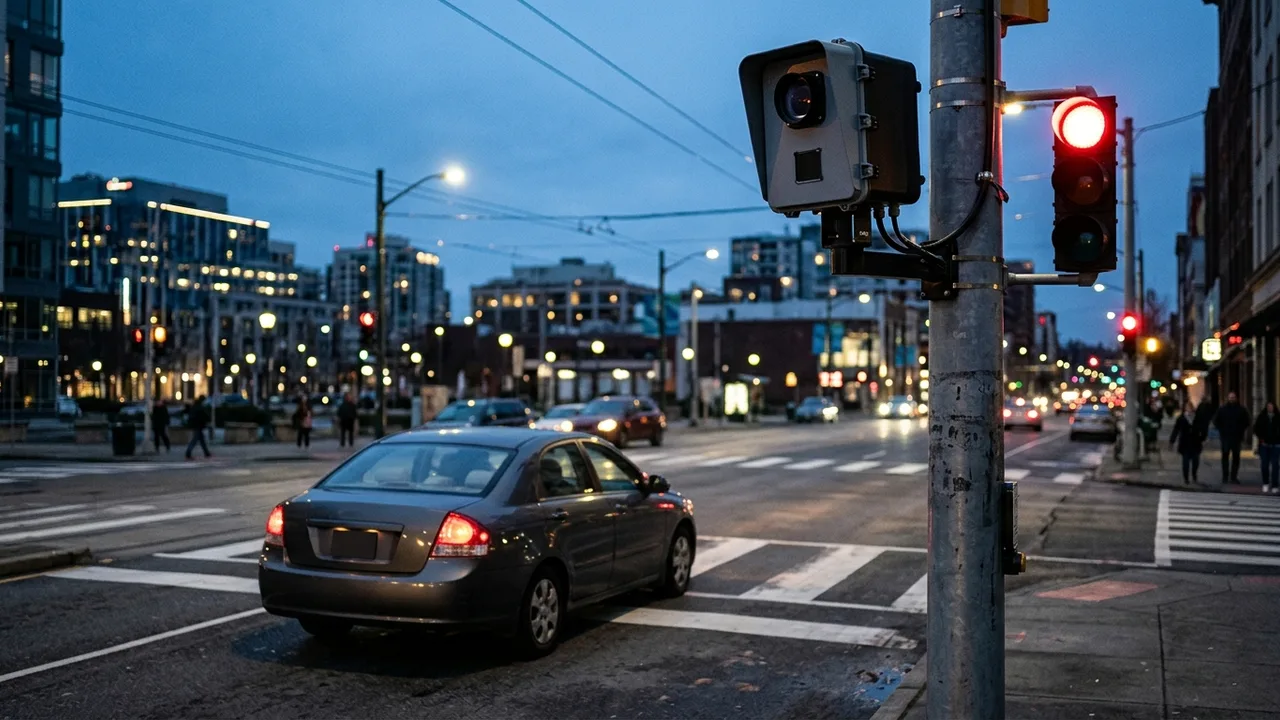
Induction loops or radar track vehicles approaching the stop line; if one crosses after the signal turns red (entering on yellow and clearing on red is not a violation in properly configured systems), cameras capture stills and usually video: plate, position before and after the line, and the signal phase. A human reviewer — police or vendor staff, depending on jurisdiction — approves the citation, which mails to the registered owner.
That last phrase is the legal pivot. Most camera programs run on owner liability: the ticket attaches to the car's owner like a parking ticket, regardless of who drove. A minority operate driver-liability rules requiring the photos to identify the driver — and their citations die when they can't.
The patchwork: where cameras are legal
Roughly half the states permit red-light cameras statewide or by local option; a substantial bloc — including Texas (which ended its programs), New Jersey, and several others — ban or have discontinued them; the rest are silent, leaving cities to experiment. Program counts fell from their 2012 peak but have stabilized, with big-city programs (Chicago, New York, Phoenix-area, Florida municipalities) processing enormous volumes. The right-turn-on-red rolling stop — not the dramatic straight-through runner — generates the majority of citations in many programs, which is precisely why critics call them revenue devices and cities call them pedestrian protection. Both descriptions fit the same data.
What a camera ticket actually costs
Here's where regimes diverge sharply:
- Fine amounts: commonly $50–$160 (Florida's statutory $158, California's ~$500 as the outlier high).
- Points: in most owner-liability programs, no license points — the violation is civil, like parking. California is the notable exception (a full moving violation with points); a few others split the difference.
- Insurance: civil camera citations generally don't reach your insurer — no points, no record entry, no premium effect. Where cameras issue true moving violations, normal consequences apply.
- Ignoring it: the real escalation path — late fees, collections, registration or renewal holds in many jurisdictions, and in some, default judgments. "They can't prove I was driving" is not a strategy in owner-liability land; non-response converts a $75 nuisance into a $300 problem attached to your plates.
Responding well
- Read the citation's legal nature first — civil/owner-liability or moving violation. That single fact sets your stakes.
- Watch the video (portals provide it). Genuine defenses exist: you weren't past the line at red, the yellow interval was short (timing records are discoverable and have voided citations en masse in some cities), the plate isn't yours, the car was sold or stolen (affidavit processes exist), or someone else drove in a driver-liability jurisdiction.
- Pay or contest within the deadline — contesting a civil citation is typically an administrative hearing, low-stakes and occasionally successful on technicalities; missing the deadline forfeits everything.
- Rental cars: agencies pass camera tickets through with an admin fee; dispute rights survive but shrink — respond fast.
And the prevention that beats all of it: treat stale greens as decisions, stop on yellow when you safely can, and make right-on-red stops complete — the camera's favorite customer is the rolling right turn.
The questions drivers actually ask
Do I have to identify the driver? In owner-liability states, no — and you're liable regardless. A few driver-liability jurisdictions request nomination; check the citation's actual demand before volunteering anything.
Are the cameras ever wrong? Mechanically rarely; legally, yellow-timing and signage challenges have succeeded at scale. Individual "it wasn't red yet" claims fail against the video far more often than they win.
Will unpaid out-of-state camera tickets follow me home? Increasingly yes, via collections and interstate registration agreements — the era of shrugging them off across state lines is closing.
Key takeaways
- Camera tickets are usually civil, owner-liability citations — often no points, no insurance effect, but real collection teeth
- Legality is state-by-state: permitted in about half, banned in a solid bloc, city-optional elsewhere
- Rolling right turns on red generate most citations — complete stops are the cheap fix
- Watch the video before paying; yellow-timing and ownership defenses are the ones that work
- Never ignore one: non-response converts small fines into holds, fees and collections
Sources & further reading
- IIHS automated-enforcement law tracker
- state camera statutes and bans
- municipal program data (Chicago, NYC, Florida)
- yellow-interval litigation records, 2026
Figures, prices and policy details were current at the last-updated date above. Automotive pricing, incentives and regulations change frequently — verify time-sensitive details with the linked primary sources. Read our editorial policy and fact-checking standards.