The default rule most drivers half-know
In every US state, turning right at a red light is legal after a complete stop, unless a sign prohibits it. That single sentence contains the two elements drivers most often fumble: the complete stop (wheels stopped, behind the line, not a rolling taper) and the unless (posted "NO TURN ON RED" signs override the default everywhere).
The rule exists for fuel economy — it spread nationally during the 1970s energy crisis — and it works only when treated as a yield after stopping, never as a green-light substitute.
The sequence the law expects
- Stop completely at the marked stop line or before the crosswalk — not in it. Cameras and officers both key on this: the drifting "California roll" is the most ticketed version of this maneuver.
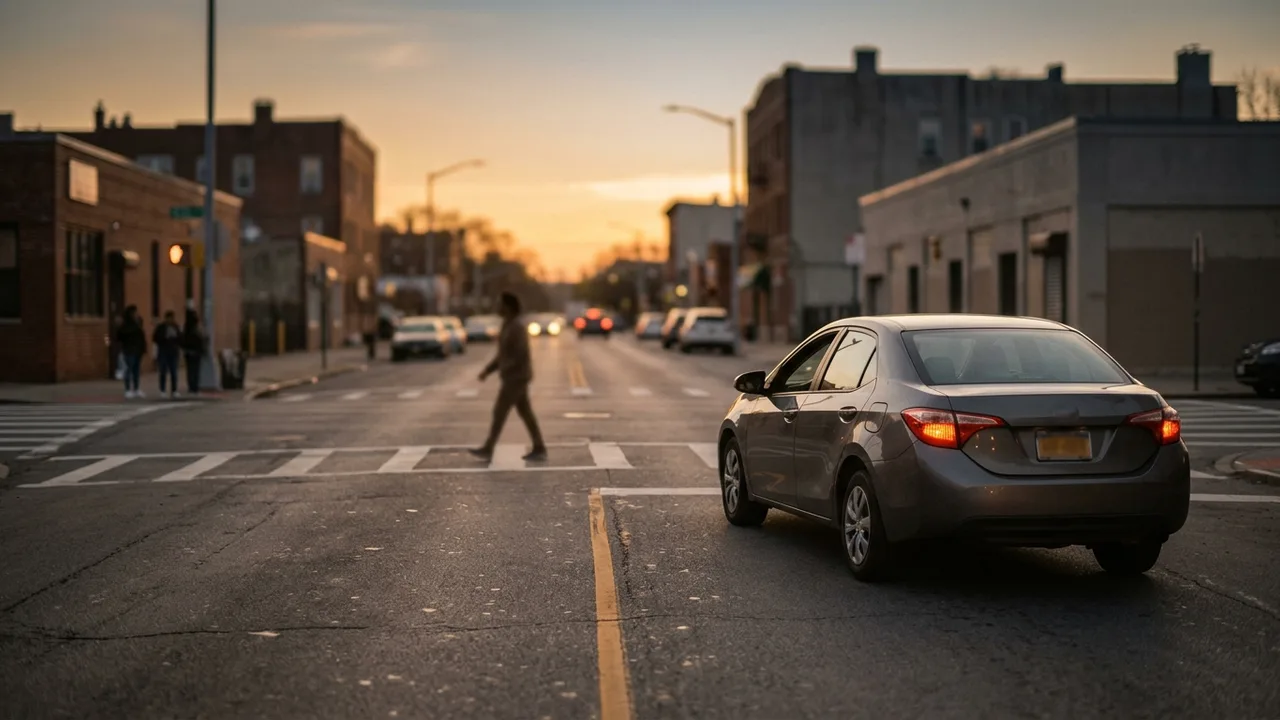
- Yield to pedestrians in or approaching the crosswalk. They have the walk signal; you have a red light. Every pedestrian conflict here is legally yours.
- Yield to cross traffic and cyclists — including bikes in a curbside lane coming from your left on a one-way, and riders in crosswalks.
- Turn into the nearest lane when clear. Sweeping into the far lane is a lane-usage violation in most states and the classic cause of side-swipe claims.
The exceptions that catch travelers
- New York City bans it citywide — the sign is the absence of permission there: no turn on red anywhere unless a sign explicitly allows it. The five boroughs ticket this heavily, and out-of-state drivers are the main customers.
- City-level bans are spreading. Washington DC has enacted a broad ban, and several cities (San Francisco among those moving that way, plus campus and downtown zones nationwide) restrict it intersection by intersection. Watch for signs; the trend is toward more restriction in dense cores.
- Red arrows: in most states a right on a red arrow is treated like a red ball (stop, then turn if permitted), but a significant minority prohibit turning on a red arrow entirely — the worst rule to guess on. When in doubt, wait.
- Dual right-turn lanes: where permitted, generally only the curb lane may turn on red unless signed otherwise.
- Left on red? Yes, in most states — but only from a one-way street onto another one-way street, after stopping. A handful of states prohibit it; it's the trivia question that decides real tickets.
What it costs when it goes wrong
A basic violation runs roughly $50–$500 depending on state and county, typically with license points; in camera-enforced cities it arrives by mail. The bigger exposure is civil: because the turning driver bears the yield duty, a crash during a right-on-red is close to presumptively your fault — expect the insurance fault assessment to read that way, with the premium consequences attached.
The pedestrian stakes are why bans are spreading. Safety research consistently shows right-on-red conflicts concentrate on walkers and cyclists — low-speed but high-injury interactions at exactly the moment drivers look left for traffic while the person crosses from the right. The practical discipline: look right last, at the crosswalk, before your foot leaves the brake.
The questions drivers actually ask
Is a rolling stop ever tolerated? No — and it converts a legal turn into a violation even if everything else was perfect. Cameras measure it precisely; officers estimate it generously against you.
Do I have to turn if the car behind honks? Never. Right on red is permission, not obligation. If visibility is blocked or pedestrians are around, waiting for green is legally bulletproof and the honker's problem is their own.
Does a passenger-side bike lane change anything? Yes: you must yield to cyclists continuing straight, and in many states merge across the bike lane only when clear — check mirrors right as religiously as left.
Key takeaways
- Legal in all 50 states by default — but only after a complete stop, and signs override everything
- New York City is the blanket exception: no right on red citywide; DC and other dense cores are following
- Red arrows are prohibited-territory in a minority of states — wait when unsure
- Yield order is pedestrians, then cross traffic and cyclists; turn into the nearest lane
- Fault in a right-on-red crash lands on the turning driver almost by default — treat it as a yield, not a right
Sources & further reading
- State vehicle codes (UVC §11-202 model language)
- NYC DOT rules
- Washington DC right-on-red legislation
- IIHS and FHWA pedestrian-conflict research
- municipal camera-enforcement schedules, 2026
Figures, prices and policy details were current at the last-updated date above. Automotive pricing, incentives and regulations change frequently — verify time-sensitive details with the linked primary sources. Read our editorial policy and fact-checking standards.