🔧 GENERAL GUIDANCE. Service requirements vary by manufacturer, model, powertrain and market. The manufacturer's schedule for your specific vehicle is the authority — this explains how to read it and what questions to ask.
The gap
Manufacturers publish service schedules. Service centres frequently recommend more.
Some of that additional work is genuinely sensible. Some is preventive but optional. And some is simply sold.
Understanding the difference is worth real money over a car's life — and, as our 30,000 km service report argued, it's the kind of information owners routinely lack at exactly the moment they need it.
The three categories
Every recommendation falls into one of these, and a good service adviser will tell you which.
⭐ 1. Manufacturer-scheduled. In the published schedule at a defined interval or mileage. This is what maintains the warranty and what the engineers determined the car needs.
2. Condition-based. Not on a fixed schedule, but replaced when inspection shows wear — brake pads, tyres, wipers, discs. Legitimate when the wear is genuinely there. Ask to see it.
3. Preventive or optional. Not required, sometimes genuinely useful, sometimes not. Fuel system cleaning, various flushes, treatments and protective coatings commonly sit here.
⭐ The question that sorts them: "Is this in the manufacturer's schedule for this vehicle at this mileage?"
A good adviser answers directly. A poor one doesn't.
What's genuinely essential
Follow the manufacturer's schedule. It exists because the engineers who built the car determined what it needs.
The items that genuinely matter:
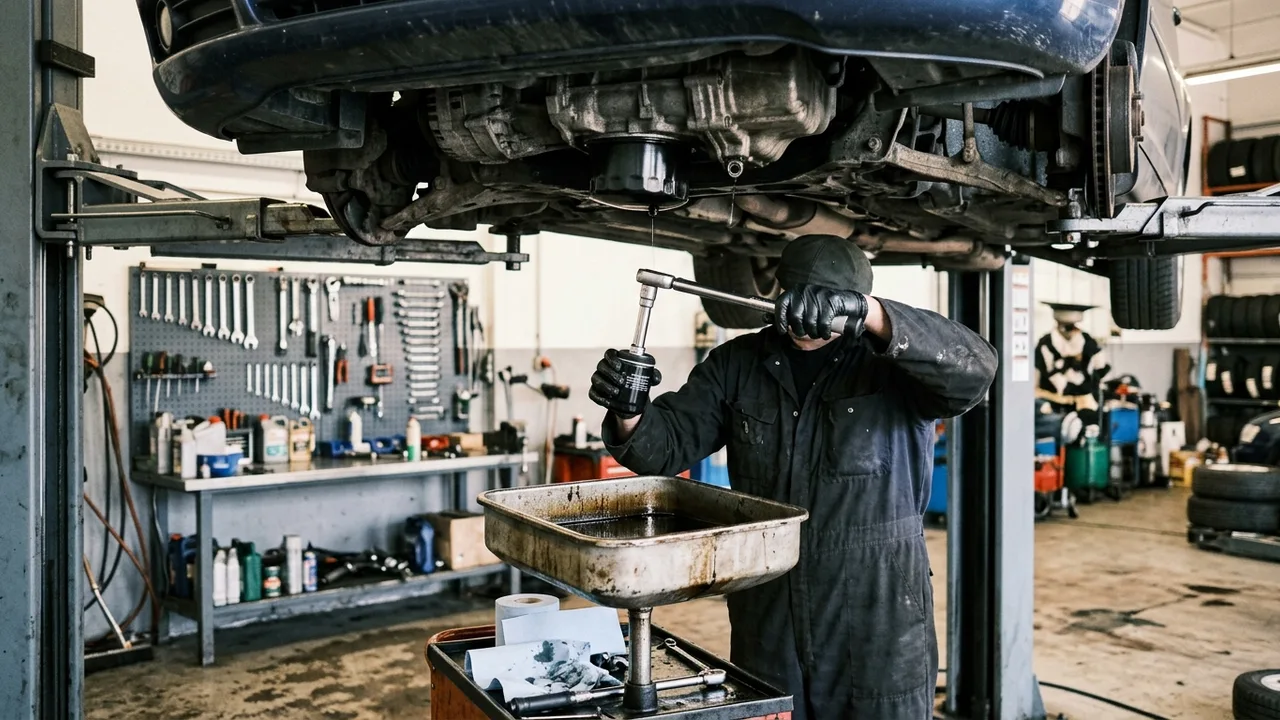
Engine oil and filter at the specified interval and grade. The single most important maintenance item on a combustion engine.
Brake fluid, which is hygroscopic — it absorbs moisture over time, which lowers its boiling point and directly causes brake fade. As our Ghats brake-fade test established, fluid fade is the dangerous kind, and fresh fluid is cheap insurance.
Timing belt or chain, where specified. Belt failure can destroy an engine. This is not optional.
Coolant at the specified interval.
Air and cabin filters.
Spark plugs at the specified interval. ⚠️ And as our CNG coverage established, CNG vehicles need them more often — every 15,000–20,000 km.
Brake and tyre inspection, with replacement when genuinely worn.
What's frequently sold and rarely essential
These aren't always worthless — but they're rarely in the schedule:
Fuel system cleaning, on a healthy modern engine using reasonable fuel.
Various flushes not specified by the manufacturer.
Engine and fuel additives.
Paint and interior protection, which — as our detailing coverage argued — is frequently oversold. Ceramic coating is genuinely useful and does not make paint scratch-proof, whatever the pitch.
Nitrogen tyre inflation, whose benefit for ordinary road use is marginal.
Wheel alignment as a routine item, rather than when symptoms or tyre wear indicate it.
Our position: none of these is fraud. Some have modest benefit. But they're not what the manufacturer says the car needs, and you should know that when deciding.
⭐ EVs are genuinely different
This matters and it's under-quantified.
No oil changes. No filters beyond cabin. No exhaust. No spark plugs. And far less brake wear, because regenerative braking does most of the deceleration.
What EVs still need:
Brake fluid — still hygroscopic, still critical. Arguably more important, because brakes used less can seize or corrode.
Cabin filter. Tyres — and more often, as our cost analysis noted, because of weight and instant torque. Coolant for battery thermal management. Software updates.
The result: substantially lower scheduled servicing costs — a genuine ownership advantage, and one worth quantifying when comparing total cost.
The seven questions to ask
1. Is this in the manufacturer's schedule for my vehicle at this mileage?
2. Is it safety-critical, preventive, or optional? A good adviser distinguishes clearly; a poor one presents all three as equally urgent.
3. Can you show me the worn component?
4. What happens if I defer it?
5. Can I have an itemised estimate before work begins? Not after.
6. Does declining this affect my warranty?
7. Can I have the old parts back? A reasonable request that keeps everyone honest.
Independent versus franchised
While under warranty, franchised servicing is generally the safer choice — the risk of a warranty dispute usually outweighs the saving.
Note that in many markets, servicing at a qualified independent using correct parts and procedures does not automatically void a warranty. Verify your local position, because the assumption that it does is widespread and not always correct.
Out of warranty, a good independent is frequently substantially cheaper.
⭐ Either way: keep every invoice. As our service report and used-buying coverage both argued, a complete service history materially supports resale value — frequently by more than the servicing premium cost.
The bottom line
Follow the manufacturer's schedule. It's what the engineers determined the car needs, and it protects your warranty.
Sort every additional recommendation into scheduled, condition-based or optional — and ask which it is. A good adviser tells you plainly.
Brake fluid, timing belts and correct-grade oil are the items that genuinely matter. Flushes, additives and coatings mostly aren't in the schedule.
EVs need genuinely less, and that advantage deserves counting when comparing costs.
And keep every invoice. The history is worth money.
Key takeaways
- Sort every recommendation into three categories: manufacturer-scheduled, condition-based, or preventive/optional — and ask which it is
- The items that genuinely matter: correct-grade oil, brake fluid (hygroscopic, and fluid fade is the dangerous kind), timing belts, coolant, filters and plugs
- Frequently sold and rarely scheduled: fuel system cleaning, unspecified flushes, additives, protective coatings and nitrogen inflation
- ⭐ EVs need substantially less — no oil, filters, exhaust or plugs, and far less brake wear. Still need brake fluid, tyres and coolant
- Ask for an itemised estimate before work begins, and keep every invoice — a complete history materially supports resale value
Sources & further reading
- Manufacturer service schedule principles
Figures, prices and policy details were current at the last-updated date above. Automotive pricing, incentives and regulations change frequently — verify time-sensitive details against the primary sources listed below. Read our editorial policy and fact-checking standards.