The forty minutes, demystified
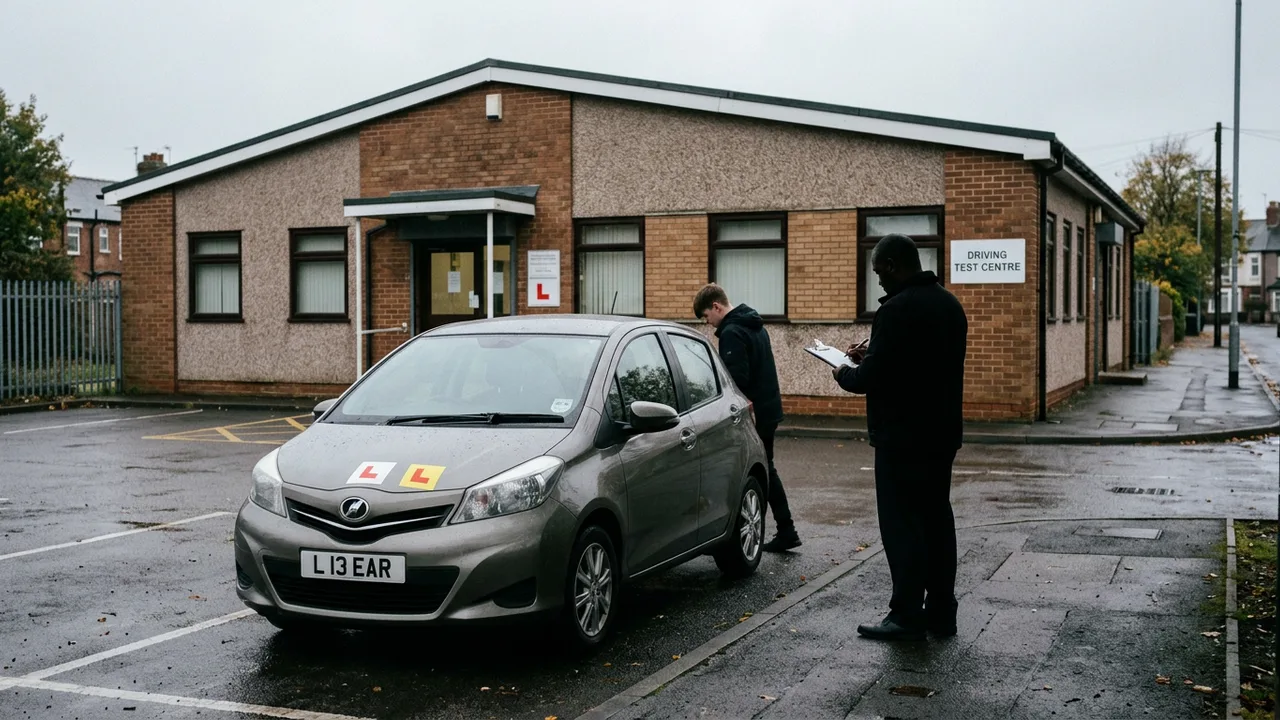
The practical test is around 40 minutes: an eyesight check (reading a plate at 20 metres), two vehicle-safety "show me, tell me" questions, roughly 20 minutes of general driving, one reversing manoeuvre, possibly an emergency stop, and — the section that changed everything — about 20 minutes of independent driving, usually following a sat-nav.
The marking is the part worth understanding. You can accumulate up to 15 driving (minor) faults and still pass. One serious or dangerous fault fails you instantly, regardless of how clean the rest was. Repeating the same minor fault can also escalate it to serious — three hesitant approaches to roundabouts tell the examiner a story one doesn't.
What actually fails people
Published DVSA data is remarkably stable year to year. The perennial top failure points: observations at junctions (looking without seeing), mirror use before changing direction or speed, incorrect positioning at roundabouts, poor control during the reverse manoeuvre, and responding wrongly to traffic lights — the amber gamble. Notice the theme: none of these are car-control exotica; they're attention habits under pressure.
Examiners aren't hunting perfection. Hesitancy fails more tests than boldness at busy junctions — failing to proceed when safe is itself a fault — and a wobble you correct calmly often stays minor. What escalates faults is anything forcing another road user to react: brake, swerve, or wait when they had priority.
Preparing like the pass data suggests
Average learners take around 45 hours of professional instruction plus private practice before passing; the test's national pass rate sits near half, first-timers a little lower. Mock tests under exam conditions are the highest-value hour money buys — the pressure response is trainable. Drive the test-centre area's known circuits, practise the sat-nav format (going the wrong way isn't a fault; doing it unsafely is), and rehearse the "show me" questions — fumbling the demisting controls while moving is a real, avoidable minor.
The questions learners actually ask
Should I take the test in my instructor's car or mine? The dual-control instructor car, usually — familiarity and insurance simplicity. Your own car is fine if it meets requirements and you know it cold.
Does the examiner want commentary? No — drive normally. Some candidates quietly narrate to structure their observations; examiners don't mind either way.
Waiting lists are months long — any advice? Book the moment your instructor agrees you're close, then pull the date forward via cancellation-checking; readiness should drive the date, not desperation.
Key takeaways
- Pass with up to 15 minors; one serious/dangerous fault is instant failure
- Junction observations and mirror use fail more tests than any manoeuvre
- Hesitancy is a fault — safe assertiveness is what's being examined
- ~45 hours' instruction plus private practice is the realistic average
- Mock tests under real conditions are the best-value preparation hour
Sources & further reading
- DVSA test structure and published fault statistics
- instructor-community consensus on preparation hours
Figures, prices and policy details were current at the last-updated date above. Automotive pricing, incentives and regulations change frequently — verify time-sensitive details with the linked primary sources. Read our editorial policy and fact-checking standards.