The cameras, decoded
Britain runs one of the densest safety-camera networks in the world, and mythology has grown around it accordingly. Here is how each type actually works — and what the process looks like if one flashes at you.
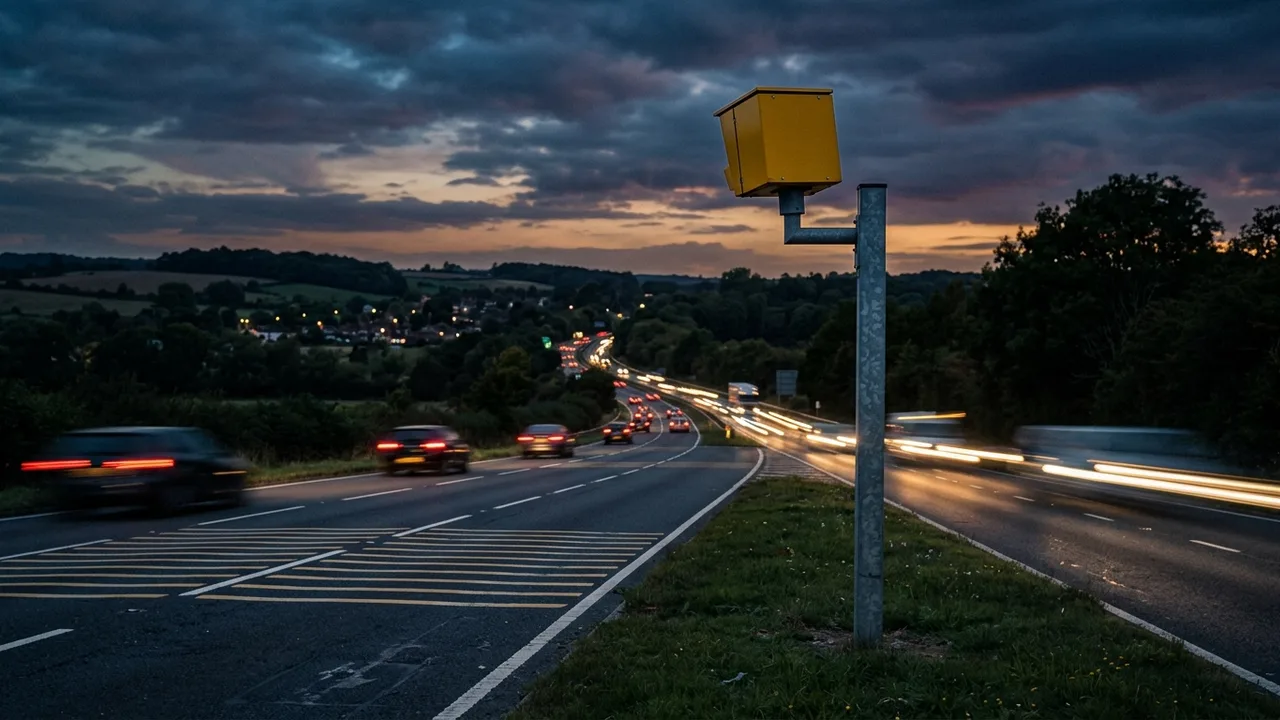
Gatso (rear-facing, radar). The yellow box that started it all. Radar measures your speed as you pass; if you're over the threshold, two flash photographs capture the rear of the car crossing painted calibration lines on the road. Rear-facing means the flash you see in the mirror has already happened.
Truvelo (forward-facing, sensors). Uses piezo sensors in the road rather than radar, and photographs the front of the car through an infra-red flash you typically won't notice. Forward-facing matters: the image can show the driver's face, which closes off the "we can't tell who was driving" defence.
HADECS (motorway "stealth" cameras). The small grey units mounted high on smart-motorway gantries. Radar-based, capable of monitoring multiple lanes, and tied to the variable limit in force on the overhead signs — including enforcing 40 through an active roadworks limit at 2am. Their low visibility is deliberate policy.
Average-speed (SPECS/VECTOR). Cameras on yellow poles read your numberplate at multiple points; a computer divides distance by time. There is no "safe" spot to slow for — the entire zone is the camera. These now police long roadworks and increasingly permanent stretches. The urban myth that lane-changing defeats them is years out of date: modern systems match plates across lanes.
Mobile enforcement vans. A camera operator with laser (LIDAR) equipment, capable of measuring speed accurately from around a kilometre away, positioned at community-concern sites. The van being marked or parked visibly is not a legal requirement of the reading.
AI-equipped cameras. The newest generation photographs through the windscreen and uses image recognition to flag phone use and unfastened seatbelts as well as speed, with human review before any prosecution. Trials have expanded across multiple police forces through the mid-2020s.
Thresholds: the 10% + 2 reality
Cameras enforce the limit; prosecution guidance is where the buffer lives. The National Police Chiefs' Council guidance most forces follow sets the enforcement threshold at 10% of the limit plus 2mph — 35 in a 30, 46 in a 40, 79 in a 70. Two honesty notes: this is guidance, not law — a force can prosecute at 31 in a 30 — and camera tolerances are set by each force, with some running tighter than the guidance. Treat the buffer as error margin, not headroom.
What happens after the flash
- A Notice of Intended Prosecution (NIP) must be sent to the registered keeper within 14 days. You are legally required to identify the driver — refusing is itself an offence carrying six points.
- The outcome ladder:
- Speed-awareness course (~£90–£110, no points): typically offered for readings up to roughly 10% + 9 over, if you haven't attended one in the past three years
- Fixed penalty: £100 and three points
- Court prosecution for higher speeds: fines means-tested up to 150% of weekly income, four to six points, or disqualification — including instant bans for extreme speeds
- Insurance follows. Points typically raise premiums at renewal; even a course attendance must be declared to some insurers if asked.
The myths, retired
- "Cameras are just revenue-raising." Fine income goes to the Treasury, not the local partnership; courses fund the scheme. Whatever you think of placement, the local council isn't pocketing your £100.
- "Flash means caught." Gatsos flash-test and misfire; equally, Truvelos catch you with no visible flash at all. The NIP within 14 days is the only signal that matters.
- "You can ask which direction / request the calibration certificate and get off." Calibration records exist and are produced in court; fishing for technicalities without legal advice usually just forfeits the course offer.
The questions drivers actually ask
Do average-speed cameras work at night and in rain? Yes — infra-red plate reading is weather- and light-independent. The systems were designed for 24-hour roadworks enforcement; darkness is their home fixture.
If I pass one camera of a pair, am I "caught"? A single-point read in an average-speed zone proves nothing by itself; the offence is the calculated average between points. But zones overlap and pair cameras in patterns that aren't published — driving the whole zone at the limit is the only strategy that always works.
Points from a camera in someone else's car? The NIP goes to the registered keeper, who must name the driver — that's you, and the points follow the licence, not the vehicle. Company-car drivers should expect the paperwork via their fleet manager with the same 28-day obligations attached.
Key takeaways
- Every camera type resolves to one of three methods: radar, road sensors, or plate-matching over distance
- Average-speed zones measure the whole stretch — braking at the poles achieves nothing
- The 10% + 2 threshold is guidance, not a right; some forces run tighter tolerances
- An NIP must reach the registered keeper within 14 days; naming the driver is a legal obligation
- First-time, low-margin offences usually mean a course; everything above it means points that your insurer will price
Sources & further reading
- National Police Chiefs' Council speed-enforcement guidance
- UK sentencing guidelines for speeding offences
- National Highways HADECS documentation
- police-force camera-tolerance disclosures obtained under FOI, 2023–2026
Figures, prices and policy details were current at the last-updated date above. Automotive pricing, incentives and regulations change frequently — verify time-sensitive details against the primary sources listed below. Read our editorial policy and fact-checking standards.