The exam half of Britain underestimates
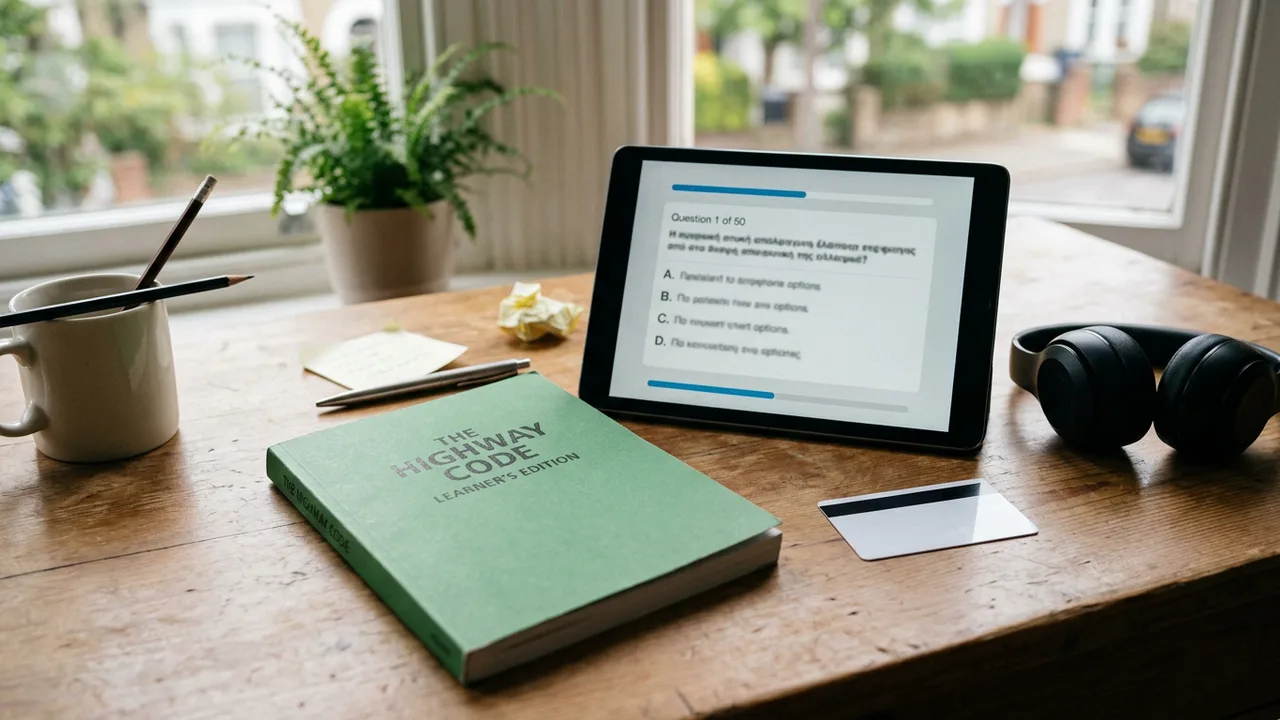
The theory test looks like a formality and behaves like a filter: pass rates hover below fifty percent, and most failures come from preparation that treated it as common sense. It's two tests in one sitting: 50 multiple-choice questions (pass mark 43) drawn from the Highway Code and road-craft knowledge, then the hazard-perception test — 14 video clips, 15 scoreable hazards, a 44-out-of-75 pass mark — and you must pass both in the same sitting or rebook entirely.
You'll need it before booking a practical test, it's booked through the official GOV.UK service (beware copycat booking sites charging mark-ups), and a pass certificate lasts two years — miss the window for your practical and you start again.
Where the marks actually go
The multiple-choice section punishes rote-only revision. Questions increasingly use case-study formats — a scenario followed by several linked questions — and the recurring killers are stopping distances, motorway rules, vulnerable-road-user priority (the 2022 hierarchy changes), and signage meanings that look guessable and aren't. The official DVSA question bank is the only bank worth revising from; third-party apps licensing it are fine, paraphrased ones are a risk.
Hazard perception fails people differently: the software rewards clicking as a developing hazard emerges — the moment a parked car's wheels turn, not when it's already pulling out — and penalises rhythmic or continuous clicking to zero on that clip. One clip contains two scoreable hazards; nobody knows which in advance. Practising with official-style clips calibrates your timing better than any written summary can.
The honest preparation plan
Two to three weeks of daily short sessions beats a weekend cram. Work the full official question bank until your practice scores sit above 90% (the real test's pressure eats a margin), run at least twenty hazard clips, and read the Highway Code's updated hierarchy-of-road-users section end to end once — it's short, and it anchors a disproportionate share of questions. On the day: arrive early, use the practice run-through the test offers, and flag uncertain questions for review rather than stalling.
The questions learners actually ask
How hard is the hazard-perception scoring really? Forgiving if your timing is natural, brutal if you spam clicks. One deliberate click as each hazard develops, a second a beat later as insurance, is the accepted technique.
Can I take the theory test before driving lessons? Yes — any time after you hold a provisional licence. Many instructors suggest starting lessons first so road experience feeds your hazard timing.
What if I fail one part? You fail the sitting and rebook the whole test (there's a three-working-day wait). Fees are modest but queues in busy areas aren't — book the retake immediately.
Key takeaways
- Two parts, one sitting: 43/50 multiple choice and 44/75 hazard perception
- Pass certificate lasts two years — plan your practical inside the window
- Revise the official DVSA bank to 90%+; read the updated Highway Code hierarchy
- Click as hazards develop; rhythmic clicking scores zero on that clip
- Book only via GOV.UK — copycat sites charge for nothing
Sources & further reading
- DVSA test structure and Highway Code (2022 hierarchy update)
- published pass-rate statistics
- driving-instructor preparation consensus
Figures, prices and policy details were current at the last-updated date above. Automotive pricing, incentives and regulations change frequently — verify time-sensitive details with the linked primary sources. Read our editorial policy and fact-checking standards.