The claim game, named
Factory warranties are contracts, and contract disputes have rules. Most denied claims fail on three grounds: maintenance not proven, damage attributed to abuse or outside causes, or the component classed as wear-and-tear. Each has a counter — and federal law referees the big one. The Magnuson-Moss Warranty Act bars a manufacturer from voiding coverage merely because you used independent garages or non-branded parts; to deny, they must show the specific failure was caused by the maintenance or part in question. "You didn't service at our dealer" is not, by itself, a lawful denial.
That protection only bites if you can produce records — which makes the playbook start long before anything breaks.
Before and during the claim
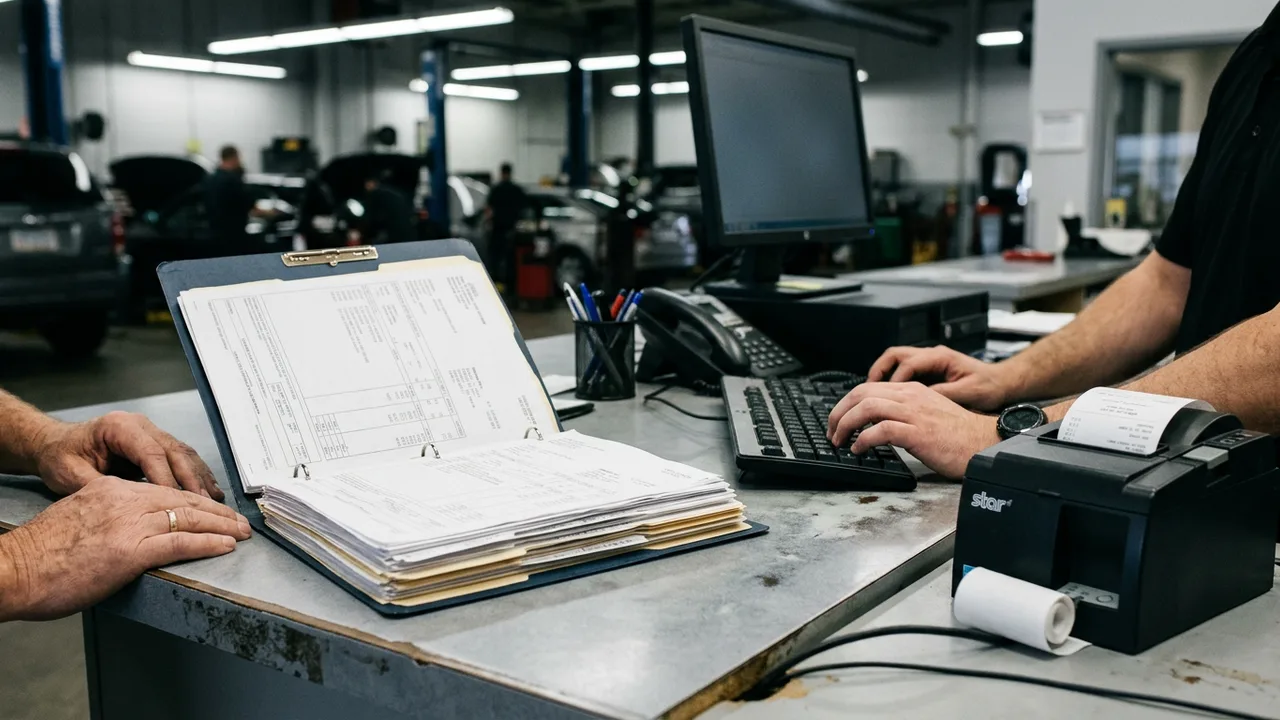
Paper the car's life: every service invoice with date, mileage and fluid specs, kept digitally. Use oil meeting the manual's exact specification and keep the receipts. When a fault appears, document it immediately — dates, symptoms, photos, videos — and get it into a dealer while under warranty: a fault reported in-warranty generally remains claimable even if repairs happen after expiry, so the repair-order timestamp is your shield.
At the service desk, describe symptoms, not diagnoses; insist every visit generates a written repair order with your complaint verbatim (these visits also count toward lemon-law thresholds on newer cars). If the advisor floats "goodwill" percentages, stay polite and keep climbing.
Escalating a denial
Order matters. 1) Service manager, calmly, with your records. 2) The manufacturer's customer-care line — open a case number; zone reps can overrule dealers and often do. 3) The dispute path in your warranty booklet — most manufacturers are bound to an arbitration/mediation program (BBB AUTO LINE or similar) that's free to you, and manufacturers lose there regularly when the paper trail is clean. 4) State remedies: lemon laws for repeat in-warranty failures on newer vehicles, small-claims court (warranty amounts often fit), or an attorney letter — Magnuson-Moss awards attorney fees, which changes manufacturers' math abruptly.
Aftermarket "extended warranties" are a different animal — service contracts with their own exclusion games; the same documentation discipline applies double.
The questions owners actually ask
Can they void my whole warranty over a tune or lift kit? They can deny claims caused by the modification, not unrelated ones — though causation fights on modified cars get ugly. Modify with eyes open.
Dealer says "can't reproduce the fault." Video evidence, a second dealer, and a case number. Intermittent faults are claimable; undocumented ones aren't.
Is "goodwill" worth taking? A fair partial offer just past expiry, maybe. In-warranty, on a documented fault — hold the line.
Key takeaways
- Magnuson-Moss protects independent servicing — denial needs proven causation
- Every invoice, spec-correct fluids, and in-warranty repair orders are your case
- Escalate: service manager → manufacturer case → arbitration → lemon law/court
- Symptoms on paper, verbatim, every visit — the repair order is the record
- Attorney-fee provisions make manufacturers settle documented claims
Sources & further reading
- Magnuson-Moss Warranty Act provisions
- manufacturer dispute-program documentation
- consumer-law practice guidance
Figures, prices and policy details were current at the last-updated date above. Automotive pricing, incentives and regulations change frequently — verify time-sensitive details against the primary sources listed below. Read our editorial policy and fact-checking standards.