📚 Retrospective assessment. True Motion Auto did not publish comparison tests in 2002. This revisits the era's contenders and the period consensus, assessed with hindsight.
The segment that defined American motoring
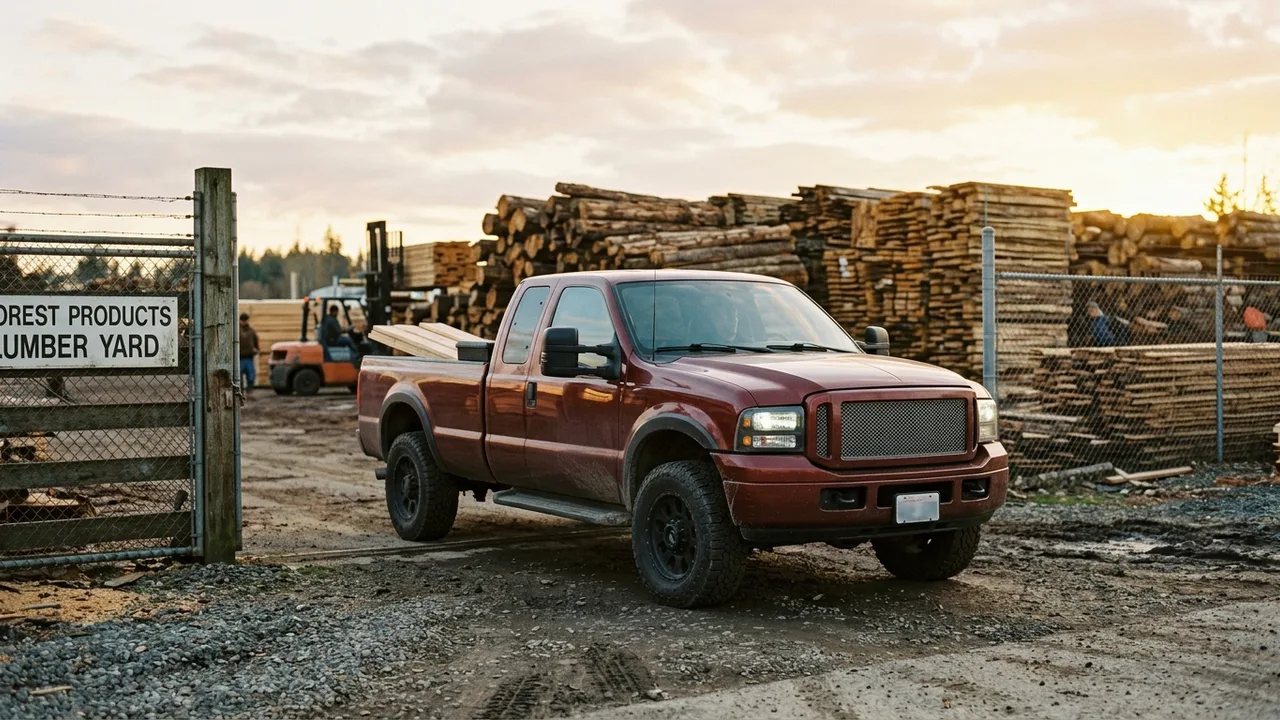
By 2002, the full-size pickup was the most commercially important vehicle category in America — enormously profitable, fiercely contested, and bought by people with genuinely practical requirements.
The field was familiar: Ford F-150, Chevrolet Silverado and GMC Sierra, Dodge Ram, and — significantly — Toyota's growing challenge with the Tundra, which was beginning to make the domestic manufacturers take an import competitor seriously in their most protected segment.
The period consensus, broadly: Ford's F-150 led on breadth and volume, GM's twins on refinement and drivetrain, Dodge on styling boldness and value, and Toyota on build quality but not yet on capability or scale.
What mattered then
The criteria of the era are instructive, because some have changed and some haven't:
Then and still:
- Towing and payload capacity — the fundamental measure
- Durability — trucks are bought to last a decade or more
- Value — including resale, which was strong across the segment
- Powertrain — where the V8 was simply assumed
Then but not now:
- Interiors were genuinely basic, even in higher trims. The luxury-truck era had barely begun
- Fuel economy was largely an afterthought
- Safety equipment and crash performance were far behind modern standards
- Four doors were still becoming standard rather than assumed
What has changed in two decades
1. Trucks became luxury products. This is the biggest shift. In 2002, a well-equipped pickup was a work truck with some comfort. Today, as our F-150/Silverado/Ram comparison found, the Ram 1500's interior is genuinely best-in-class, and $80,000-plus luxury trucks are a substantial part of the market.
That's a complete repositioning, and it's why our comparison also praised the Ram 2500 Tradesman — the work trim that skips the luxury and keeps the capability — as the smart-money choice for buyers who actually work their trucks.
2. Efficiency became a genuine criterion. In 2002 it barely registered. Today, our comparison placed the F-150 PowerBoost hybrid first partly on fuel economy — and its Pro Power Onboard generator is a capability that didn't exist in any form.
3. Electrification arrived, and then complicated itself. The F-150 Lightning and Silverado EV exist; Ram cancelled its all-electric truck entirely in favour of the Ramcharger EREV — whose V6 generator never connects to the wheels, delivering 145 miles of electric range and ~690 miles total with 14,000 lb towing.
As our prototype drive of the next Silverado found, GM's decision to keep investing in the conventional V8 truck is looking increasingly smart as pure-electric pickup demand undershoots forecasts.
4. Safety transformed, as it did everywhere.
5. Toyota's challenge partly succeeded. The Tundra established Toyota as a credible full-size player, though the domestic manufacturers retained their dominance — an instructive parallel to the Lexus story, where product excellence took decades to convert into segment leadership.
What hasn't changed
1. The V8 endures, and for concrete reasons our Silverado prototype drive set out: uncompromised towing over distance, universal refuelling infrastructure, proven durability, lower purchase cost, and genuine buyer demand for V8 character.
2. Capability remains the fundamental measure. Towing and payload still decide purchases.
3. Brand loyalty is extraordinary. Truck buyers are among the most brand-loyal in motoring, and that hasn't shifted.
4. The segment remains the most commercially important in America.
The pattern worth noting
The 2002 comparison and our 2026 one would reach broadly similar conclusions about the fundamentals — capability, durability and value still decide it — while disagreeing entirely about what else matters.
Interior quality, fuel economy, onboard power generation and electrification strategy were either irrelevant or nonexistent in 2002. Today they're substantial parts of the verdict.
That's how segments mature: the fundamentals persist, and the differentiators multiply.
The bottom line
In 2002, the full-size pickup was judged on towing, payload, durability and value, with a V8 assumed and interiors basic. Those fundamentals still decide the segment today.
What's changed is everything around them: trucks became luxury products, efficiency became a genuine criterion, onboard power generation emerged as a differentiator, and electrification arrived — then complicated itself, with Ram cancelling its pure EV in favour of a range-extender and GM's conventional-V8 hedge looking increasingly well-judged.
The most interesting continuity is the V8's persistence. In 2002 it was unquestioned. In 2020 it was widely written off. In 2026 it's looking rather durable — because the reasons for it were always practical rather than sentimental.
Key takeaways
- In 2002 the segment was judged on towing, payload, durability and value, with a V8 assumed and interiors genuinely basic
- The biggest change is that trucks became luxury products — today's Ram 1500 has a best-in-class interior, and $80,000+ trucks are mainstream
- Efficiency became a genuine criterion; our modern comparison placed the F-150 PowerBoost first partly on economy and its onboard generator
- Electrification arrived then complicated itself: Ram cancelled its all-electric truck for the Ramcharger EREV, and GM's V8 hedge looks well-judged
- The fundamentals persist while the differentiators multiply — that's how a mature segment evolves
Sources & further reading
- Period automotive press and specifications
Figures, prices and policy details were current at the last-updated date above. Automotive pricing, incentives and regulations change frequently — verify time-sensitive details against the primary sources listed below. Read our editorial policy and fact-checking standards.