🏆 BUYING GUIDE. ⚠️ Verify current pricing and transmission availability by variant.
⭐ The types behave completely differently
This is the article's central point, and it's routinely glossed over.
"Automatic" in India covers at least four genuinely different technologies, and choosing the wrong one for your driving is the most common source of regret.
AMT (Automated Manual Transmission). A manual gearbox with automated clutch and shift actuation.
How it feels: the characteristic head-nod between shifts — a pause in torque delivery that smooth-driving buyers notice immediately.
Why it exists: it's the cheapest way to offer an automatic, and it typically costs little in efficiency versus the manual.
Best for: buyers who want automatic convenience in city traffic at the lowest price, and who can adapt their driving (lifting slightly on upshifts smooths it considerably).
⚠️ Not for: anyone who prioritises smoothness.
CVT (Continuously Variable Transmission). No fixed ratios — a belt or chain varying continuously.
How it feels: exceptionally smooth, with no shift shock at all. But the "rubber-band" effect under hard acceleration — engine revs rise and hold while speed catches up — divides opinion sharply.
Best for: city driving, where smoothness matters most, and efficiency-focused buyers.
⚠️ Not for: drivers who want a mechanical connection between throttle and response.
Torque converter. The traditional automatic.
How it feels: smooth, progressive and familiar. Modern units with more ratios are genuinely good.
Best for: buyers wanting proven, smooth, undramatic operation. Generally the most refined at this price.
DCT / DSG (Dual-Clutch). Two clutches pre-selecting alternate gears.
How it feels: fast, crisp shifts and the most engaging of the four.
⚠️ The honest caveat: low-speed behaviour in dense traffic can be less smooth than a torque converter, and some DCTs have had reliability questions in hot, congested conditions — which describes a great deal of Indian driving. Research the specific unit.
Best for: drivers who want responsiveness and mostly drive at flowing speeds.
⭐ Which suits Indian driving
Be honest about your actual conditions:
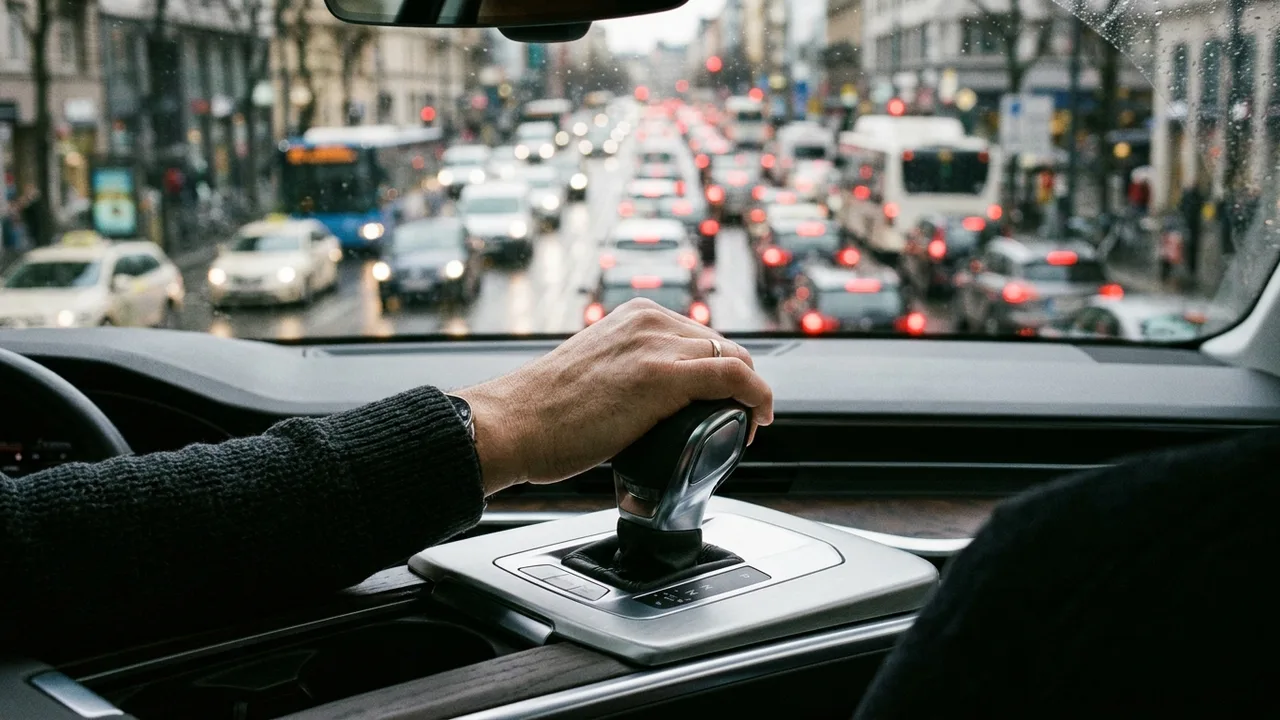
Predominantly dense city traffic — CVT or torque converter. Smoothness matters most when you're changing speed constantly.
Mixed city and highway — torque converter is the safest all-round choice.
Budget-constrained, city-focused — AMT delivers the convenience cheapest, if you can live with the shift pause.
Enthusiastic driving, flowing roads — DCT, with the traffic caveat researched.
The picks
Maruti Swift AMT / CVT — winner of our premium hatch comparison, and the lightest car in its class, which makes it both the most fun and most efficient. Maruti's ownership advantages and CNG availability (manual only).
Maruti Brezza AT — the service network, resale and running costs that matter for a decade-long purchase.
Tata Punch AMT — winner of our micro-SUV comparison on 5-star Global NCAP safety at an accessible price, genuine SUV character and value.
Hyundai Exter AMT — the most comprehensive equipment in that comparison, in a practical boxy package.
Maruti Fronx AT — class-leading efficiency, and the turbo-petrol offers genuinely enjoyable performance, which is rare here.
Maruti Baleno CVT — the most space in our premium hatch test, and the CVT suits its comfortable, easy character.
⚠️ Verify transmission availability by variant — automatics are frequently restricted to specific trims, which affects what else you get.
⚠️ What we haven't tested
Several Tata, Hyundai, Kia, Renault and Nissan automatics in this bracket would legitimately contend.
⭐ What to check
1. Test-drive in your actual conditions. An AMT feels very different in flowing traffic than in stop-start congestion — and congestion is where you'll spend your time.
2. Verify the safety rating for your exact variant. Automatic variants sometimes differ in equipment.
3. Check maintenance requirements. CVT and DCT fluid services can be more expensive than a manual's.
4. Factor the efficiency difference, which varies by type — AMT typically costs least, torque converters historically most, though modern units have narrowed it.
5. Consider resale. Automatics increasingly command a premium in urban India as traffic worsens.
The bottom line
The transmission type matters more than the badge, and choosing the wrong one for your conditions is the commonest regret.
Dense city driving: CVT or torque converter. Mixed use: torque converter. Tight budget, city-focused: AMT, if the shift pause doesn't bother you. Flowing roads and enthusiasm: DCT, with the traffic caveat researched.
⭐ And test-drive in your actual conditions — not on an empty showroom loop. The differences between these technologies are most obvious exactly where you'll spend your time.
Key takeaways
- ⭐ "Automatic" covers four genuinely different technologies in India, and choosing the wrong one for your conditions is the commonest regret
- AMT is cheapest with a characteristic shift pause; CVT is exceptionally smooth with a rubber-band feel; torque converters are the safest all-rounder; DCT is most engaging
- ⚠️ Research DCT low-speed behaviour — some units have had reliability questions in hot, congested conditions, which describes much Indian driving
- Test-drive in your actual conditions — an AMT feels very different in congestion than on an empty showroom loop
- Verify transmission availability and the safety rating by variant — automatics are often restricted to specific trims