The federal new-EV credit (Section 30D, up to $7,500) and used-EV credit (Section 25E, up to $4,000) both expired on 30 September 2025 under the One Big Beautiful Bill Act (OBBBA, Public Law 119-21). Vehicles acquired on or after 1 October 2025 do not qualify for either credit. The one narrow exception is buyers who signed a binding purchase contract and made a payment on or before 30 September 2025 — they may still claim the credit on their 2025 return regardless of delivery date. In 2026, federal savings are gone; your best alternatives are state and utility incentives, the new OBBBA auto loan interest deduction, and the home charger credit (extended to 30 June 2026).
Federal EV incentive status — June 2026
| Incentive | Status | Deadline/Details | Alternative for 2026 buyers |
|---|---|---|---|
| Section 30D new EV credit (up to $7,500) | EXPIRED | Ended 30 Sep 2025 (OBBBA) | State incentives; OBBBA interest deduction |
| Section 25E used EV credit (up to $4,000) | EXPIRED | Ended 30 Sep 2025 (OBBBA) | State/utility rebates |
| Section 30C home charger credit (30%) | EXPIRING | Expires 30 Jun 2026 — act now | Claim before 1 Jul 2026 if buying a charger |
| OBBBA auto loan interest deduction (up to $10,000/yr) | ACTIVE | 2025–2028 tax years, new US-assembled vehicles only | Available to EV loan borrowers who qualify |
What ended and exactly when
The One Big Beautiful Bill Act, signed into law as Public Law 119-21, eliminated the two main federal consumer EV tax credits effective 30 September 2025. Section 30D (new clean vehicle credit, up to $7,500 on qualifying new EVs and PHEVs) and Section 25E (previously-owned clean vehicle credit, up to $4,000 on used EVs under $25,000) are both gone for purchases made on or after 1 October 2025.
These credits were the centrepiece of the Inflation Reduction Act's EV incentive architecture. The OBBBA reversed them as part of a broader fiscal package. There is no equivalent replacement credit at the federal level at the time of writing in June 2026.
The narrow exception: binding contract before 30 September 2025
The IRS has confirmed a limited exception: if a buyer signed a written binding purchase agreement, made at least a nominal payment (even a small deposit), and both occurred on or before 30 September 2025, that buyer may still claim the credit on their 2025 federal tax return — even if the vehicle was delivered after that date.
This exception is genuinely narrow. The IRS has specific guidance on what constitutes a 'binding contract' for these purposes. If you believe you may qualify based on a pre-30 September 2025 deposit, consult a tax professional before claiming. Do not assume a reservation or waitlist position qualifies — a binding purchase contract with a payment is required.
The home charger credit: act before 30 June 2026
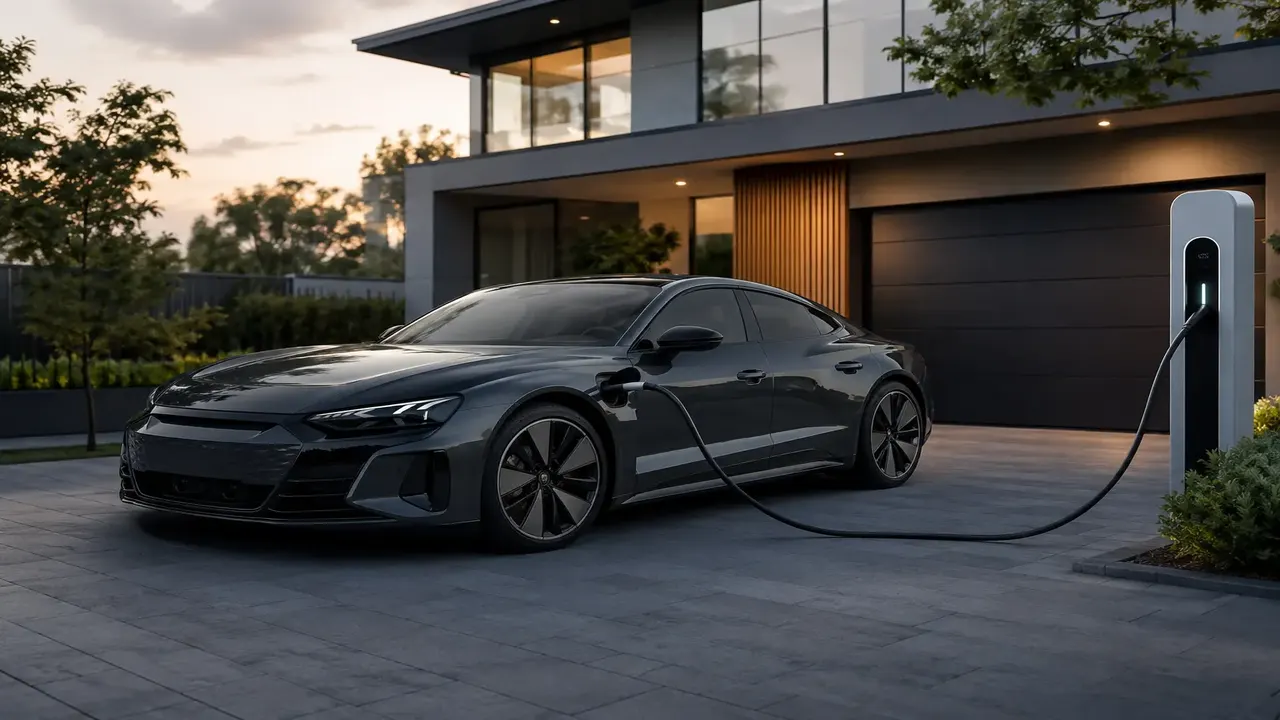
Section 30C of the tax code — which provides a credit of 30% of the cost of installing a home EV charger (previously capped at $1,000 per item) — was extended under the OBBBA but expires 30 June 2026. If you are buying an EV and plan to install a home Level 2 charger, doing so before 1 July 2026 allows you to claim this credit. A typical home charger installation costs $700–$2,000 (hardware plus electrician), so the credit can be worth $210–$600.
The OBBBA auto loan interest deduction
A new and underappreciated benefit emerged from the OBBBA: interest paid on auto loans for new vehicles that are assembled in the United States is deductible up to $10,000/year, for tax years 2025–2028. This applies to any qualifying vehicle — including EVs — purchased new, for personal use. Eligibility phases out for MAGI above $100,000 (single) or $200,000 (married filing jointly).
For an EV buyer financing at 6.9% APR on a $50,000 loan, annual interest in year one is approximately $3,100. At a 22% tax bracket, the deduction saves about $682. The saving is smaller than the old $7,500 tax credit — but it is real, and it stacks with state incentives.
What is still available in 2026: state and utility incentives
State EV incentives vary widely and are increasingly important now that the federal credit has ended. As of mid-2026:
- California: Clean Vehicle Rebate Project and Clean Air Vehicle (CAV) decals; various utility rebates through PG&E, SCE, SDG&E for home charger installation.
- Colorado: up to $5,000 state EV income tax credit for new EVs (income limits apply).
- New York: Drive Clean Rebate up to $2,000 for qualifying new EVs.
- Connecticut, Massachusetts, Oregon: state-level rebates ranging from $1,500–$4,000 for new EV purchases.
- Utility rebates: many utilities offer $300–$800 rebates for Level 2 charger installation, separate from any state or federal credit.
The US Dept of Energy's Alternative Fuels Station Locator and incentive database (afdc.energy.gov) is the authoritative source for current state and local incentives by zip code.
Many state EV incentives require you to be a resident and register the vehicle in-state. Income limits, vehicle price caps, and eligibility criteria vary by state and change frequently. Always verify directly with the state agency or a tax adviser before purchasing.
EV leasing in 2026: does it change the incentive picture?
When the 30D credit was active, leased EVs qualified through the commercial vehicle credit (Section 45W), which the lessor captured and often passed to the lessee as a reduced money factor or cap-cost reduction — making leasing a backdoor route to the credit. That credit pathway is also now closed for consumer-facing leases. Leasing still has financial merits in 2026 (lower monthly payments, no long-term depreciation risk) but the tax credit arbitrage is gone.
Frequently asked questions
Can I claim the $7,500 EV tax credit in 2026?
Is there still a federal tax credit for used EVs?
What does the OBBBA interest deduction mean for EV buyers?
Do I still get a federal credit for installing a home EV charger?
Where can I find current state EV incentives?
Sources & further reading
- IRS — Clean Vehicle Tax Credits (OBBBA changes)
- IRS — One Big Beautiful Bill Act Provisions
- US Dept of Energy — Alternative Fuels Incentive Database
Figures, prices and policy details were current at the last-updated date above. Automotive pricing, incentives and regulations change frequently — verify time-sensitive details with the linked primary sources. Read our editorial policy and fact-checking standards.