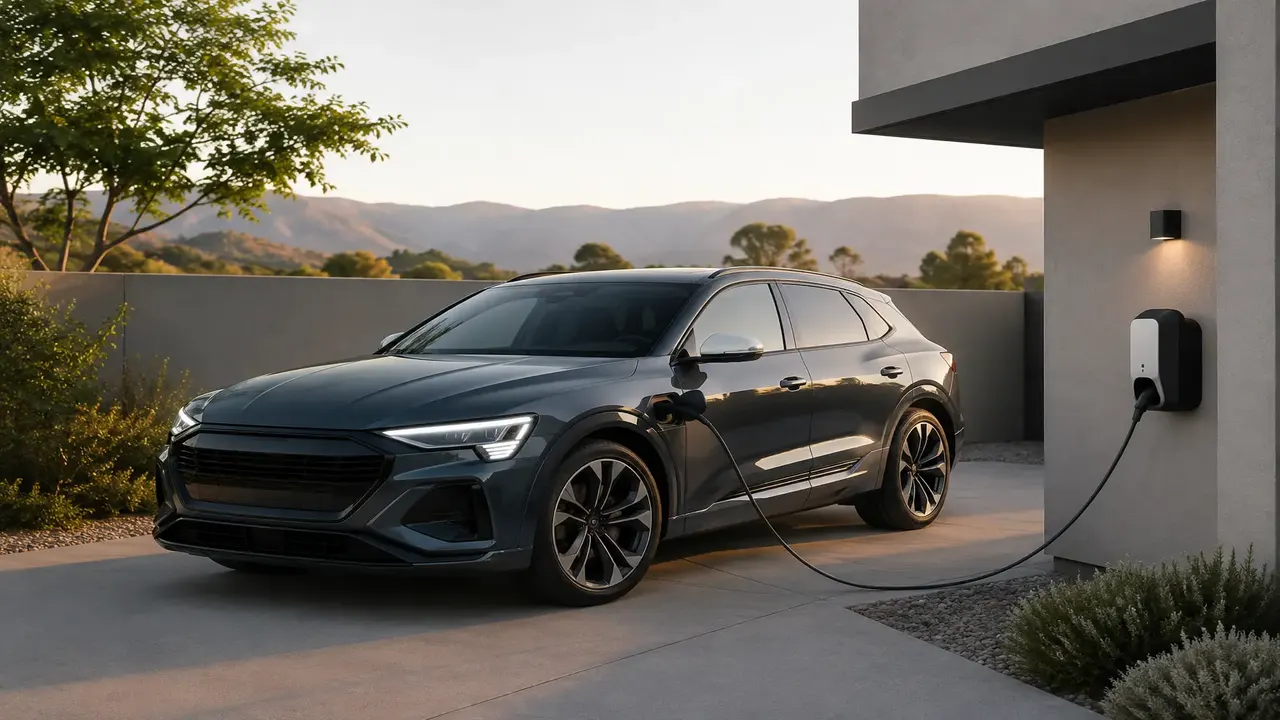
Installing a Level 2 home charger typically costs $700–$2,000 all-in (hardware plus electrician), depending on panel capacity and installation complexity. You can fund it through your EV loan, a separate personal loan, a home equity line, or by paying outright. The Section 30C federal tax credit (30% of costs) is available through 30 June 2026 only — it expires on that date under the OBBBA. Acting before 1 July 2026 can save you $210–$600 in federal tax. State and utility rebates may add further savings.
True Motion Auto collects and presents information from official and primary sources (regulators, government bodies, lenders and insurers' published terms). This is general information, not personalised financial advice — check figures with the provider or a qualified adviser before acting. Jurisdiction: US. Last checked: August 2026.
Editorial oversight: Vasudha Gupta, Editor.
Home EV charger costs and funding options
| Funding method | Typical cost | Pros | Cons |
|---|---|---|---|
| Cash (pay outright) | $700–$2,000 | No interest; simple; eligible for Section 30C credit | Upfront outlay |
| Roll into EV auto loan | Depends on lender | One payment; no separate debt | Not all lenders allow; extends secured loan on depreciating asset |
| Personal loan (unsecured) | Add $700–$2,000 at 8–15% APR | Flexible; quick | Separate payment; higher rate than secured loan |
| Home equity line of credit (HELOC) | Variable rate (currently 8–9% in 2026) | Lower rate if home equity available; interest may be deductible | Uses home as collateral; application process |
| Dealer-arranged add-on | Often marked up | Convenient | Price usually higher; less transparent |
Why home charging installation is a financial decision, not just a convenience one
Most EV buyers focus on the vehicle purchase price and overlook the charging infrastructure cost. A Level 2 home charger (240V, 32–48 amp) charges most EVs from low to full overnight — roughly 20–40 miles of range per hour — whereas a standard 120V wall socket (Level 1) adds only 3–5 miles per hour and may struggle to keep up with daily driving. For most households, a home charger is less a luxury than an operational necessity.
What installation actually costs
The range is wide because costs depend on: your electrical panel's current capacity (a panel upgrade can add $1,500–$3,000), the distance the new circuit must run, local labour rates, and whether permits are required (usually yes). Typical all-in costs:
- Simple installation (panel has capacity, short run): $700–$1,100 total.
- Moderate complexity (long run, minor panel work): $1,100–$1,600.
- Panel upgrade required: $2,000–$4,500 including upgrade and charger installation.
Hardware (the charger unit itself) typically costs $250–$700 depending on amperage, features (Wi-Fi, load balancing) and brand. Professional installation is required for warranty validity on most units and for permit compliance.
The Section 30C credit: act before 30 June 2026
The Alternative Fuel Vehicle Refuelling Property Credit (Section 30C) provides a tax credit of 30% of the cost of purchasing and installing a home EV charger, up to $1,000 per item for non-business use. This credit was extended by the OBBBA but with an expiry date of 30 June 2026.
On a $1,500 all-in installation: 30% × $1,500 = $450 credit. On a $2,000 installation: $600. The credit applies to your federal tax return for the year the installation is completed, reducing your tax liability dollar-for-dollar (unlike a deduction, which reduces taxable income). If you are planning an EV purchase and home charger, completing the installation before 1 July 2026 locks in this saving.
The Section 30C home charger credit is a dollar-for-dollar reduction in your tax bill — worth the full percentage regardless of your tax bracket. The OBBBA auto loan interest deduction reduces taxable income; its value depends on your bracket. Both can apply if you finance a qualifying new EV and install a home charger before 30 June 2026.
State and utility rebates for home chargers
Multiple state and utility programmes offer additional rebates — often stackable with the federal credit while it lasts, and continuing after it expires:
- Utility rebates: many major utilities (PG&E, Consumers Energy, Eversource, Duke Energy) offer $300–$800 rebates for ENERGY STAR-certified Level 2 charger installations.
- State programmes: California, New York, Massachusetts, Colorado and others have their own home charger incentive programmes. Amounts and eligibility vary.
- afdc.energy.gov: the DOE's database lists current state and utility incentives by zip code — check before installing.
Should you include the charger cost in your EV loan?
Some lenders allow you to include charger installation in the auto loan amount. This is convenient and may be the right choice if you do not have the cash, but it is not always the cheapest option — you are securing charger installation costs against a depreciating vehicle at auto loan rates. Compare this against a short-term personal loan (typically 8–12% APR for good credit) or, if available, a low-rate home equity product. For most buyers, paying the charger installation separately (cash or home equity) is more cost-efficient.
Practical steps before installation
- Get at least two quotes from certified electricians for the full installation including any panel work.
- Check your utility's rebate programme — some require pre-approval or specific equipment before installation.
- Confirm the charger hardware is on the utility's approved list if a rebate is involved.
- Schedule installation before 30 June 2026 if you want the Section 30C credit.
- Keep all receipts, installer invoices and the charger's serial number — you will need these to claim both federal credit and utility rebates.
Frequently asked questions
Do I need a permit to install a home EV charger?
Can I install a Level 2 charger myself?
Is the Section 30C credit refundable?
Does the home charger credit apply if I rent?
What if my installation date spans 30 June 2026?
Sources & further reading
- IRS — Section 30C Alternative Fuel Vehicle Refuelling Property Credit
- US Dept of Energy — EV Charging and Incentives
- ENERGY STAR — Home EV Charging Station Resources
Figures, prices and policy details were current at the last-updated date above. Automotive pricing, incentives and regulations change frequently — verify time-sensitive details with the linked primary sources. Read our editorial policy and fact-checking standards.