Three things distinguish a long Australian drive from a long drive anywhere else: the distance between fuel stops on remote highways, the concentration of wildlife on the road at dawn and dusk, and the consequence of a breakdown where there is no mobile coverage. Plan fuel around the longest gap on your route rather than the average, avoid driving in the hour either side of sunrise and sunset where you can, and carry water and a means of communication that does not depend on a mobile network.
Plan fuel around the longest gap, not the average
The mistake is treating range as a daily average. What matters is the single longest stretch between reliable fuel on your specific route, and whether the stop at the end of it keeps hours that suit your arrival time. Remote roadhouses are not necessarily open around the clock, and a closed pump at 9pm is functionally the same as no pump.
- Identify the longest fuel gap on the route before you set off, and treat that figure as your minimum required range with a substantial margin on top.
- Build the margin for the conditions that reduce range: headwinds, a roof load, towing, air conditioning in serious heat, and unsealed detours.
- Refuel earlier than you would at home. On remote highways the working rule is to fill whenever you pass fuel below roughly half a tank rather than waiting for a warning light.
- Check opening hours and payment methods in advance. Card acceptance and connectivity at remote sites can be less reliable than in town.
- Carrying additional fuel is common practice but is not risk-free — use approved containers, carry them properly secured and ventilated, and understand that this changes how you must handle the vehicle.
Electric vehicles on long routes
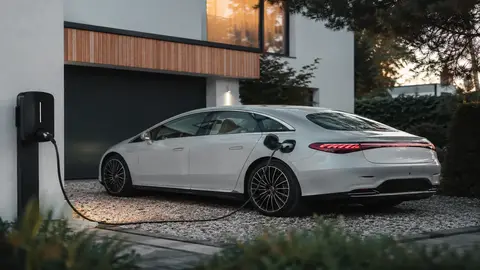
Charging infrastructure along Australia's major highway corridors has expanded considerably, but it remains sparser and more variable than in dense urban areas, and remote sections still have long gaps. An EV long-distance trip is realistic on well-served corridors with route planning that treats each charger as a single point of failure, checks its live status before committing to the leg, and always identifies a fallback. Heat, headwind and a roof load all reduce range more sharply at highway speed than most drivers expect.
Wildlife is the risk drivers underestimate
Animal strikes are among the most common causes of vehicle damage on rural Australian roads, and the risk is concentrated in a narrow window. Kangaroos and other native animals are most active around dawn and dusk, and they move unpredictably — one crossing the road often means several more behind it.
- Where practical, do not drive in the hour either side of sunrise and sunset, and avoid driving at night on unlit rural highways.
- If an animal appears, brake in a straight line. Swerving at highway speed is the decision that turns a damaged panel into a rollover, particularly in a tall vehicle.
- Slow down when you see one animal, rather than accelerating past it.
- Livestock roams freely on unfenced roads in many areas — the signage means exactly what it says.
Heat, road surface and tyres
Sustained high ambient temperature and long stretches at highway speed are hard on tyres, and tyre problems are the most frequently reported issue on remote Australian trips. Coarse chip seal and unsealed sections punish tyres designed for suburban use.
- Check pressures cold, at the start of the day, against the load you are actually carrying — a fully loaded vehicle needs the higher pressures on the placard, not the unladen figure.
- Inspect sidewalls for cuts before each long leg. Sidewall damage from sharp stone is not repairable at the roadside in the way a tread puncture often is.
- Carry a serviceable spare, the tools to fit it, and confirm you can actually get the wheel off — many owners discover a seized wheel nut or a missing locking key for the first time in the worst possible place.
- Consider tyres appropriate to the surfaces you will meet if any of the route is unsealed. A road-biased tyre on sharp gravel is the classic cause of a trip-ending failure.
Mobile coverage on remote highways is patchy to non-existent, and a phone is not a safety plan. A satellite communicator or an emergency beacon is the standard precaution for remote travel, and the standing advice from Australian emergency services is to stay with the vehicle if you break down — it is far easier to spot from the air than a person on foot, and it provides shade. Carry substantially more drinking water than you expect to need.
Practical planning steps
- Map the route in legs defined by fuel and water, not by hours driven.
- Check road conditions and closures before departure, particularly after rain — unsealed roads in the north are routinely closed in the wet season and driving a closed road can carry penalties as well as risk.
- Tell someone your route and expected arrival, and tell them when the plan changes.
- Service the vehicle before the trip rather than during it, and check the spare, the fluids and the battery.
- Build slack into the schedule. Fatigue is a leading factor in rural crashes, and long straight roads are more tiring than they feel.
What the classic routes demand
- Great Ocean Road (Victoria). Sealed, scenic and busy. No special vehicle requirement; the challenge is traffic, tight sequences of bends and heavy pedestrian activity at the lookouts.
- Nullarbor crossing. Sealed the whole way, but with long distances between roadhouses, strong crosswinds, heavy freight traffic and considerable wildlife activity at either end of the day.
- The full circuit of the continent. Achievable in a standard road car on sealed roads with careful planning; the difficulty is scale and repetition rather than terrain.
- Cape York and comparable remote tracks. A genuinely different proposition requiring appropriate vehicle, tyres, recovery equipment, experience and seasonal timing.
Frequently asked questions
How should I plan fuel stops on a remote Australian route?
Do I need a four-wheel drive for the Great Ocean Road or the sealed long-distance routes?
When is wildlife most dangerous on Australian roads?
Is an electric vehicle realistic for a long Australian trip?
What is the most common vehicle problem on long Australian drives?
Sources & further reading
- Australian Government — services and travel information
- Australian Government Department of Infrastructure and Transport
Figures, prices and policy details were current at the last-updated date above. Automotive pricing, incentives and regulations change frequently — verify time-sensitive details with the linked primary sources. Read our editorial policy and fact-checking standards.