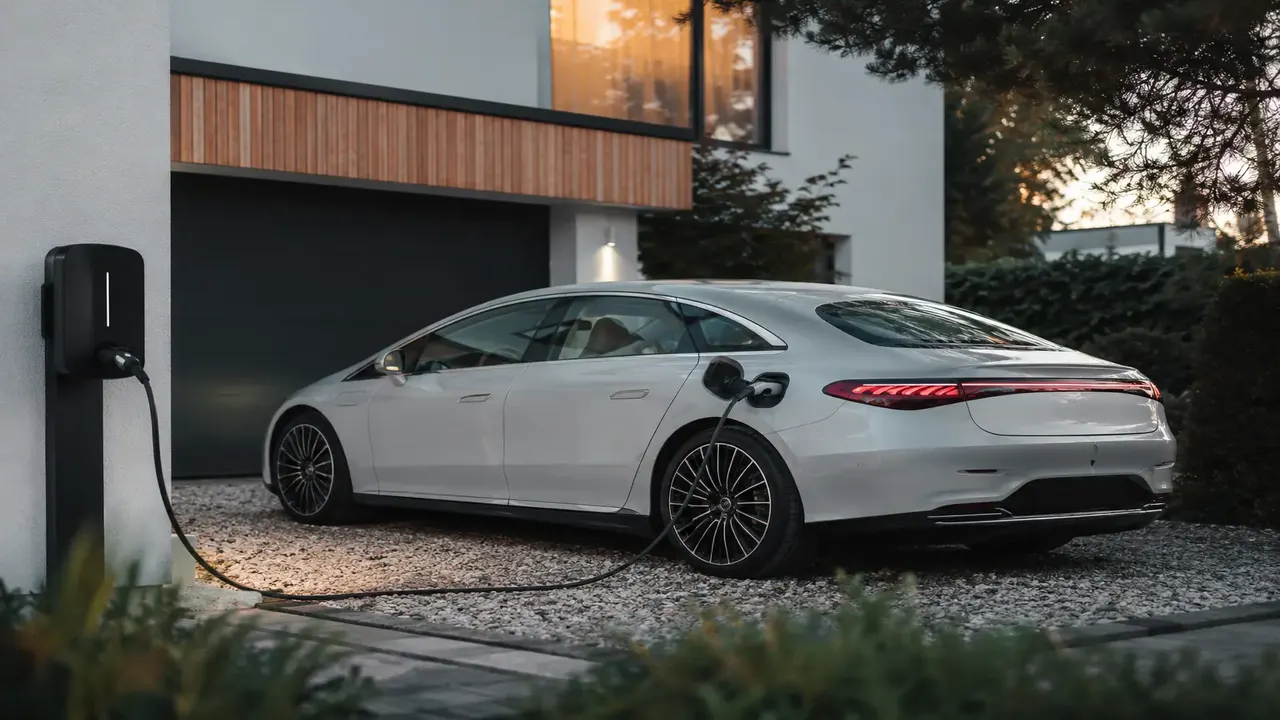
The dominant theme across London EV owner submissions: charging access depends heavily on whether you have off-street parking. Owners without a driveway rely on on-street lamppost chargers (typically slow, 5-7kW) or destination charging, while those doing longer trips use rapid hubs along the North Circular and at motorway services. Costs at public rapid chargers commonly run 3-4x the price per kWh of home charging, which owners say is the single biggest gap between London's EV-on-paper economics and reality.
At a glance
| Charging type | What owners report |
|---|---|
| Home driveway charging | Cheapest, but only available to a minority of London EV owners |
| On-street lamppost charging | Common in terraced boroughs; typically slow (5-7kW) |
| Public rapid charging | 3-4x the per-kWh cost of home charging |
| Most congested charging spots | Supermarket and retail park rapid bays at weekends |
| ULEZ relevance | EVs exempt, a recurring reason owners cite for switching |
Why London charging stories differ from national guides
National EV charging guides assume a driveway and a home wallbox. That assumption breaks down across most of inner and much of outer London, where terraced housing and on-street parking are the norm. This hub collects real charging experiences from True Motion Auto's London members specifically because the borough you live in changes your entire charging strategy.
What owners without a driveway are doing
- Relying on on-street lamppost or bollard chargers installed by the local council — widely available in boroughs like Hounslow, Richmond and parts of Hackney, patchy elsewhere.
- Charging opportunistically at destination chargers — supermarkets, gyms and retail parks — while doing errands, rather than treating charging as a dedicated task.
- Using workplace charging where available, which several owners say is the single biggest factor in making EV ownership viable without home charging.
- Planning a weekly top-up rapid-charge session rather than daily charging, accepting the higher per-kWh cost as a trade-off for convenience.
Cost reality owners flag
The recurring complaint across submissions is the gap between the advertised low running cost of EVs and what public-rapid-charging-dependent owners actually pay. Rapid and ultra-rapid public chargers commonly cost three to four times as much per kWh as home electricity, which owners without home charging say materially changes the cost-of-ownership case compared to someone charging overnight on a driveway.
Where owners charge on longer trips
- Rapid-charging hubs along the North Circular and South Circular, used for quick top-ups mid-journey across London.
- Motorway service stations on the M25/M1/M4 approaches for anyone driving further out of the city.
- Underground and multi-storey car park chargers in central London, though owners note availability can be tight during business hours.
- Hotel and destination chargers used opportunistically when driving into London for the day.
Check your borough's on-street charging density before assuming you'll always find a spot near home. Budget for meaningfully higher per-kWh costs if you can't charge at home or work — this is the single biggest expectation gap owners report.
Why owners still make the switch
Despite the charging friction, ULEZ (Ultra Low Emission Zone) exemption is repeatedly cited as a major financial driver for London-based owners who drive daily into the zone, alongside lower servicing costs and the option of eventually installing home charging if their housing situation changes.
Frequently asked questions
Can you own an EV in London without a driveway?
How much more expensive is public rapid charging in London vs home charging?
Are on-street EV chargers available everywhere in London?
Does ULEZ exemption make EV ownership worthwhile in London?
Where do London EV owners charge on longer trips out of the city?
Sources & further reading
Figures, prices and policy details were current at the last-updated date above. Automotive pricing, incentives and regulations change frequently — verify time-sensitive details with the linked primary sources. Read our editorial policy and fact-checking standards.