Fit proper winter tyres once daytime temperatures sit consistently around or below 7C — the compound in an all-season tyre stiffens near that point and loses grip well before there is any snow on the road. Expect an electric vehicle to lose a substantial share of its range in deep cold, commonly in the region of a fifth to a third depending on temperature, speed and how much cabin heating is used. Winter tyres are legally required in Quebec for part of the year and on designated highways in British Columbia; elsewhere in Canada they are strongly recommended rather than mandated, and rules change, so check your provincial transport authority.
Winter tyres are the single biggest change you can make
The distinction that matters is compound, not tread pattern. All-season rubber hardens as temperature falls and its grip degrades steadily from around 7C downward, which is why the threshold is a temperature and not the first snowfall. Winter compound stays pliable in cold, and the difference shows up most on cold dry pavement and on ice — the two surfaces drivers assume they do not need winter tyres for.
- Look for the three-peak mountain snowflake symbol, which indicates a tyre tested for severe snow service. The older mud and snow marking alone does not carry the same meaning.
- Fit four. Two winter tyres on one axle creates a grip imbalance that makes the car behave unpredictably, and the failure mode differs depending on which axle you fit them to. Neither is good.
- Studded and studless winter tyres both exist and are regulated differently by province, including seasonal windows for studs. Check locally before buying studs.
- A second set on steel wheels is usually cheaper over time than repeated mounting and balancing, and it means the summer tyres are not wearing while parked.
- Winter tyres do not shorten stopping distances on ice to anything like dry-road figures. They improve a very bad situation; they do not remove it.
Where they are legally required
Quebec requires winter tyres on passenger vehicles for a defined winter period each year. British Columbia requires winter or approved tyres on designated highways for a defined seasonal window, and signage marks those routes. Other provinces and territories generally recommend rather than require them, and some insurers offer a discount for fitting them. Dates and definitions are revised from time to time — confirm the current rule with the relevant provincial transport authority rather than relying on a figure remembered from a previous year.
Batteries and cold starts
Cold does two things at once: it reduces the current a battery can deliver, and it thickens engine oil so more current is needed to turn the engine over. A battery that was marginal in autumn fails on the first genuinely cold morning, which is why failures cluster in early winter rather than mid-winter.
- Have the battery tested before winter rather than after it fails. Testing is quick and usually free.
- A block heater remains standard practice in the coldest parts of the country. It reduces wear at start-up, cuts warm-up time and improves cabin heat and defrost performance. On a timer, two to four hours before departure is generally sufficient — running it all night mostly buys electricity.
- Use the oil viscosity the manufacturer specifies for low temperature. It matters more than any additive.
- Keep the fuel tank reasonably full to reduce condensation in the tank, and keep the washer reservoir topped with fluid rated well below the temperatures you actually see.
- Clear the whole car before moving — all glass, mirrors, lights, and the roof. Snow left on the roof slides onto your own windscreen under braking and onto the vehicle behind you.
Electric vehicles in deep cold
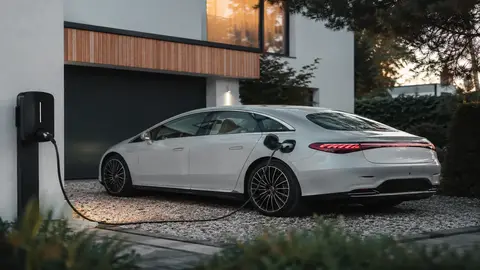
Range loss in winter is real, expected, and driven by three separate effects: reduced battery efficiency at low temperature, energy spent heating the cabin, and higher rolling and aerodynamic resistance in cold dense air. Losses commonly fall somewhere between a fifth and a third of summer range, and worsen with lower temperatures, higher speeds and more cabin heating.
- Precondition while plugged in. Warming the cabin and battery from the charger rather than from the pack is the single most effective mitigation.
- Use heated seats and steering wheel in preference to heating the whole cabin. They draw far less power.
- A heat pump helps but its advantage narrows at extreme low temperatures, where resistive heating does more of the work.
- Charging is slower when the pack is cold. Use route preconditioning before a fast charge if the vehicle offers it, and expect a cold pack to accept a lower rate.
- Plan winter journeys with a wider margin and treat public chargers as a single point of failure in remote areas.
Ice forms first on bridges and overpasses, because they lose heat from both surfaces and have no ground warmth beneath them. It also collects in shaded cuttings that never see sun, at intersections where repeated braking polishes the surface, and near freezing point when melting snow refreezes at dusk. The temperature range around 0C to -4C is more treacherous than deep cold, because that is when partial melt and refreeze happen. If the road looks wet but the spray from other vehicles has stopped, treat it as ice.
Technique in snow and ice
- Increase following distance well beyond the dry-road habit — a large multiple, not a small addition.
- Make one input at a time. Brake in a straight line, then steer, then accelerate. Combining them is what breaks traction.
- Be smooth and early with everything. Abruptness is the common factor in almost every winter loss of control.
- In a skid, look and steer where you want to go and ease off the accelerator. Avoid sudden correction, which produces the secondary skid that usually causes the crash.
- Understand what your systems do. All-wheel drive helps you accelerate; it does not help you stop or turn. Stability control cannot exceed the grip the tyres have.
- If visibility collapses in blowing snow, get off the road properly — a parking area, not the shoulder — and put your hazards on.
What to carry
- Snow brush and scraper, and a small shovel.
- Warm layers, hat, gloves and a blanket, kept in the cabin rather than the boot.
- Booster cables or a lithium jump pack, kept charged.
- Traction aid — sand, grit, or traction mats.
- A charged phone and a power bank, plus water and food for a long wait.
- A working torch, and a reflective triangle or vest.
Frequently asked questions
At what temperature should I switch to winter tyres?
Are winter tyres legally required in Canada?
How much range does an electric car lose in a Canadian winter?
Why do car batteries fail in early winter rather than mid-winter?
Where does black ice form first?
Sources & further reading
Figures, prices and policy details were current at the last-updated date above. Automotive pricing, incentives and regulations change frequently — verify time-sensitive details with the linked primary sources. Read our editorial policy and fact-checking standards.