Most mainstream family electric SUVs now offer 220-300+ miles of EPA-rated range, seating for five with several offering an optional or standard third row, and cargo space broadly comparable to gas-powered midsize SUVs once you account for the smaller frunk. For families, the highest-value comparison points are real-world range with a full car and roof cargo, home-charging speed, and the strength of standard driver-assist features — not headline horsepower.
At a glance: family EV SUV shopping factors
| Factor | What to compare |
|---|---|
| Real-world range | EPA number minus 10-20% for cold, highway speed, and full load |
| Seating | Confirm true 3-row capacity — some 'available 3rd row' seats are child-only |
| Home charging | Level 2 (240V) charging time to full, typically 6-10 hours overnight |
| Cargo behind 2nd row | Compare cubic feet directly against gas SUVs you're cross-shopping |
| Driver-assist tech | Standard vs optional automatic emergency braking, blind-spot, rear cross-traffic |
What family buyers should weigh first
Family shoppers cross-shop EV SUVs against gas SUVs on a different set of priorities than enthusiast buyers. Zero-to-60 times rarely matter with kids in the back; what matters is whether the car comfortably handles the school run, road trips to grandma's, and the occasional big grocery or gear haul without turning every errand into a charging-logistics puzzle.
Range and charging realities for family use
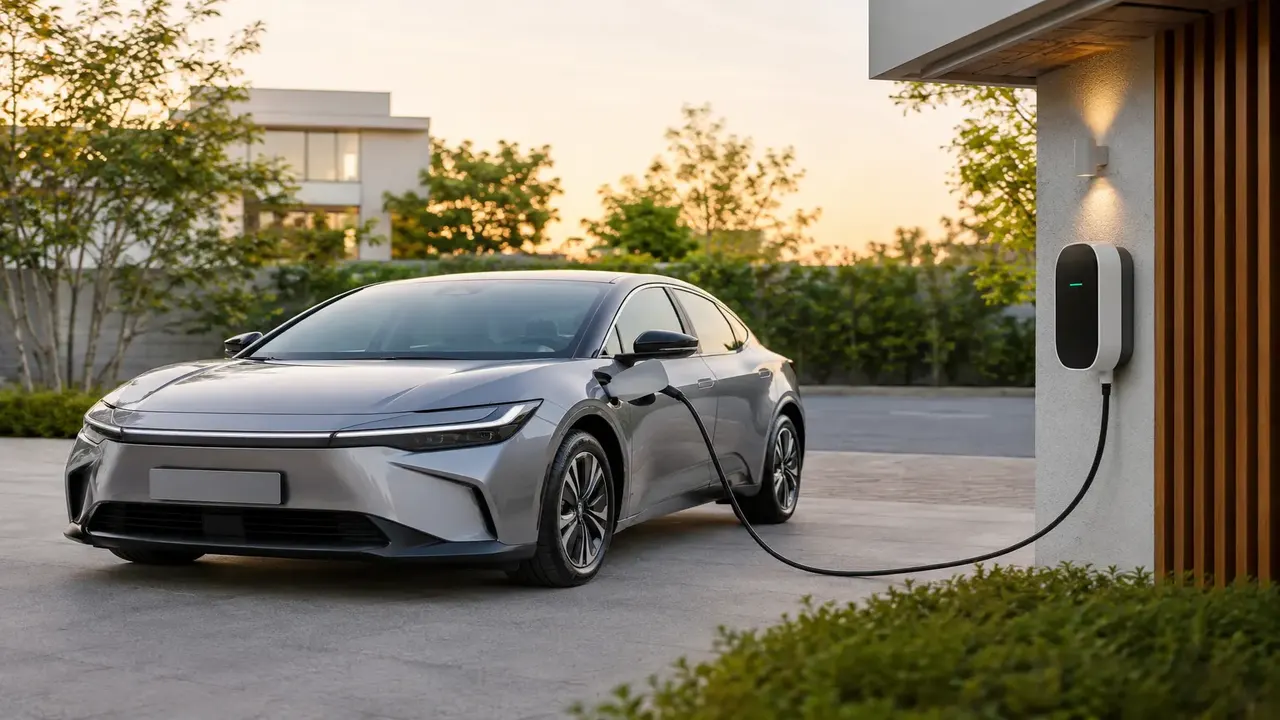
EPA range figures assume ideal conditions. With a full cabin, roof rack or cargo box, air conditioning or heat running, and highway speeds, expect real-world range to land 10-20% below the sticker number. For most two-car families, that's still plenty for daily driving; the number that matters more is how easily the car charges overnight at home. A Level 2 home charger typically refills a depleted battery in 6-10 hours, which fits a normal overnight window for nearly any family schedule.
- Confirm your home electrical panel can support a Level 2 charger (240V), or budget for an electrician visit
- For road trips, check DC fast-charging network coverage on your actual travel routes, not just national averages
- Ask whether the '3rd row' seat is rated for adults or listed as child-only — this varies a lot between models
Cargo space and family gear
Because EVs don't need space for a large engine and transmission, some models offer a small front trunk (frunk) in addition to rear cargo space. But frunks are often too small for anything beyond a charging cable or small bag, so compare the rear cargo figures — both behind the second row and with seats folded — directly against the gas SUVs you're cross-shopping, rather than assuming the EV automatically wins on space.
Safety and driver-assist tech
What's worth prioritizing
Automatic emergency braking with pedestrian detection, blind-spot monitoring, and rear cross-traffic alert are the features with the clearest real-world safety payoff for family driving — parking lots, school pickup lines, and highway merges. Adaptive cruise control and lane-centering are convenience features that reduce fatigue on long trips but shouldn't be weighted the same as core crash-avoidance tech when comparing trims.
Cold weather and long-trip planning
Families in colder climates should expect a bigger range hit in winter — commonly 20-30% — and plan road trips with that buffer in mind. See our dedicated cold-weather EV range guide for the specifics on which features (heat pumps, preconditioning) reduce that penalty.
Electric SUVs suit families who can charge at home and whose road trips follow well-charged corridors. They're a harder fit for families without home charging access or who frequently drive long, rural routes with sparse fast-charging infrastructure — for those households, a plug-in hybrid or efficient gas SUV may be the more practical choice today.
Common mistakes when comparing electric family SUVs
The biggest mistake is ranking purely on EPA range or 0-60 time. The more useful comparison for family duty is: real-world range with a full load, confirmed adult-capable seating count, cargo space with seats folded, and the standard (not optional) safety equipment list — because those are the things you'll notice every single week.
Frequently asked questions
How much range do I actually need in a family electric SUV?
Do electric SUVs have enough cargo space for family trips?
Is a third-row electric SUV really usable for adults?
Can I install a home charger if I rent or live in an apartment?
Are electric SUVs safe for families?
Sources & further reading
- IIHS — vehicle safety ratings
- NHTSA — 5-Star Safety Ratings
- U.S. DOE/EPA — fueleconomy.gov EV range data
Figures, prices and policy details were current at the last-updated date above. Automotive pricing, incentives and regulations change frequently — verify time-sensitive details with the linked primary sources. Read our editorial policy and fact-checking standards.