Independent winter testing consistently finds EVs lose 20-30% of their rated range in freezing temperatures, and up to 35-40% in extreme cold with heavy cabin heater use. Models with a heat pump, a larger usable battery buffer, and battery preconditioning tied to the navigation system hold up best. There is no single "cold weather EV champion" every year — the gap between the best and worst performers narrows and widens as automakers update software, so compare recent independent test data rather than marketing claims.
At a glance: cold-weather EV range factors
| Factor | Why it moves the needle |
|---|---|
| Heat pump vs resistive heater | Heat pumps can cut winter energy use for cabin heat by roughly half |
| Battery preconditioning | Warms the pack before fast charging, recovering charging speed lost to cold |
| Battery buffer/size | Larger packs lose a smaller percentage of usable range for the same cold-weather hit |
| Tire choice | Winter tires can cost 5-10% range but improve safety and traction |
| Charging in the cold | DC fast-charge speeds can drop 20-50% below warm-weather peaks |
Why EVs lose range when it's cold
Lithium-ion batteries are simply less efficient at moving charge when they're cold, and internal resistance rises as temperature drops. On top of that chemistry penalty, EVs have to spend energy heating the cabin and the battery itself, energy that would otherwise go toward driving. Gasoline cars lose some efficiency too, but they have a free byproduct — waste engine heat — to warm the cabin. EVs don't, so the heater draws straight from the same battery that powers the wheels.
What separates cold-weather-confident EVs from the rest
Independent testing groups, including the Norwegian Automobile Federation's annual winter EV test and Recurrent's real-world range studies, repeatedly point to the same handful of differentiators: a heat pump instead of a simple resistive heater, software that preconditions the battery automatically when a charging stop is set as a navigation destination, and a battery pack large enough that a 25-30% cold-weather hit still leaves a workable range for most trips.
- Heat pump climate systems (increasingly standard on newer EVs, but still absent on some entry trims)
- Automatic battery preconditioning tied to navigation-set fast-charging stops
- Larger battery packs that absorb a percentage-based range loss more comfortably
- Cabin features like heated seats and heated steering wheels, which use far less energy than heating the whole cabin
Heat pumps vs resistive heaters
A resistive heater works like a toaster: effective, but energy-hungry. A heat pump moves heat rather than generating it from scratch, which is far more efficient in mild-to-moderately-cold conditions. In extreme cold (well below freezing), heat pump efficiency drops and a backup resistive element kicks in anyway, so the advantage narrows the colder it gets — but it rarely disappears.
Battery size, buffer, and why bigger sometimes wins on paper
A 300-mile EPA-rated EV that loses 30% of its range in winter still has roughly 210 miles to work with. A 150-mile EPA-rated EV facing the same percentage loss is down to about 105 miles, a much tighter margin for daily driving. This is one reason cold-climate buyers are steered toward higher-range trims even if they never need the full range in summer.
Charging speed in the cold
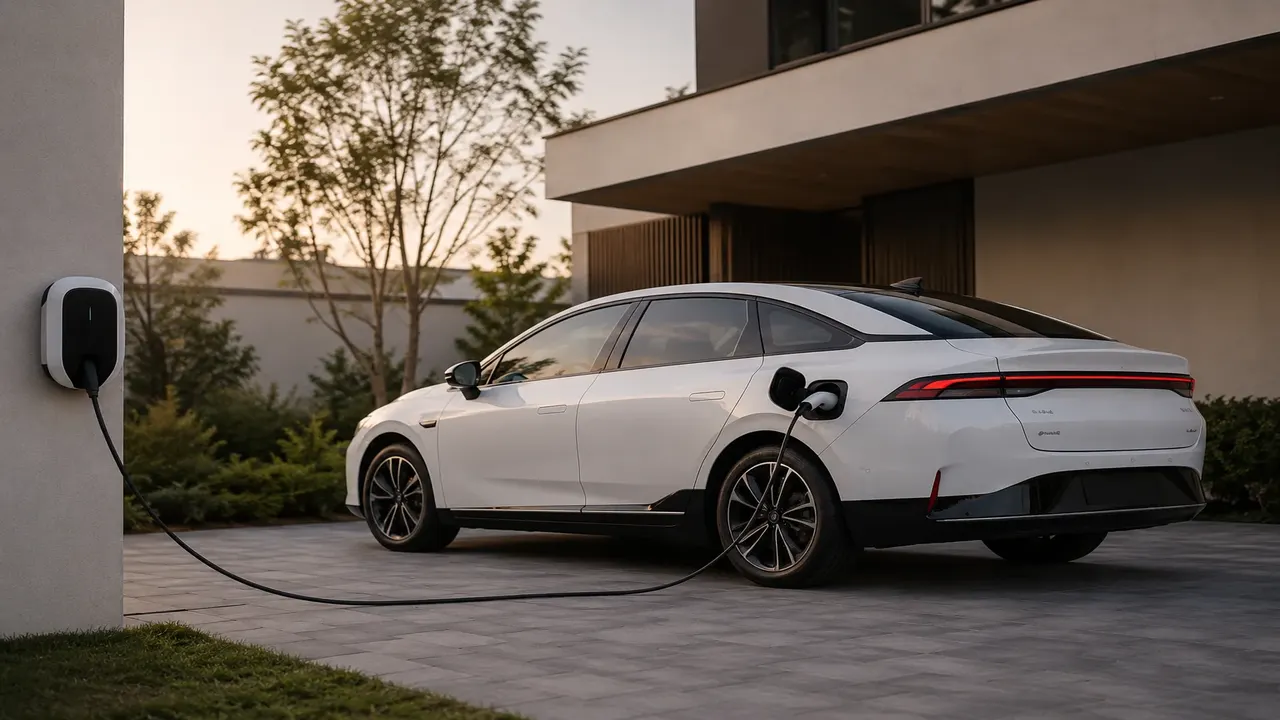
Range loss gets the headlines, but slower DC fast-charging is often the bigger daily annoyance. A cold battery accepts charge more slowly to protect its longevity, so a car that normally charges from 20-80% in 25 minutes might take 40-plus minutes when the pack is cold-soaked. Preconditioning — warming the battery for 20-30 minutes before arrival at a fast charger — largely closes this gap, which is why it matters as much as raw heat-pump efficiency when comparing models.
Marketing range figures (EPA or WLTP) are measured at mild, controlled temperatures. Treat them as a best-case number and look for independent cold-weather test data — from outlets that actually drive cars in winter conditions — before assuming any EV will hit its sticker range in January.
How we'd rank cold-weather EVs without overstating certainty
Because automakers update heat pump availability, software, and battery chemistry from one model year to the next, a fixed "top 5 cold-weather EVs" list goes stale fast. The more durable approach is to compare EVs on the factors above — heat pump presence, preconditioning software, and battery buffer — and check the latest independent winter test results for the specific model year you're considering, rather than relying on a ranking that may reflect an older software version.
Frequently asked questions
How much range do EVs really lose in winter?
Do all EVs lose the same percentage of range in cold weather?
Does cold weather permanently damage an EV battery?
Do winter tires hurt EV range?
Should I buy a higher-range trim if I live somewhere cold?
Sources & further reading
- U.S. Department of Energy / EPA — fueleconomy.gov
- Recurrent — real-world EV winter range research
- Norwegian Automobile Federation (NAF) winter EV range test
Figures, prices and policy details were current at the last-updated date above. Automotive pricing, incentives and regulations change frequently — verify time-sensitive details with the linked primary sources. Read our editorial policy and fact-checking standards.