The in-house rivalry that owns the class
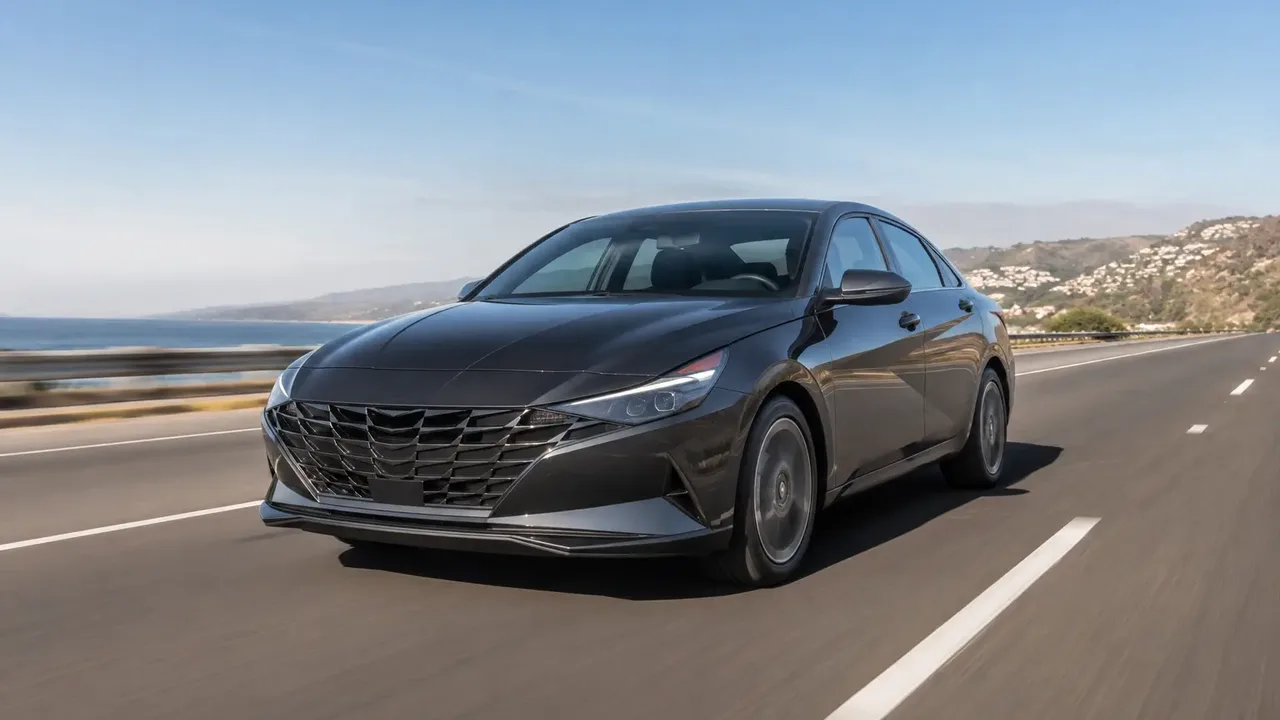
With Detroit abandoning compact sedans, the class's most interesting fight now happens inside one corporate family. The Hyundai Elantra and Kia K4 share group hardware yet argue for your money differently: the Elantra as the efficiency-and-value pick with the class's cheap hybrid, the K4 — the Forte's replacement — as the bigger, more fashionable, more tech-forward one. Same warranty, same dealers' coffee, different cars.
Where the K4 wins
Presence and cabin. The K4 is the style pick, and its interior backs the bluff: a wide dual-screen layout, near-midsize rear legroom (best-in-class territory around 38 inches), and materials that read above the price. It feels like the newer design because it is.
Space. The K4 is one of the largest cars in the class — rear passengers and the 14.6 cu-ft trunk both benefit. For back-seat-first buyers it's the stronger family tool.
The GT-Line turbo option (1.6T, ~190 hp) gives it a warm trim the Elantra only answers with the full N — a different budget conversation.
The hatchback. The K4's five-door body is the practical wildcard the Elantra simply doesn't offer.
Where the Elantra wins
The hybrid. This is the argument that ends most shopping trips: the Elantra Hybrid's ~50 mpg combined against the K4's petrol-only high-30s. There is no hybrid K4, and in 2026 that's a strategic hole. At 12,000 miles a year, the Elantra Hybrid saves several hundred dollars annually in fuel over either car's gas engine — a compounding win over ownership.
Price and value trims. The Elantra's base and SEL trims consistently undercut equivalent K4s while giving away little that matters; incentives on the older design run richer, too.
Lightness of touch. The Elantra is marginally the more efficient, marginally the lighter-feeling car; the N-Line and full N trims also make it the enthusiast branch of the family.
Neither wins the warranty — that's the point of the family: 10-year/100,000-mile powertrain cover on both, the class's best safety-tech standardization on both, and closely related running gear serviced identically.
The honest demerits, both sides
- Elantra: polarizing creased styling, a rear seat and trunk usefully smaller than the Kia's, plainer cabin below Limited trim, more road noise than the class's quietest.
- K4: no hybrid, thirsty-ish CVT base engine for the size, a firm-ish ride on big wheels, and pricing that climbs confidently into deals territory for larger cars.
- Both: dual-clutch none — these are CVT/auto commuters at heart; the fun versions cost real money.
Hyundai Elantra vs Kia K4: the verdict
Money and running costs: Elantra Hybrid, and it isn't close — it's the rational compact-sedan purchase in America right now. Space, style and screens: K4, the better car to be driven in. Enthusiasts look past both at the Elantra N and grin. Families who wanted a hatch have exactly one choice, and it wears a Kia badge.
The quiet conclusion: this family builds the best value cars in the class from two showrooms — cross-shop them against each other and let the monthly totals, not the badges, decide.
The questions shoppers actually ask
Same company — are the dealers interchangeable? Legally separate networks, practically your leverage: a Hyundai store and a Kia store will bid against each other for what is nearly the same sale. Get written quotes from both; the family rivalry is the buyer's best friend.
How do they stack against Civic and Corolla? The Japanese pair counter with stronger resale and their own excellent hybrids; the Koreans counter with more equipment per dollar and double the powertrain warranty. If you keep cars past year six, the warranty argument compounds; if you trade at three, resale favors Toyota-Honda.
Sedan vs the matching small SUV (Kona/Seltos)? The sedans are quicker, quieter, more efficient and $2,000–$4,000 cheaper like-for-like. Unless you need the cargo posture or the ride height, the sedan is simply more car for the money — which is why this class refuses to die. Drive the sedan and the crossover back to back on the same afternoon; the price gap feels even larger from behind the wheel than it looks on the sticker.
Key takeaways
- Elantra Hybrid's ~50 mpg is the decisive ownership advantage; Kia offers no K4 hybrid
- K4 counters with class-leading rear space, the nicer cabin and a hatchback body
- Warranty, safety kit and dealer economics are effectively identical — this is a spec-sheet duel
- Value trims favor the Elantra; style-and-tech budgets favor the K4 GT-Line
- Run both as monthly totals with fuel included: the Hyundai usually wins the math, the Kia the emotions
Sources & further reading
- Hyundai and Kia 2026 US specification and pricing data
- EPA economy ratings
- IIHS safety designations
- True Motion Auto compact-class testing notes
Figures, prices and policy details were current at the last-updated date above. Automotive pricing, incentives and regulations change frequently — verify time-sensitive details with the linked primary sources. Read our editorial policy and fact-checking standards.