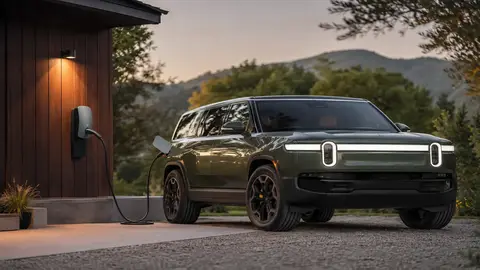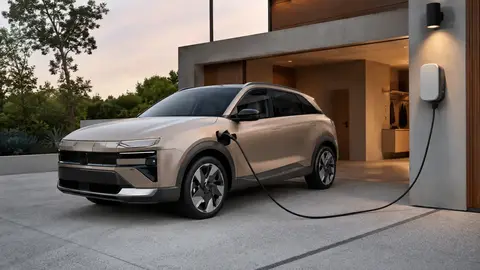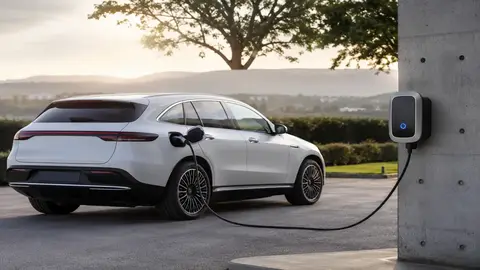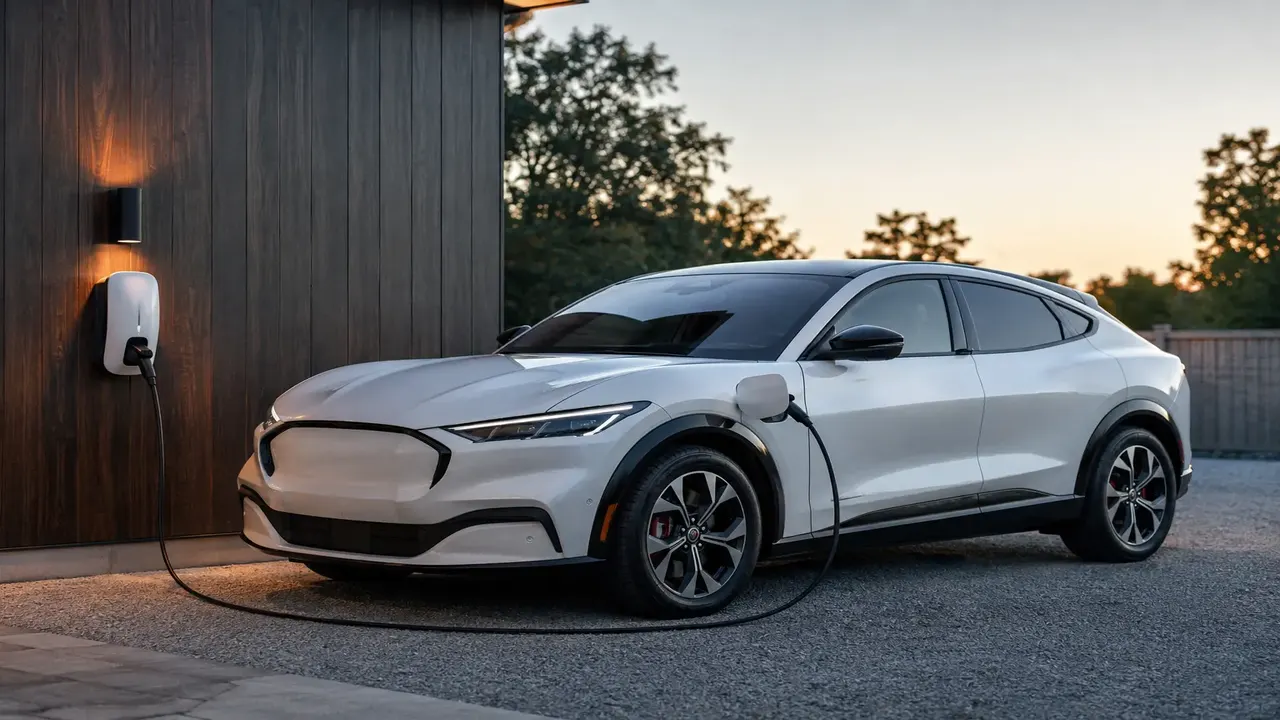
The difference comes down to battery size and whether you plug in. Hybrid (HEV): a small battery that charges itself; you never plug in. It cannot drive far on electricity but cuts fuel use, especially in town. Plug-in hybrid (PHEV): a bigger battery you charge from a socket, giving roughly 25-50 miles of electric-only driving before a petrol engine takes over for longer trips. Electric vehicle (EV): no engine, no fuel tank, a large battery and electric motor only, with zero tailpipe emissions and 200-350+ miles of range, charged entirely by plugging in. As a rule: efficiency and electric range rise from hybrid to PHEV to EV, while reliance on the grid rises with them.
Hybrid vs PHEV vs EV at a glance
| Feature | Hybrid (HEV) | Plug-in hybrid (PHEV) | Electric (EV) |
|---|---|---|---|
| Plug in? | No | Yes | Yes (only way to refuel) |
| Electric-only range | Very short (low speed) | ~25-50 miles | ~200-350+ miles |
| Has petrol engine? | Yes | Yes | No |
| Tailpipe emissions | Reduced | Reduced (if charged) | Zero |
| Best for | Town driving, no charging access | Short commutes + occasional trips | Daily driving with charging access |
| Typical price | Lowest of the three | Middle | Highest upfront |
One idea, three levels of electrification
Hybrids, plug-in hybrids and EVs sit on a spectrum. At one end, a hybrid is mostly a petrol car with electric help. At the other, an EV is purely electric. A plug-in hybrid sits in between, able to behave like an EV for short distances and a hybrid for long ones. The single most useful question for telling them apart is: how big is the battery, and do you plug it in?
Hybrid (HEV): electric help, no plug
A conventional or self-charging hybrid pairs a petrol engine with a small battery and electric motor. The battery charges itself from the engine and from regenerative braking, you never plug it in. It can creep along on electricity at low speed and for short bursts, but the petrol engine does most of the work. The benefit is meaningful fuel savings, especially in stop-start city traffic where the electric motor handles the inefficient low-speed work and recovers braking energy. A hybrid asks nothing new of you: fuel it like any petrol car.
Hybrids suit drivers who want better economy and lower emissions than a pure petrol car but have no convenient way to charge, or who do a lot of urban miles. They are typically the cheapest of the three to buy.
Plug-in hybrid (PHEV): two cars in one
A plug-in hybrid has a much bigger battery, charged from a socket or charge point, giving roughly 25-50 miles of electric-only driving depending on the model. For short daily journeys you can drive entirely on electricity, with zero tailpipe emissions, then call on the petrol engine for longer trips or when the battery runs down. In effect it behaves like an EV around town and a hybrid on a road trip, with no range anxiety.
A plug-in hybrid is genuinely efficient only when you keep the battery topped up. Driven on a flat battery, it lugs around a heavy pack and a petrol engine and can be less efficient than a normal hybrid. Real-world studies have found PHEVs that are not charged regularly emit far more CO2 than their official figures suggest. If you cannot or will not charge most days, a self-charging hybrid is the smarter choice.
Electric vehicle (EV): no engine at all
A full EV has no petrol engine and no fuel tank, just a large battery and one or more electric motors. It produces zero tailpipe emissions, delivers instant, quiet acceleration, and is cheapest per mile to run if you charge at home. Modern EVs typically offer 200-350+ miles of range and refuel by plugging in: overnight at home for daily use, or at a DC fast charger (often 10-80% in 20-40 minutes) on longer trips. The trade-off is that charging access is essential, and the upfront price is usually the highest of the three.
How they compare on the things that matter
| Priority | Best choice | Why |
|---|---|---|
| Lowest upfront price | Hybrid | Smallest battery, simplest electrification |
| Best fuel economy without charging | Hybrid | Self-charging; no plug needed |
| Short commute + occasional long trips | PHEV | Electric daily, petrol backup for distance |
| Lowest running cost per mile | EV | Cheap home charging, minimal maintenance |
| Zero tailpipe emissions | EV | No combustion engine at all |
| No charging access at all | Hybrid | Does not depend on plugging in |
Cost and running differences
Hybrids are cheapest to buy and ask nothing new of you. PHEVs cost more and only pay off if you charge them; their tax treatment is often favourable (notably low company-car tax in the UK), which makes them popular as business cars. EVs cost the most upfront but usually the least to run, with no oil changes, fewer moving parts and cheap home electricity. Maintenance falls as you move from hybrid to PHEV to EV, because there is progressively less engine to service.
Which should you choose?
- Choose a hybrid if you cannot charge at home, do lots of city miles, and want better economy with zero hassle.
- Choose a PHEV if you have charging access, most daily trips are short enough to do on electric, but you still need easy long-distance ability, and you will actually plug it in.
- Choose an EV if you can charge where the car sleeps, want the lowest running costs and zero tailpipe emissions, and your typical journeys fit comfortably within the range.
Regional notes
In the UK, company-car tax strongly favours EVs and well-specified PHEVs, and most owners charge at home on cheap off-peak tariffs. In the US, the federal purchase tax credits for new and used EVs ended on 30 September 2025, so the buying maths now leans more on running-cost savings; check state and utility incentives. In India, hybrids and EVs both attract policy support, but EV charging access varies widely by city, which makes hybrids and PHEVs a practical bridge for many buyers. Always price your own charging, incentives and insurance locally before deciding.
Frequently asked questions
Do you have to plug in a hybrid?
How far can a plug-in hybrid go on electricity alone?
Is a plug-in hybrid better than a normal hybrid?
What is the main difference between a PHEV and an EV?
Which is cheapest to run?
Sources & further reading
- U.S. News - Hybrid vs PHEV vs Electric: What's the Difference?
- Kelley Blue Book - Hybrids vs Plug-in Hybrids: What Are the Differences?
- US EPA - Electric & Plug-In Hybrid Electric Vehicles
Figures, prices and policy details were current at the last-updated date above. Automotive pricing, incentives and regulations change frequently — verify time-sensitive details with the linked primary sources. Read our editorial policy and fact-checking standards.