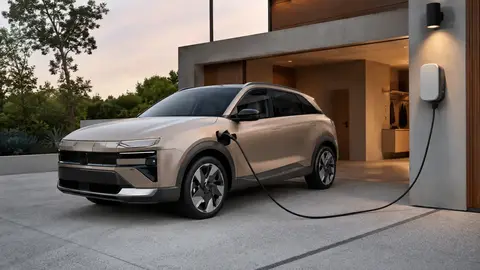
A hydrogen fuel cell car is an electric car that makes its own electricity. Instead of a big battery, it carries hydrogen in tanks and a fuel cell that combines hydrogen with oxygen to generate electricity on the move, emitting only water vapour. The appeal is fast refuelling, about 5 minutes, and long range (the Toyota Mirai is EPA-rated at around 400 miles). The catch is infrastructure and cost: refuelling stations are scarce (mostly California, Japan, South Korea and parts of Europe), hydrogen is expensive (recently around $30-36/kg in California, so over $150 to fill a Mirai), and only a few models exist, chiefly the Toyota Mirai and Hyundai Nexo.
Hydrogen fuel cell cars at a glance
| Aspect | Detail |
|---|---|
| What it is | Electric car powered by a hydrogen fuel cell, not a large battery |
| Emissions | Water vapour only at the tailpipe |
| Refuelling time | ~5 minutes, like a petrol car |
| Range | ~400 miles (e.g. Toyota Mirai, EPA estimate) |
| Fuel cost (California) | ~$30-36 per kg; $150+ to fill a Mirai recently |
| Main models | Toyota Mirai, Hyundai Nexo, Honda CR-V e:FCEV |
| Biggest obstacle | Very limited refuelling network |
What a hydrogen fuel cell car actually is
A hydrogen fuel cell electric vehicle (FCEV) is, in everyday terms, an electric car. It drives the wheels with an electric motor and feels much like a battery EV, quiet, smooth, instant torque. The difference is where the electricity comes from. Instead of storing a large amount of energy in a battery and charging it from the grid, an FCEV stores energy as hydrogen gas in high-pressure tanks and generates electricity on demand using a fuel cell.
How the fuel cell works
Inside the fuel cell, hydrogen from the tanks is combined with oxygen drawn from the surrounding air. A chemical reaction across a membrane produces electricity, with water as the only by-product. That electricity powers the motor (and tops up a small buffer battery that handles regenerative braking and surges). Because the only tailpipe output is water vapour, an FCEV produces zero harmful tailpipe emissions while driving. You refuel by connecting a nozzle to a pump and filling the tanks with compressed hydrogen, much like filling with petrol.
A battery EV stores electricity and you charge it. A hydrogen FCEV stores hydrogen and makes electricity as it drives. Both are electric cars; they differ only in how the energy is stored and replenished.
The genuine advantages
- Fast refuelling: filling the tanks takes about five minutes, comparable to petrol and far quicker than charging a battery EV.
- Long range: the Toyota Mirai is EPA-rated at roughly 400 miles, competitive with or beyond many battery EVs.
- Zero tailpipe emissions: only water vapour comes out.
- Light for the range: hydrogen is very energy-dense by weight, which is attractive for heavy or long-duty applications such as trucks and buses.
- Consistent in cold: less prone to the cold-weather range loss that affects battery EVs.
The serious drawbacks
For passenger cars, the obstacles are large and stubborn:
- Almost no refuelling network: stations are concentrated in California, Japan, South Korea and parts of Europe, and remain rare or non-existent elsewhere. Some California stations have even closed, stranding owners.
- Expensive fuel: hydrogen has recently cost around $30-36/kg in California, so filling a Mirai's ~5.6 kg tanks can top $150, far more per mile than home-charging a battery EV.
- Energy inefficiency: making hydrogen, compressing it, transporting it and converting it back to electricity wastes a lot of energy. Well-to-wheel, an FCEV uses roughly two to three times the renewable electricity of a battery EV for the same distance.
- Few models: the choice is essentially the Toyota Mirai, Hyundai Nexo and Honda CR-V e:FCEV.
- Not all hydrogen is clean: most hydrogen today is grey hydrogen made from natural gas, which carries significant emissions. Truly clean motoring depends on green hydrogen made with renewable electricity.
Cost of running one
| Item | Hydrogen FCEV | Battery EV (home charging) |
|---|---|---|
| Refuel/recharge time | ~5 minutes | Overnight; 20-40 min on a fast charger |
| Energy cost | High (~$150+ per fill in CA) | Low (cheap home electricity) |
| Range | ~400 miles | ~200-350+ miles |
| Network availability | Very limited | Widespread and growing |
| Tailpipe emissions | Water vapour only | None |
Manufacturers often soften the fuel-cost problem with incentives, Toyota has bundled several years of complimentary hydrogen with the Mirai, but that does not fix the underlying price or the lack of stations.
Where hydrogen makes more sense
The clearest case for hydrogen is not cars at all, it is heavy transport. Trucks, buses, trains and potentially shipping and aviation are hard to electrify with batteries because the batteries would be enormous and slow to charge. There, hydrogen's fast refuelling and high energy-by-weight are real advantages, and fleets refuel at a small number of depots rather than needing a nationwide consumer network. For most private buyers, a battery EV is the more practical electric car today; hydrogen remains a long-term bet that hinges on cheaper green hydrogen and far better infrastructure.
Regional snapshot
US: effectively California-only for refuelling, with a fragile and sometimes shrinking network. UK and Europe: a handful of stations and pilot fleets; Germany and a few others are investing, but passenger uptake is tiny. Asia: Japan and South Korea have the most developed networks and the strongest policy backing for FCEVs. India: early-stage, with green-hydrogen ambitions focused more on industry and heavy transport than private cars.
Frequently asked questions
Are hydrogen cars electric cars?
How long does it take to refuel a hydrogen car?
Why are hydrogen cars not more common?
Do hydrogen cars pollute?
Is hydrogen better than battery EVs?
Sources & further reading
- Cars.com - How Much Is the 2025 Toyota Mirai?
- InsideEVs - Toyota Mirai: the cost of hydrogen
- TopSpeed - How Much It Costs To Refill A Hydrogen Toyota Mirai
Figures, prices and policy details were current at the last-updated date above. Automotive pricing, incentives and regulations change frequently — verify time-sensitive details with the linked primary sources. Read our editorial policy and fact-checking standards.