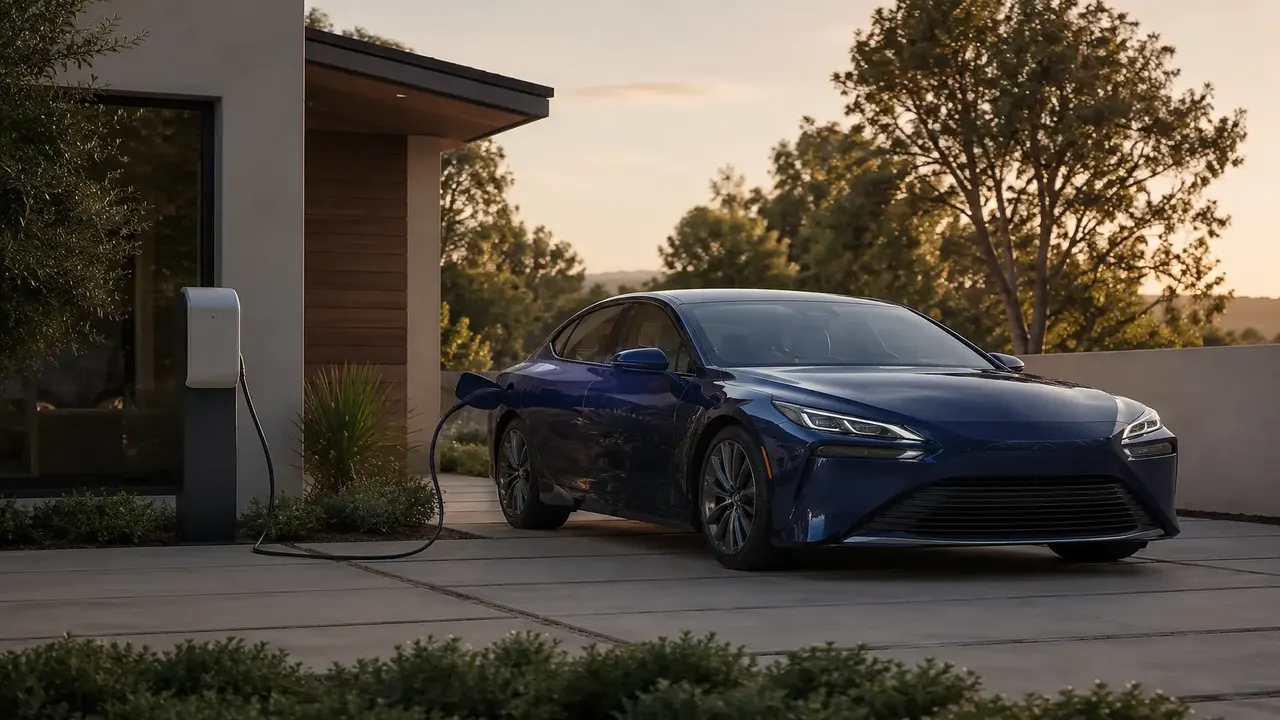
Vehicle Overview
The Toyota Mirai, first introduced in 2014, was the world’s first mass-produced hydrogen fuel-cell sedan — a bold step in Toyota’s quest for zero-emission mobility beyond traditional battery-electric vehicles (BEVs).
Now in its second generation (launched in 2020), the Mirai has evolved into a luxury, rear-wheel-drive sedan built on Toyota’s GA-L platform (shared with the Lexus LS). It combines refined design, executive comfort, and zero-emission fuel-cell technology, offering a unique alternative to both electric and hybrid cars.
For 2025, the Mirai continues as Toyota’s hydrogen flagship, offering long range, quick refueling, and Lexus-level comfort — competing with the Hyundai Nexo and premium electric sedans like the Tesla Model S and Mercedes EQE.
Key Specifications (2025 Toyota Mirai FCEV)
| Specification | Details |
|---|---|
| Platform | Toyota GA-L (Rear-Wheel Drive) |
| Powertrain | Hydrogen Fuel-Cell Electric Vehicle (FCEV) |
| Motor Output | 182 hp (134 kW) |
| Torque | 300 Nm |
| Transmission | Single-speed automatic |
| Drivetrain | Rear-wheel drive (RWD) |
| 0–62 mph (0–100 km/h) | 9.0 seconds |
| Top Speed | 108 mph (175 km/h) |
| Hydrogen Tank Capacity | 5.6 kg (3 tanks, 700 bar pressure) |
| Range (WLTP) | Up to 400 miles (647 km) |
| Refueling Time | Approx. 5 minutes |
| Energy Efficiency (Hydrogen) | ~0.89 kg H₂ per 100 km |
| Length / Width / Height | 4,975 mm / 1,885 mm / 1,470 mm |
| Boot Capacity | 321 L |
| Kerb Weight | 1,900–1,950 kg |
Exterior Design
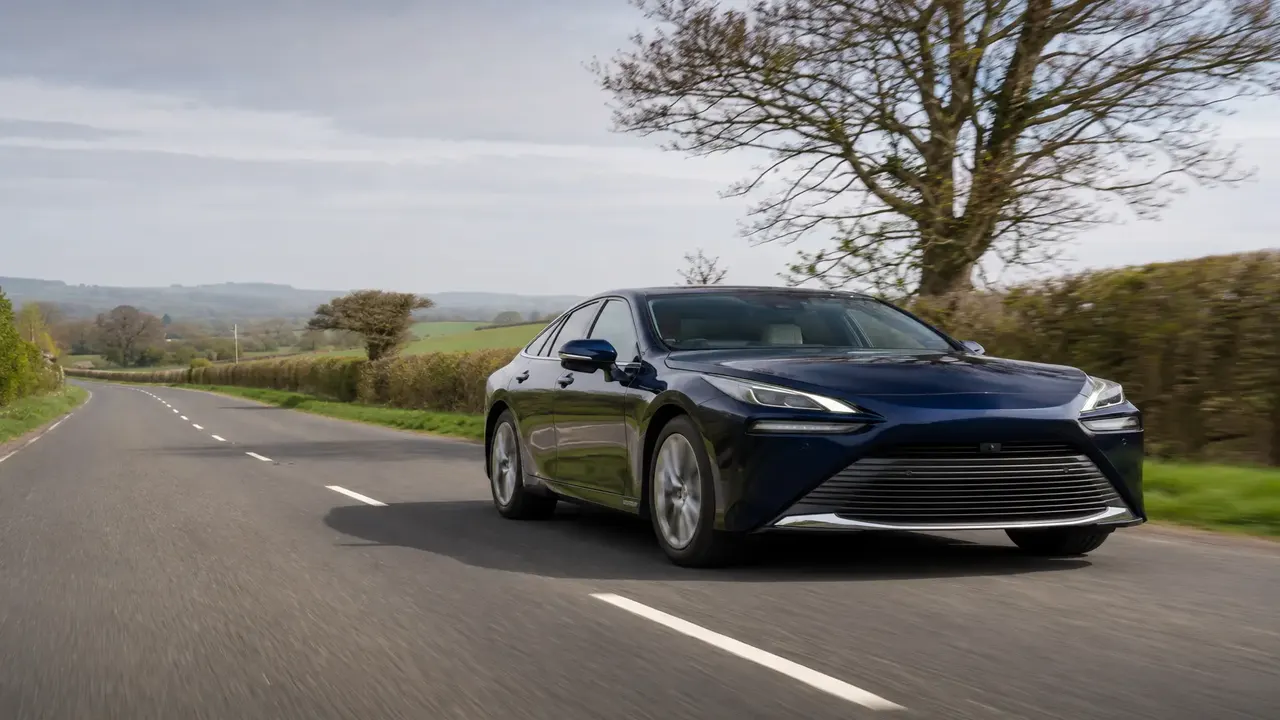
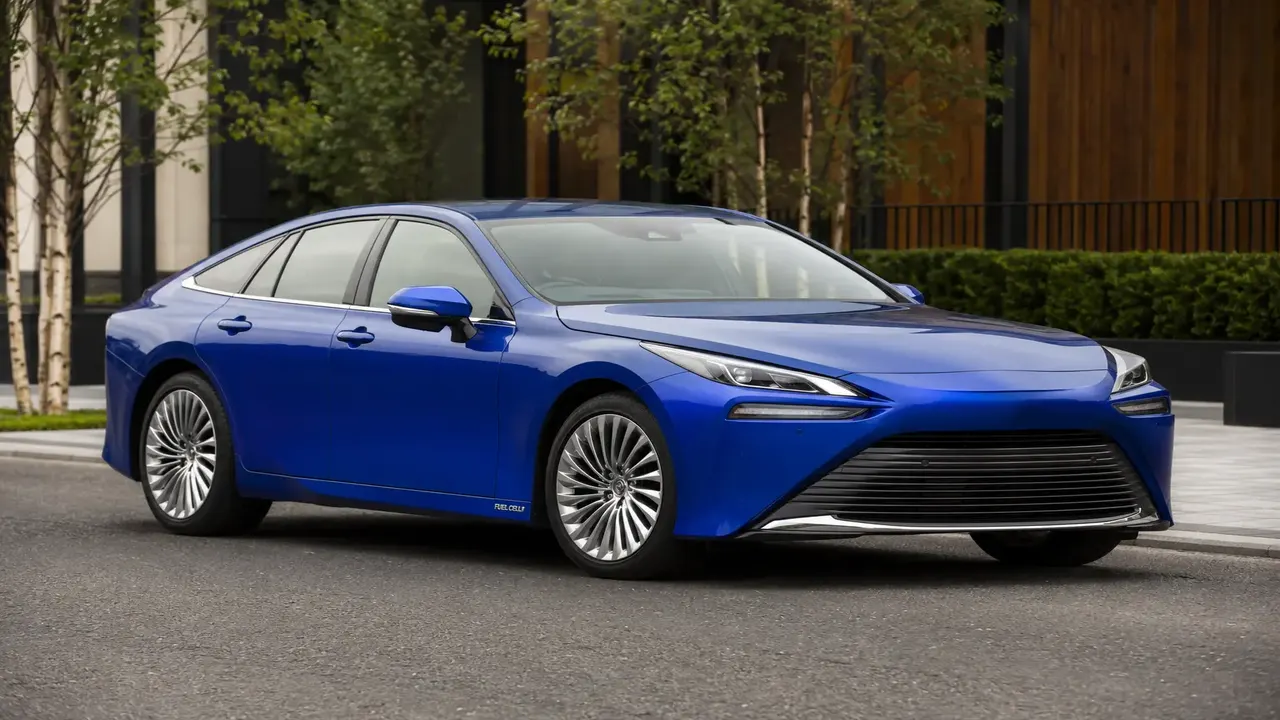
The Toyota Mirai combines sleek, futuristic styling with elegant executive-car proportions. It’s longer, wider, and lower than its predecessor, giving it genuine luxury-sedan presence.
Design highlights
Coupe-inspired silhouette with long wheelbase and low stance
Narrow LED headlights with “hammerhead” signature
Flush aerodynamic panels for improved airflow
Distinctive full-width LED rear light bar
18-inch or 20-inch alloy wheels (depending on trim)
Subtle blue accents denoting hydrogen fuel-cell technology
Optional bi-tone paint schemes
The Mirai’s refined design bridges futuristic technology with timeless elegance — it looks as clean as the energy it runs on.
Interior, Comfort & Materials
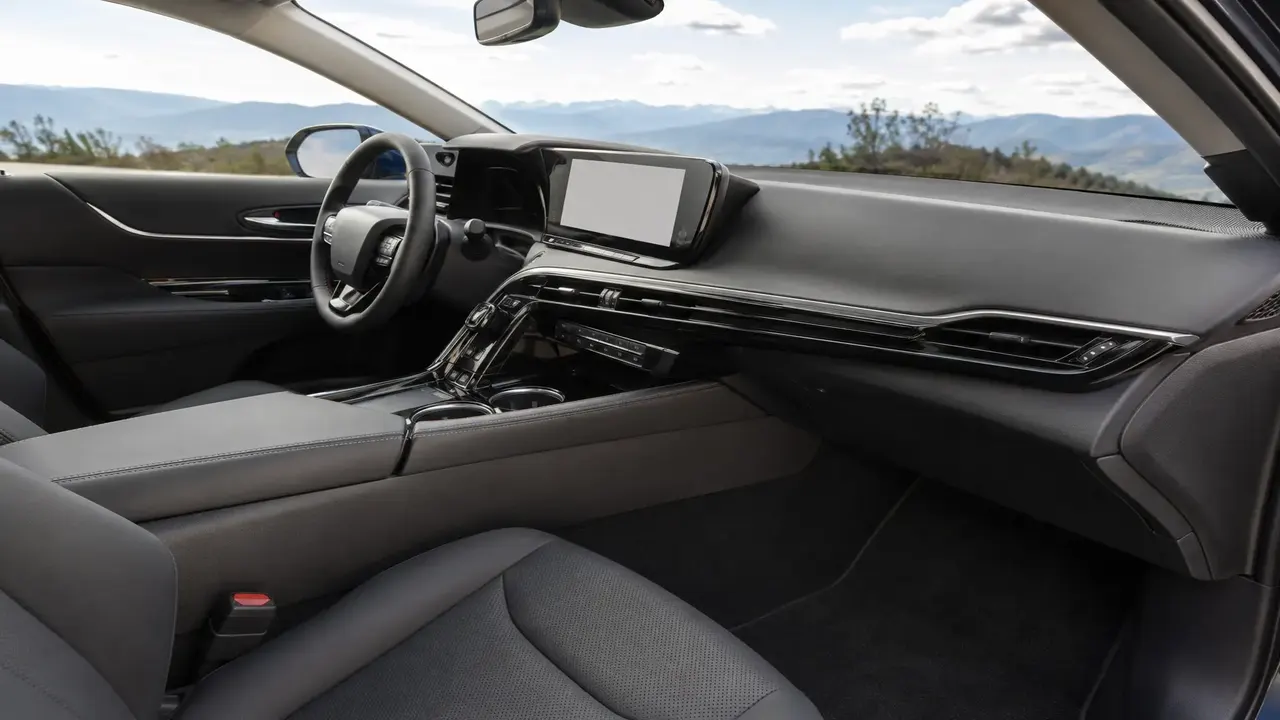
Inside, the Mirai offers a premium, Lexus-like experience, with top-tier materials and craftsmanship throughout.
Interior highlights
12.3-inch central touchscreen (Smart Connect+)
8-inch digital driver’s display
Optional head-up display (HUD)
Heated and ventilated leather seats (front and rear)
Ambient interior lighting
Soft-touch dashboard with metallic accents
Tri-zone automatic climate control
Quiet cabin with advanced sound insulation
Rear passenger controls for audio and climate (top trims)
It’s serene, sophisticated, and impeccably built — an environment designed for silent, zero-emission motoring.
Features & Infotainment
The Mirai’s technology package rivals that of premium executive sedans.
12.3-inch high-resolution touchscreen
Wireless Apple CarPlay & Android Auto
Integrated cloud navigation & OTA updates
JBL Premium Sound System (14 speakers)
Wireless phone charging + USB-C ports
Digital key (MyT app)
Surround-view 360° camera
Voice recognition (“Hey Toyota”)
Connected services for vehicle status and route planning
The infotainment is fast, intuitive, and connected — befitting a cutting-edge hydrogen flagship.
Safety & Ratings
The Mirai includes the full Toyota Safety Sense 3 suite. Euro NCAP rated it five stars in September 2021: adult occupant 88%, child occupant 85%, vulnerable road users 80%, safety assist 82% (Euro NCAP, checked 2 October 2026).
Key safety features
Pre-Collision System with pedestrian & cyclist detection
Adaptive Cruise Control with Stop & Go
Lane Tracing Assist & Lane Departure Alert
Traffic Sign Recognition
Blind Spot Monitor & Rear Cross-Traffic Alert
Safe Exit Assist
Automatic High Beam Assist
Parking sensors and 360° view monitor
Hydrogen safety system with multiple pressure sensors and auto-shut valves
Hydrogen tanks are carbon-fibre reinforced and rigorously tested, ensuring world-class safety standards.
Driving Performance
The Mirai isn’t designed to be fast — it’s designed to be refined, smooth, and serene. Its power delivery is instant and whisper-quiet, typical of electric propulsion, with Toyota’s engineering precision evident in every drive.
Driving impressions
Instant torque and linear acceleration from the electric motor
Smooth, near-silent operation — no vibration or noise
RWD layout delivers balanced, composed handling
Adaptive suspension absorbs imperfections effortlessly
Excellent steering stability and comfort on motorways
| Selectable drive modes | Eco, Normal, Sport |
It’s luxurious and effortless, offering the comfort of a grand tourer with the zero-emission purity of hydrogen power.
Efficiency / Hydrogen Fuel-Cell System
The Mirai’s second-generation fuel-cell stack is more compact, lighter, and 10% more efficient than before.
| Fuel cell output | 128 kW (173 hp equivalent) |
| Efficiency | 0.89 kg hydrogen / 100 km |
| Range | Up to 400 miles (WLTP) |
| Refueling | Full tank in around 5 minutes |
| Hydrogen storage | 3 tanks, 5.6 kg total at 700 bar pressure |
| Emissions | Only water vapour |
This makes the Mirai one of the cleanest and fastest-refuelling zero-emission vehicles on sale today.
Practicality & Everyday Usability
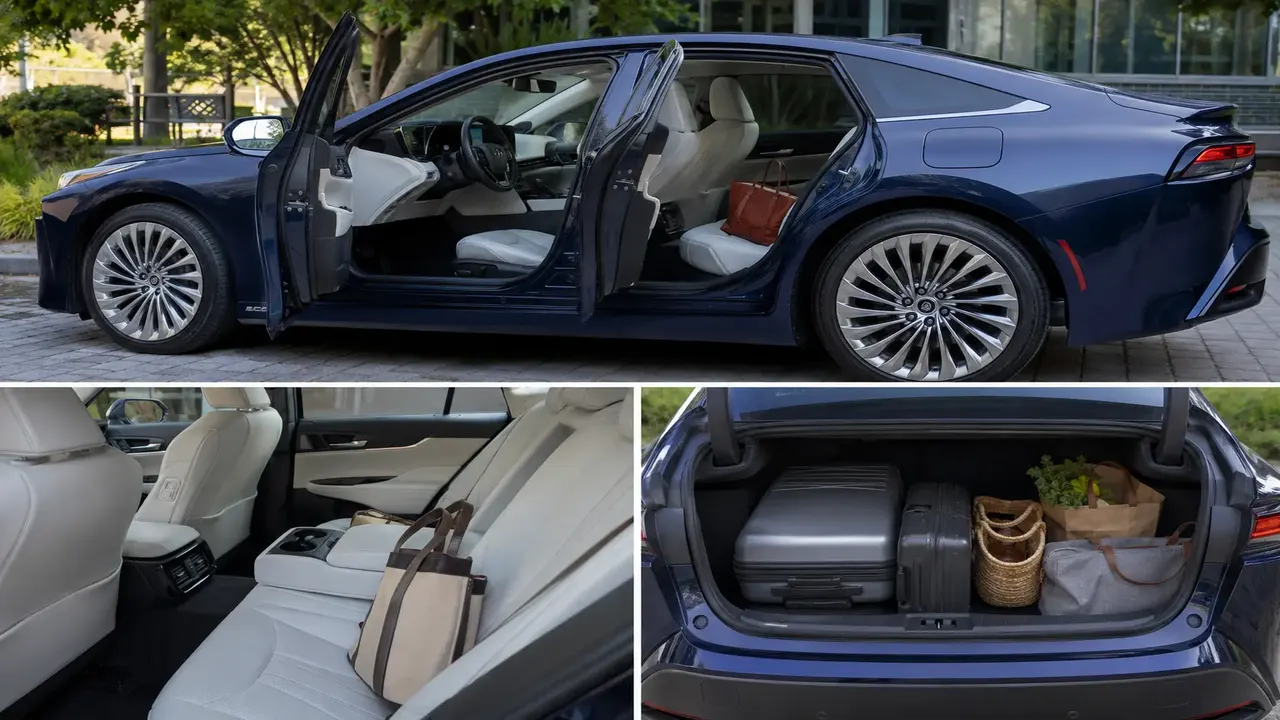
Though sleek and luxurious, the Mirai is still a practical four-door sedan.
Seating for five (best for four adults in comfort)
| Boot space | 321 L (limited by hydrogen tanks) |
Flat, open cabin design with excellent rear legroom
Smooth ingress/egress due to low sill height
Rear climate and infotainment controls (on high trims)
| Refueling time | just 5 minutes for 400 miles of range |
The only compromise is limited boot capacity and hydrogen station availability, but for early adopters, the usability is otherwise excellent.
Warranty & Maintenance
| Vehicle warranty | 3 years / 60,000 miles (extendable to 10 years via Toyota Relax servicing) |
| Fuel-cell system warranty | 8 years / 100,000 miles |
| Hydrogen tank warranty | 10 years (manufacturer-backed) |
| Service interval | Every 12 months or 10,000 miles |
| Roadside assistance | 1 year included |
As with all Toyotas, the Mirai offers outstanding reliability — backed by the brand’s global hybrid and FCEV expertise.
Price & Value for Money
| Trim | Powertrain | Starting Price (UK) |
|---|---|---|
| Design | Hydrogen Fuel Cell (RWD) | ~£51,000 |
| Design Plus / Limited Edition | Hydrogen Fuel Cell (RWD) | ~£55,000 |
| Excel Premium | Hydrogen Fuel Cell (RWD) | ~£65,000 |
While niche, the Mirai’s luxury, range, and refinement justify its price — especially for eco-conscious fleet or executive buyers.
Comparison with Rivals
| Model | Powertrain | Range | Refueling | Price |
|---|---|---|---|---|
| Toyota Mirai | Hydrogen FCEV | 400 mi | 5 min | £51k |
| Hyundai Nexo | Hydrogen FCEV | 414 mi | 5 min | £66k |
| Tesla Model S | Battery EV | 405 mi | 30 min (Supercharger) | £92k |
| Mercedes EQE 350 | Battery EV | 385 mi | 30 min | £75k |
The Mirai offers zero-emission mobility with instant refueling, a major advantage over pure EVs in regions with hydrogen infrastructure.
Pros & Cons
Pros
- Zero-emission hydrogen power with long range
- Quick 5-minute refueling
- Refined RWD handling and smooth ride
- Luxurious, quiet, and high-quality interior
- Cutting-edge Toyota engineering and safety
Cons
- Limited hydrogen refueling infrastructure
- Small boot space
- Modest performance vs electric rivals
⭐ Overall Rating: ★★★★☆ (4.6 / 5)
True Motion Auto has not independently road-tested this vehicle. Specifications, pricing and performance figures are compiled from manufacturer technical data and published independent tests, and are attributed where quoted. Our score reflects a structured research assessment of specifications, pricing, safety data and owner feedback for the segment — not an independent road test. Read how we review cars.
Final Verdict
The 2025 Toyota Mirai is a technological masterpiece — a luxury sedan powered by hydrogen, offering the comfort of a Lexus and the eco-friendliness of a true zero-emission vehicle.
More Toyota reviews: Toyota Aygo X Review, Toyota bZ4X Review and Toyota C-HR Review.
It’s not for everyone yet, but for those living near hydrogen hubs or corporate fleets prioritizing sustainability, the Mirai is a glimpse into the future of mobility — silent, sophisticated, and sustainable.
| Who it’s for | Eco-conscious professionals, government fleets, and tech-forward drivers who want to pioneer hydrogen mobility without sacrificing luxury or convenience. |
Buyer checkpoints
| Buyer checkpoint | True Motion Auto view |
|---|---|
| Best for | Drivers wanting balanced everyday usability. |
| Body style | Saloon/Fastback |
| Powertrain focus | Hydrogen fuel-cell electric |
| UK ownership note | Check insurance group, VED, charging or fuel costs and service-plan pricing before buying. |
| Verdict | Worth shortlisting if its size, running costs and equipment match your daily use. |
Frequently asked questions
Is the Mirai good for UK roads?
Should I buy new or used?
What should I check before ordering?
Is it suitable for families?
Specifications, prices and equipment were current at publication and vary by model year, trim and market. Verify final details with a franchised dealer before ordering. Read how we review cars and our editorial policy.