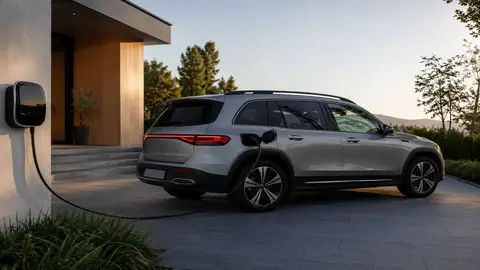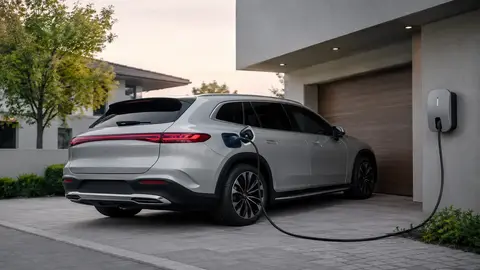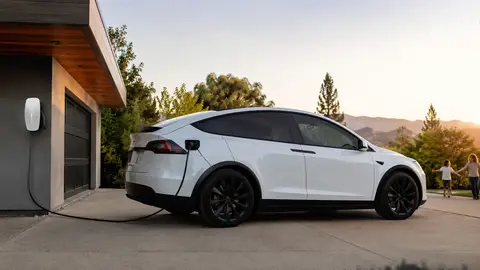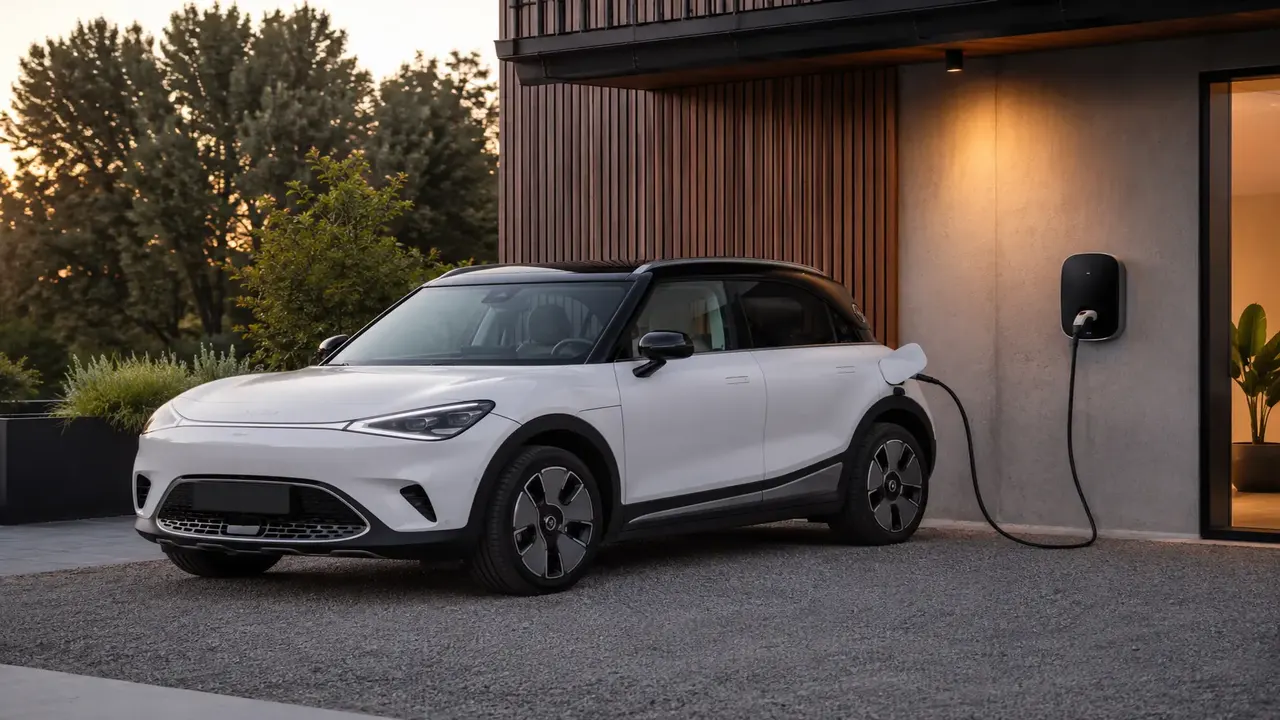
A smart grid uses two-way communication to balance supply and demand in real time — and parked EVs are ideal for it. Through smart (managed) charging, vehicles shift charging to off-peak hours using price signals or grid conditions; analyses show active managed charging can roughly double a distribution grid's EV hosting capacity. Through demand response, plugged-in EVs pause or reduce charging when the grid is stressed, often in exchange for lower rates. Through vehicle-to-grid (V2G), EVs feed energy back during peaks — major automakers are rolling out V2G- and V2H-ready platforms through 2026. The result: EVs can stabilise the grid rather than strain it.
Three ways EVs support the grid
| Mechanism | What it does | Benefit |
|---|---|---|
| Smart / managed charging | Shifts charging to off-peak | Can ~double EV hosting capacity |
| Demand response | Pauses/reduces charging on demand | Eases peaks; rewards drivers |
| Vehicle-to-grid (V2G) | EV feeds power back to grid | Peak support; virtual power plants |
| Vehicle-to-home (V2H) | EV powers the home | Backup power; bill savings |
| Time-of-use tariffs | Price signal to shift load | Cheaper charging, flatter demand |
What a smart grid is
A traditional grid pushes power one way, from generation to consumers, and balances supply by ramping power stations up and down. A smart grid adds two-way communication and control, so demand can flex to match supply — increasingly important as variable solar and wind grow. Electric vehicles fit this model almost perfectly: they are large, flexible loads that sit plugged in for hours, mostly when they are not needed urgently. That flexibility is the key to turning EVs from a perceived problem into a grid asset.
Smart charging: shifting load, not adding peaks
The foundation is smart (managed) charging. Instead of every EV drawing full power the moment it plugs in, smart charging shifts and modulates that draw using price signals, grid conditions or user preferences — typically toward the off-peak overnight hours when demand is low. Utilities run managed-charging programmes, often with automakers and software providers, to spread EV load and prevent it from creating new peaks.
The headline benefit is striking: analyses show active managed EV charging can roughly double a distribution grid's EV hosting capacity. In plain terms, smart charging lets roughly twice as many EVs connect to the same local infrastructure before upgrades are needed — a huge saving in deferred grid investment.
Demand response: rewarding flexibility
Demand response goes a step further, treating EVs as a resource the grid can call on. When the system is stressed — a hot afternoon, a generation shortfall — enrolled EVs automatically pause or reduce charging for a period, then resume when conditions ease. Because most charging is overnight and not time-critical, this is usually invisible to the driver. In return, utilities offer lower rates, bill credits or other rewards. Aggregated across thousands of vehicles, the effect is equivalent to a flexible power resource the grid can lean on at peak.
An EV typically sits plugged in far longer than it needs to charge. A car that needs three hours of charging but is parked for ten gives the grid seven hours of flexibility — to pause, slow or shift the charging without the owner ever noticing. That slack, multiplied across a fleet, is enormously valuable.
Vehicle-to-grid and vehicle-to-home
The most advanced step makes the flow bidirectional. With vehicle-to-grid (V2G), an EV can feed energy back into the grid during peak demand, effectively acting as a distributed battery. With vehicle-to-home (V2H), it can power a house during an outage or to avoid expensive peak electricity. Aggregated EV fleets are already piloting virtual power plant (VPP) and demand-response programmes, and major automakers — including GM, Ford, Hyundai/Kia and Tesla — are rolling out V2G- and V2H-ready platforms, with wider implementation targeted through 2026.
V2G is still maturing: it needs compatible hardware, supportive tariffs and market rules, and it adds some cycling to the battery. But the potential is large — load shifting and V2G can reduce peak demand and limit the need for new grid and generation investment.
What it means for drivers
- Cheaper charging: time-of-use tariffs and smart charging move your charging to the lowest-cost hours automatically.
- Get paid for flexibility: demand-response and (emerging) V2G programmes can reward you for letting the grid manage your charging.
- Backup power: V2H lets a capable EV power your home during an outage.
- A cleaner grid: shifting charging to off-peak and renewable-rich hours lowers the emissions of the electricity you use.
How to participate
- Enable smart-charging or scheduled-charging features in your car or home charger.
- Switch to a time-of-use or EV-specific electricity tariff if your supplier offers one.
- Check whether your utility runs a managed-charging or demand-response programme and enrol.
- If you are buying, look for V2G/V2H capability and the hardware (a bidirectional charger) needed to use it.
- Review the terms — understand any limits on charging windows and the rewards offered.
The bigger picture
Demand response and V2G reframe the entire EV-and-grid debate. The worry that EVs will overload the grid assumes they are passive, uncontrolled loads. In a smart grid they are the opposite: flexible, controllable and — increasingly — able to give energy back. As more vehicles, tariffs and programmes come online through 2026 and beyond, a large EV fleet looks less like a threat to grid stability and more like one of its most useful tools.
Frequently asked questions
What is smart charging?
What is EV demand response?
What is vehicle-to-grid (V2G)?
How do I benefit from smart charging and demand response?
Do these programmes drain my battery or leave me without charge?
Sources & further reading
- IEA — Vehicle-to-grid technology
- Utility Dive — Utilities use managed charging to harness EV flexibility
- CleanTechnica — Active managed EV charging can double EV hosting capacity
Figures, prices and policy details were current at the last-updated date above. Automotive pricing, incentives and regulations change frequently — verify time-sensitive details with the linked primary sources. Read our editorial policy and fact-checking standards.