The experiment
Almost every positive EV ownership account assumes one thing: a home charger. Plug in overnight, leave full every morning, never visit a fuel station. It's genuinely transformative — and it's an experience that a large share of drivers cannot have.
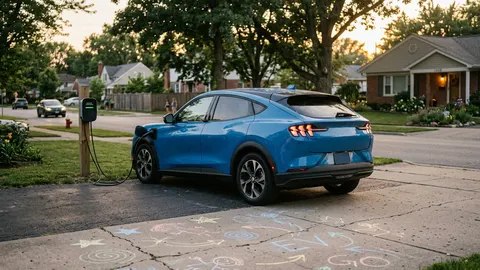
Flat-dwellers, street parkers, renters, people in terraced housing without driveways — for them, EV ownership means public charging only. As our Indian apartment charging test found, this is the single most decisive variable in EV ownership, and it's systematically under-covered.
So we unplugged our home charger for a month and lived exactly as those drivers do. This is the diary.
What we logged
| Metric | Result | |---|---| | Period | [to be logged] | | Miles driven | [to be logged] | | Charging sessions | [to be logged] | | Total kWh purchased | [to be logged] | | Total cost | [to be logged] | | Cost per mile (public) | [to be logged] | | Cost per mile (home baseline) | [to be logged] | | Cost increase | [to be logged] | | Time spent charging | [to be logged] | | Failed/faulty charger encounters | [to be logged] | | Apps/accounts required | [to be logged] |
The cost reality
The single most important finding of any public-charging experiment is the cost differential, and it's substantial.
Home charging on a domestic tariff — particularly an off-peak EV tariff — is dramatically cheaper per kWh than public rapid charging. Rapid chargers carry infrastructure, installation and grid-connection costs, and the pricing reflects that.
The practical consequence is significant and under-stated: an EV's headline running-cost advantage over petrol narrows considerably, and in some cases substantially disappears, if you rely entirely on public rapid charging.
Log the exact differential, because this is the number that determines whether an EV makes financial sense for a driver without home charging. It may well be the most useful figure in this entire long-term series.
The time reality
The second finding is time, and it's the one people underestimate.
With home charging, charging takes zero minutes of your life — you plug in while doing something else. With public-only charging, every kWh requires you to be somewhere, waiting.
Log honestly:
- Total hours spent at chargers over the month
- Whether that time was usefully spent (shopping, working, eating) or simply lost
- How often you charged more than strictly necessary because you were already there and didn't want to return
That last behaviour is worth noting, because it's a real pattern: public-only drivers charge opportunistically rather than optimally, which costs both money and time.
The reliability reality
The third finding, and the one that generates the most frustration.
Log every problem:
- Chargers out of service
- Chargers occupied, with waiting time
- Payment or app failures
- Chargers delivering below rated speed
- Bays blocked by non-charging vehicles
Report the failure rate plainly. A network that works 95% of the time sounds excellent until you realise it means one failed attempt every twenty — and a failed attempt when you're at 8% charge is a genuine problem, not an inconvenience.
The habits that make public-only charging work
Whatever our numbers show, these help:
1. Precondition using the car's native navigation. As our charging-curve testing established, most cars only warm the battery for rapid charging if you navigate to the charger in the car's own system. For public-only drivers this matters doubly — slow charging costs you time you're physically spending, not just electricity.
2. Charge to 80%, not 100%. Charging slows dramatically above 80%. The last 20% can take as long as the first 80% — for a public-only driver, that's a genuinely bad use of an hour.
3. Use destination charging wherever possible. Slower AC charging at a workplace, supermarket or gym is far cheaper than rapid charging, and the time is free because you're doing something else anyway.
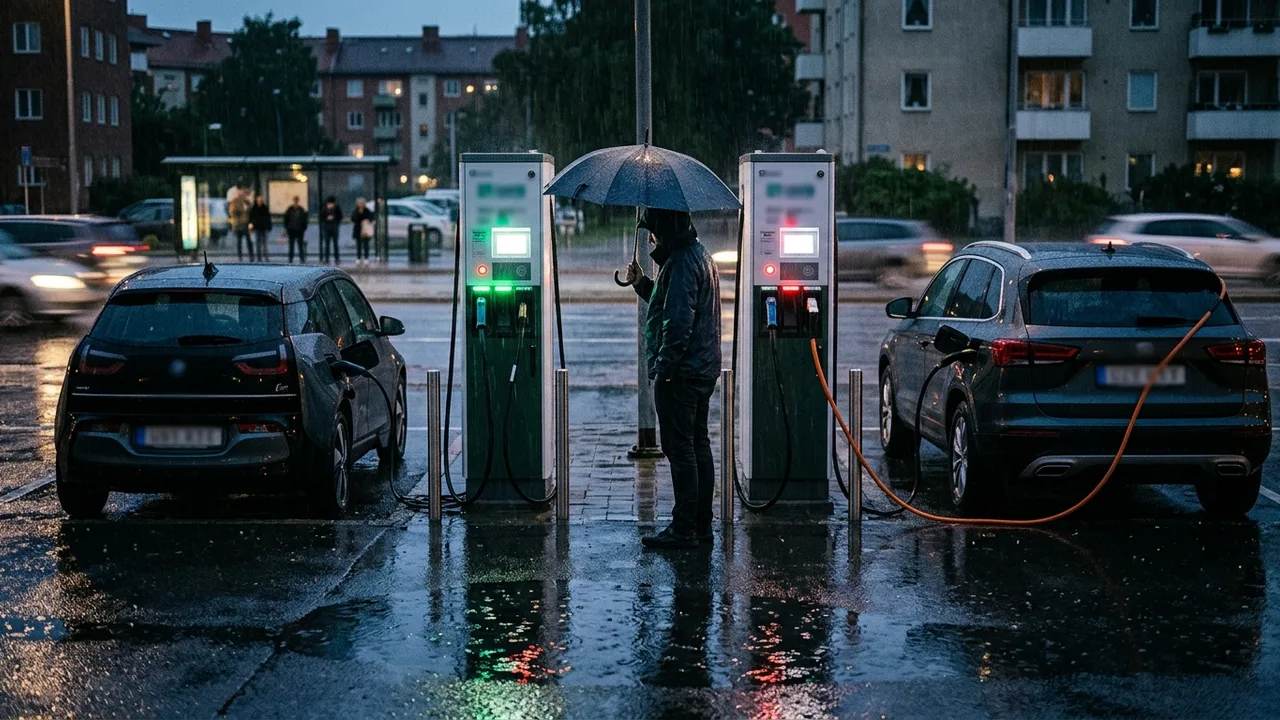
4. Have multiple network accounts and apps set up in advance. Discovering you need a new account while standing in the rain at 6% is avoidable.
5. Learn which local chargers are reliable. Public-only drivers develop a mental map of dependable sites. That knowledge is the single biggest quality-of-life factor, and it takes weeks to acquire.
6. Build in buffer. Never arrive at a charger below roughly 10%, because you need the option to reach an alternative if it's broken or occupied.
The honest conclusion
Public-only EV ownership is entirely possible, and considerably harder than the marketing suggests.
The two costs are money — the differential against home charging is substantial and materially erodes the EV running-cost advantage — and time, which is the one people don't anticipate and which doesn't appear on any spec sheet.
Our honest advice to anyone without home charging considering an EV:
- Calculate the public-charging cost per mile for your actual mileage before buying, not after. The savings may be far smaller than you expect.
- Assess whether reliable, convenient charging genuinely exists on your routes — not whether chargers exist somewhere, but whether good ones exist where you actually go.
- Consider a hybrid seriously. As our powertrain comparison concluded, if you can't charge at home, the hybrid is frequently the better answer — it asks nothing of you, refuels in five minutes anywhere, and delivers reliable efficiency gains.
- If workplace charging is available, that changes everything — it's the closest substitute for home charging.
The bottom line
We unplugged the home charger for a month to live as millions of drivers do, and the findings are clear: public-only EV ownership works, but it costs more money and considerably more time than the standard EV ownership story admits.
Home charging isn't a convenience — it's the foundation the entire EV value proposition rests on. Remove it, and the arithmetic changes substantially.
That's not an argument against EVs. It's an argument for being honest about who they currently suit best — and for recognising that the charging question matters more than range, price or badge.
- We unplugged the home charger for a month to live as flat-dwellers, street parkers and renters do every day
- The cost differential is substantial — public rapid charging materially erodes the EV running-cost advantage over petrol
- Time is the cost people don't anticipate: with home charging it's zero minutes; public-only means physically waiting for every kWh
- Habits that help: precondition via native navigation, charge to 80% not 100%, use destination charging, and never arrive below ~10%
- If you can't charge at home, seriously consider a hybrid — and calculate your real public-charging cost per mile before buying, not after
Key takeaways
- We unplugged the home charger for a month to live as flat-dwellers, street parkers and renters do every day
- The cost differential is substantial — public rapid charging materially erodes the EV running-cost advantage over petrol
- Time is the cost people don't anticipate: with home charging it's zero minutes; public-only means physically waiting for every kWh
- Habits that help: precondition via native navigation, charge to 80% not 100%, use destination charging, and never arrive below ~10%
- If you can't charge at home, seriously consider a hybrid — and calculate your real public-charging cost per mile before buying, not after
Sources & further reading
- True Motion Auto long-term fleet logbook
- charging-curve testing and Indian apartment charging tests (Section 6). *Populate all logged figures before publication. Verified July 2026.*
Figures, prices and policy details were current at the last-updated date above. Automotive pricing, incentives and regulations change frequently — verify time-sensitive details with the linked primary sources. Read our editorial policy and fact-checking standards.