Testing the theory against a British winter
Our instrumented section established what winter should cost an EV: 15–35% of range, with the heat pump the single strongest predictor of where a given car lands.
This report tests that theory against a real British winter, on a car we're running daily, on routes we drive anyway. It's the difference between a controlled measurement and lived experience — and lived experience is where the practical lessons emerge.
What we logged
| Metric | Result | |---|---| | Period covered | [to be logged] | | Average ambient temperature | [to be logged] | | Coldest day recorded | [to be logged] | | Summer/mild baseline range | [to be logged] | | Winter measured range | [to be logged] | | Percentage loss | [to be logged] | | Summer mi/kWh | [to be logged] | | Winter mi/kWh | [to be logged] | | Heat pump fitted? | [to be recorded] | | Charging cost increase | [to be logged] |
All measurements taken with cabin climate set to 21°C, per our standing methodology. We do not switch off heating to flatter a figure, because nobody drives that way in January.
The two habits that genuinely change winter EV ownership
Whatever our car's numbers show, these two behaviours matter more than any specification — and most owners don't know about them.
1. Precondition while still plugged in
This is the single most effective thing an EV owner can do in winter, and it costs nothing from the battery.
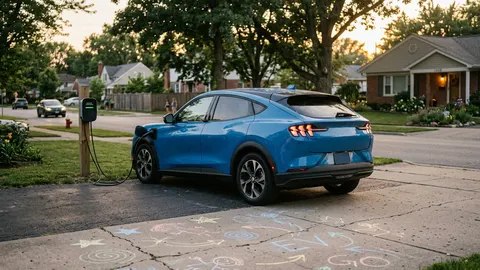
Warming the cabin and the battery using grid power before you unplug means you set off with a warm car and a pack already in its efficient operating window. The energy comes from your home supply rather than your range.
The difference is substantial, and it converts winter's biggest penalty — heating a cold cabin from a cold battery — into a cost you pay on your electricity bill rather than in miles.
Most owners don't do this, either because they don't know it's possible or because they forget to schedule it. Set a departure time in the car's app and let it happen automatically.
2. Use the car's own navigation before rapid charging
This is the one that genuinely surprises people, and it's the most under-communicated aspect of EV ownership.
Cold batteries charge slowly — the management system severely limits power to protect the cells. On a winter morning, an unpreconditioned pack might accept a fraction of its rated peak, turning a 25-minute stop into an hour.
Most modern EVs precondition the battery for rapid charging automatically — but only if you navigate to the charger using the car's native navigation system. Drive there knowing the way, and the car has no idea it needs to warm the pack.
The practical instruction is simple: always set the charger as a destination in the car's own navigation, even when you know exactly where it is. In cold weather that single habit can halve your charging time, and it costs nothing.
What the cold actually takes
The mechanisms, in order of impact:
1. Cabin heating — usually the largest factor. A resistive heater converts electricity to heat at roughly 1:1 — every kilowatt of warmth costs a kilowatt of range. A heat pump moves heat instead, typically delivering 2–3 kW of warmth per kilowatt consumed. On a cold day that single component can account for 10–15 percentage points of range.
2. Reduced battery efficiency. Lithium-ion chemistry is genuinely less efficient cold — internal resistance rises and available capacity drops until the pack warms.
3. Battery thermal management. In severe cold the car spends energy heating its own battery.
4. Increased rolling resistance. Cold tyres, cold lubricants and denser air all add drag. Winter tyres typically cost a few percent more.
5. Ancillaries. Demisting, heated seats, heated steering wheel, lights and wipers — in a British winter you're often running all of them at once.
The mitigations, ranked by effectiveness
- Precondition while plugged in — most effective, costs nothing from the battery
- Use heated seats and steering wheel instead of cabin air — heating a body directly is dramatically more efficient than heating the whole cabin volume
- Park indoors where possible — a garage keeps the pack warmer overnight
- Set the charger in native navigation before rapid charging — can halve cold-weather charging time
- Accept a slightly cooler cabin — every degree costs range, though this is a comfort trade rather than a technical one
What we'd tell a prospective buyer
1. Buy on winter range, not summer range. Take the official figure, subtract 25–30%, and check that number still covers your regular journeys comfortably. If it does, you'll be content year-round. If it only works in July, you'll spend every January frustrated.
2. Check for a heat pump. It's a specification line most buyers skip and one of the few that reliably predicts real-world satisfaction in a cold climate.
3. Winter loss is physics, not a defect. Combustion cars suffer too — they simply hide it, because their waste heat warms the cabin for free and a five-minute fuel stop makes reduced economy invisible.
4. The habits matter as much as the hardware. An owner who preconditions and uses native navigation will have a materially better winter than one who doesn't, in the same car.
The bottom line
Winter costs an EV real range — typically 15–35%, with the heat pump the strongest predictor of where a car lands. Our logged figures test that against a genuine British winter on a car we drive daily.
But the most useful findings aren't the numbers — they're the habits. Preconditioning while plugged in costs nothing and recovers much of the penalty. Setting the charger in the car's own navigation can halve cold-weather charging times. Most owners do neither, and they'd have a considerably better winter if they did.
Buy on winter range, check for the heat pump, and learn those two habits. Winter EV ownership then becomes manageable rather than alarming.
- All measurements taken with the cabin at 21°C — we never switch off heating to flatter a range figure
- Preconditioning while still plugged in is the single most effective winter habit — it costs nothing from the battery
- Most cars only precondition the battery for rapid charging if you set the charger in the car's OWN navigation — this can halve cold-weather charging times
- Cabin heating is the largest factor: resistive heating costs ~1:1, while a heat pump delivers 2–3 kW of warmth per kW used — worth 10–15 percentage points
- Buy on winter range: take the official figure, subtract 25–30%, and check it still covers your regular journeys
Key takeaways
- All measurements taken with the cabin at 21°C — we never switch off heating to flatter a range figure
- Preconditioning while still plugged in is the single most effective winter habit — it costs nothing from the battery
- Most cars only precondition the battery for rapid charging if you set the charger in the car's OWN navigation — this can halve cold-weather charging times
- Cabin heating is the largest factor: resistive heating costs ~1:1, while a heat pump delivers 2–3 kW of warmth per kW used — worth 10–15 percentage points
- Buy on winter range: take the official figure, subtract 25–30%, and check it still covers your regular journeys
Sources & further reading
- True Motion Auto winter range testing and charging-curve tests (Section 6)
- long-term fleet logbook. *Populate all logged figures before publication. Verified July 2026.*
Figures, prices and policy details were current at the last-updated date above. Automotive pricing, incentives and regulations change frequently — verify time-sensitive details with the linked primary sources. Read our editorial policy and fact-checking standards.