Note: costs mentioned below are given in US dollars as a general point of reference — actual prices vary by country, currency, and local market.
An Audi A6 Sportback e-tron performance travelled 831 miles (1,338km) on a single charge in Poland. Auto Express reported the achievement on 24 September 2026, while InsideEVs, Motor1 and autoevolution describe it as a Guinness World Record.
At a glance
| Detail | Figure |
|---|---|
| Record distance | 831 miles (1,338km) |
| Car | Audi A6 Sportback e-tron performance |
| Battery | 94.9kWh |
| Official WLTP range | Up to 468 miles |
| Average efficiency | 8.8 miles per kWh (7.09kWh/100km) |
## Electric car range on one charge: what the 831-mile record involved
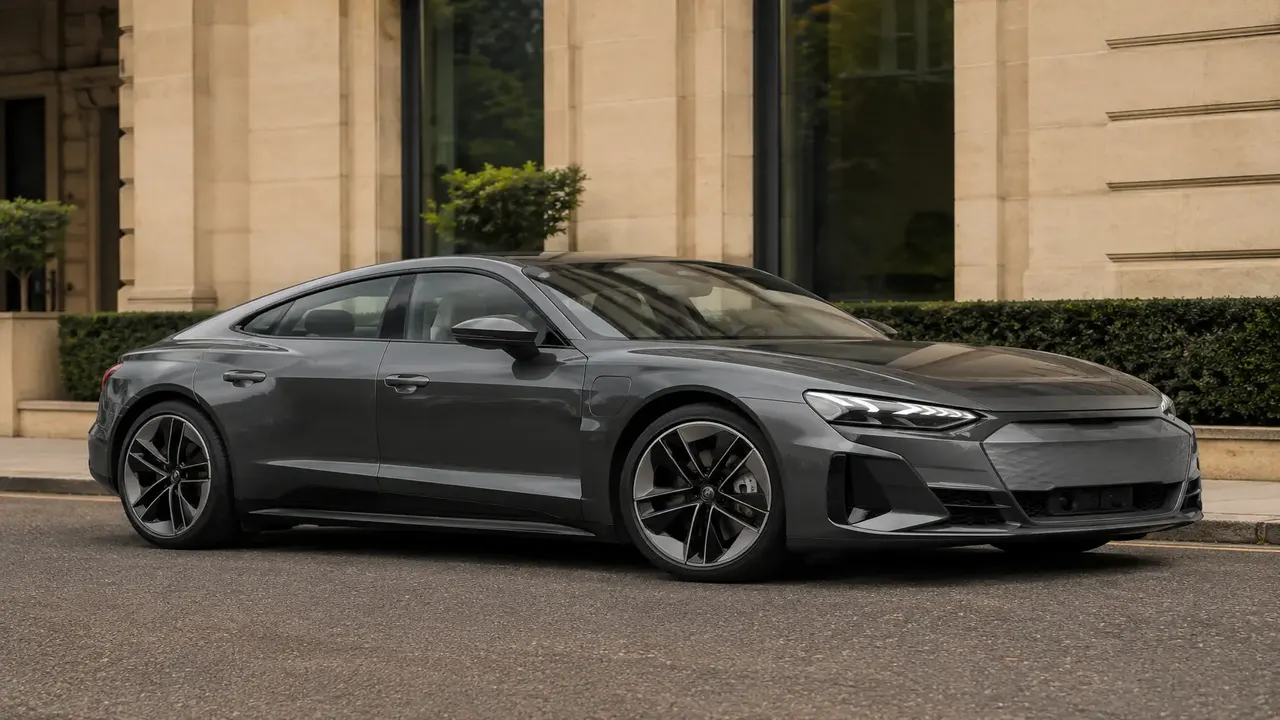
The car used for the attempt was a series-production Audi A6 Sportback e-tron performance. It has a 94.9kWh battery and an official WLTP range of up to 468 miles, yet Polish rally driver Miko Marczyk managed to keep it moving for 831 miles before the battery was flat.
Marczyk, aged 30, started the run at 1:55am on 11 September in Zakopane, in Poland's Tatra Mountains. From there, the route followed the Vistula through Krakow, Sandomierz, Pulawy, Warsaw, Plock, Wloclawek, Torun and Grudziadz before reaching the seaside resort of Hel on the Baltic.
The route then retraced much of that journey. The attempt finished more than 45 hours after it began, with the battery depleted.
This was not a closed-track exercise. The Audi was driven on public roads and in normal traffic, including rush-hour conditions. Temperatures fell as low as 7C during the run.
Average consumption was 8.8 miles per kWh, equivalent to 7.09kWh/100km. The A6 was also fitted with Michelin energy-efficient tyres. The production car has a drag coefficient of 0.21Cd and can accelerate from 0-62mph in 5.4 seconds, although outright performance was clearly not the point of this particular journey.
Marczyk said his objective during the attempt was to cover the greatest possible distance on one charge.
The previous record stood at 749 miles and had been set by a Lucid Air Grand Touring, a car that claims a range of nearly 600 miles. The Audi's new mark exceeds that distance by 133km, or 83 miles.
Real world EV range vs WLTP: why 831 miles does not mean 831 miles for buyers
The most important number for a buyer to keep alongside this record is the Audi's official WLTP figure: up to 468 miles.
The 831-mile result does not turn the A6 Sportback e-tron performance into an 831-mile everyday EV. It shows what was possible during a specific attempt in which maximum distance from one charge was the stated objective.
That distinction matters when comparing real-world EV range with official figures.
WLTP range gives buyers a standard official figure that can be used when looking at different cars. A maximum-distance record answers a very different question: how far can a particular car be made to travel when the driver is deliberately trying to stretch every unit of battery energy as far as possible?
The Polish run is still useful because it demonstrates how much energy consumption can vary according to the way a car is being used. An average of 8.8 miles per kWh is central to understanding how the Audi covered such a large distance from its 94.9kWh battery.
But an owner making everyday journeys has different priorities. People normally need to reach work, appointments or holiday destinations in a sensible amount of time. They may also be carrying passengers and luggage and driving through whatever temperatures and traffic conditions happen to occur.
For that reason, the 831-mile figure is better viewed as a record-distance achievement than as a replacement for the official 468-mile WLTP range. Related: how affordable EVs are changing.
It is also worth keeping the comparison with the previous record in context. The Lucid Air Grand Touring claims a range of nearly 600 miles, yet its 749-mile record was also substantially above its claimed figure. These record attempts are designed around maximum distance, not a representative everyday journey.
How to get more miles from an EV: what extreme hypermiling really means
At this level, hypermiling means making maximum distance the priority rather than treating the journey like normal daily driving.
That is the key context around Marczyk's result. His stated objective was to cover the greatest possible distance from a single charge, and the attempt lasted more than 45 hours.
A normal owner is unlikely to approach a journey with the same goal. Everyday driving involves compromises between range, journey time, traffic, comfort and the practical need to arrive somewhere.
Driving style matters because every demand placed on the car ultimately has to be supplied by the battery. Speed also matters: using the car in a way that prioritises efficiency is different from simply travelling at whatever pace makes a journey quickest.
The Audi's 0.21Cd drag coefficient is relevant to its efficiency, but the driver still has a major influence over how much energy a journey uses. Related: how aerodynamics affects efficiency.
Tyres are another part of the picture. The record car was running on Michelin energy-efficient tyres, so buyers should not assume tyre choice is irrelevant when trying to maximise range. Related: EV running costs against petrol.
Temperature also changes the conditions in which an EV has to operate. This record was achieved despite temperatures falling as low as 7C, but that does not mean temperature has no effect on the range an owner might see on a different journey.
The important point is that there is no single "real-world range" number that covers every owner, every road and every day. The record and the WLTP figure describe very different uses of the same car.
How to improve electric car range: 5 practical things owners can do
For ordinary EV owners, chasing an 831-mile record is less useful than concentrating on factors they can manage during normal journeys.
- Watch your speed. Higher-speed driving demands more energy, so speed is one of the factors that can change how far an EV travels on a charge.
- Drive smoothly. A measured driving style can help reduce unnecessary demands on the battery compared with repeatedly asking the car for strong acceleration.
- Pay attention to tyres. The record Audi used Michelin energy-efficient tyres. Tyre choice is therefore worth considering when range is a priority.
- Account for temperature. Conditions vary throughout the year, so do not assume the car will return exactly the same range in every temperature.
- Think about the load you are carrying. Passengers and luggage are part of normal car use, and load is one of the variables to consider when judging how much range a particular journey may require.
The 831-mile record should not be treated as an everyday range promise for the Audi A6 Sportback e-tron performance. Its official WLTP figure remains up to 468 miles, while this run was specifically organised around covering the greatest possible distance from one charge.
Frequently asked questions
How far did the Audi A6 e-tron go on one charge?
What is the official range of the Audi A6 Sportback e-tron performance?
What battery did the record Audi A6 e-tron use?
What was the previous electric car single-charge record?
Sources & further reading
- Auto Express - Audi A6 e-tron breaks EV range record with 831 miles on a single charge
- InsideEVs - Audi A6 e-tron Guinness World Record single-charge run
- Motor1 - Audi EV sets Guinness record with 831 miles on a single charge
Figures, prices and policy details were current at the last-updated date above. Automotive pricing, incentives and regulations change frequently — verify time-sensitive details with the linked primary sources. Read our editorial policy and fact-checking standards.