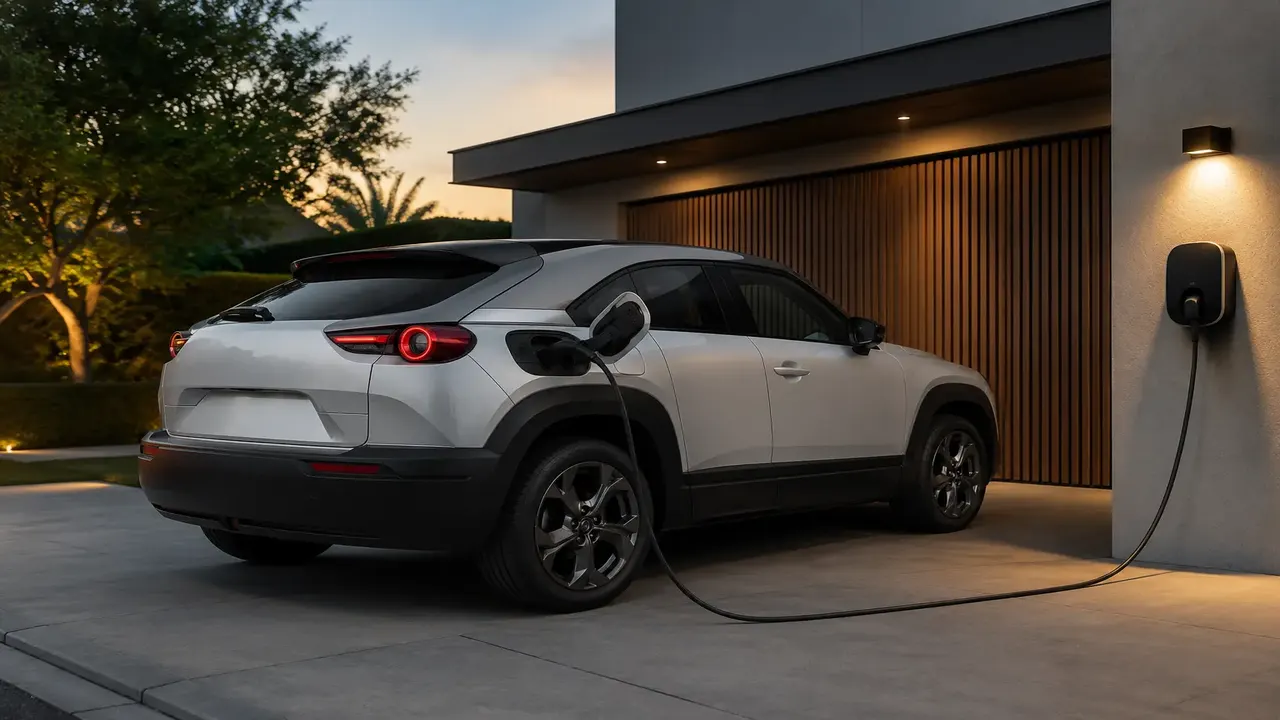
Bidirectional charging lets an EV's battery send electricity back out - to a home (V2H, vehicle-to-home), to another device (V2L, vehicle-to-load) or to the wider grid (V2G, vehicle-to-grid) - rather than only receiving a charge. The ISO 15118-20 communication standard, which underpins the newest bidirectional-capable chargers and vehicles, is increasingly supported on 2025-2026 model-year EVs, and several utilities are now piloting or launching V2G programs that pay EV owners for storing and returning grid power at peak demand times.
At a glance
| Mode | What it does |
|---|---|
| V2L (vehicle-to-load) | powers external devices/appliances directly from the car's battery via an outlet or adapter |
| V2H (vehicle-to-home) | powers a home during an outage or peak-price period, similar to a home battery backup |
| V2G (vehicle-to-grid) | sends power back to the electricity grid, often in exchange for utility payments or credits |
| Key enabling standard | ISO 15118-20 bidirectional communication protocol |
| Adoption status (2026) | growing but still a minority of EVs and chargers support full V2G; V2L is more widely available |
Why bidirectional charging is having a moment
Two trends are converging: EV batteries have gotten big enough (60-100+ kWh in many models) to meaningfully power a home for hours or days, and grid operators facing more volatile demand from renewables and electrification are actively looking for flexible, distributed storage they can tap into during peak periods. A parked EV, plugged in most of the day and night anyway, is a natural fit for both problems at once.
The three flavors, from simplest to most complex
- V2L (vehicle-to-load) - the simplest form, using a household-style outlet built into the car or an adapter at the charge port to power tools, camping equipment or small appliances directly; widely available on many current EVs, including several Hyundai, Kia and Ford models.
- V2H (vehicle-to-home) - requires a compatible home charger/inverter setup that can route the car's stored power into a home's electrical panel, typically used as backup power during outages; growing in popularity in regions with frequent grid outages.
- V2G (vehicle-to-grid) - the most complex, requiring utility coordination, compatible hardware, and often specific program enrollment, where a car's battery actively participates in grid balancing and the owner is compensated for the service.
Why V2G is harder than it sounds
V2G requires alignment between the vehicle, the charger, the utility's grid management systems, and often a specific commercial program the owner opts into - a lot more coordination than simply plugging in. Battery degradation is also a genuine concern utilities and automakers are still studying: cycling a battery more frequently for grid services could, in theory, accelerate wear, though most current pilot programs report the effect is smaller than initially feared when cycling is managed carefully and kept within moderate depth-of-discharge ranges.
Where it's actually being deployed
Utility-backed V2G pilots are running in parts of the US, UK, Japan and several EU countries, often structured so EV owners receive bill credits or direct payments for participating during specified peak-demand windows. Nissan was an early mover in Japan with V2H/V2G-capable Leaf models; more recently a wider range of automakers have added bidirectional hardware to newer EVs as ISO 15118-20 compatible chargers have become more available.
What this means for EV buyers
If backup power or potential utility payments matter to you, check specifically whether a vehicle supports V2H or V2G (not just V2L, which is far more common but only powers small devices) and whether compatible home charging hardware is available and affordable in your area - the vehicle capability alone isn't enough without matching charger infrastructure and, for V2G, an actual utility program to enroll in.
A car advertised as "bidirectional capable" may only support V2L, not the more useful V2H or V2G modes - check the specific capability, since marketing language doesn't always distinguish clearly between the three.
Frequently asked questions
What's the difference between V2L, V2H and V2G?
Can any EV do bidirectional charging?
Does using bidirectional charging damage an EV's battery faster?
Can I get paid for participating in vehicle-to-grid programs?
What do I need besides a compatible EV to use vehicle-to-home charging?
Sources & further reading
- U.S. Department of Energy - vehicle-to-grid integration overview
- ISO - ISO 15118 standard series overview
Figures, prices and policy details were current at the last-updated date above. Automotive pricing, incentives and regulations change frequently — verify time-sensitive details with the linked primary sources. Read our editorial policy and fact-checking standards.