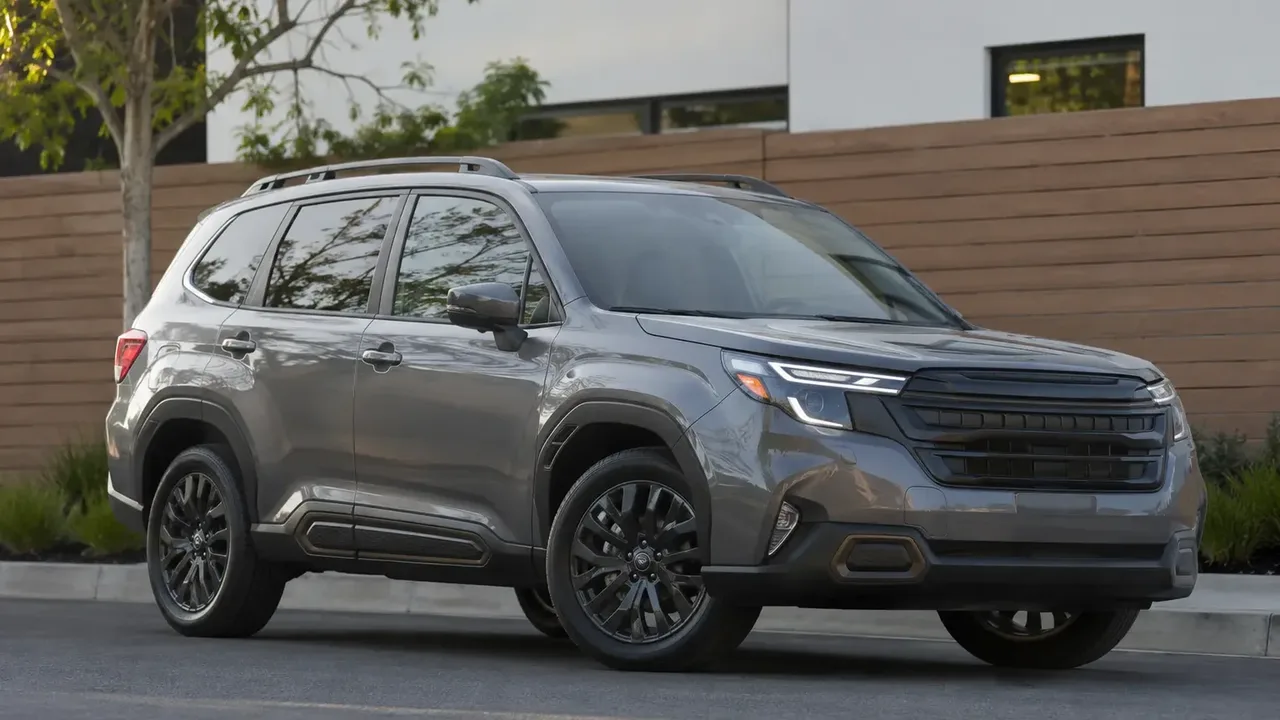
The loyalist's compact SUV, modernized
Foresters get bought by people replacing Foresters — for the visibility, the standard all-wheel drive, the dog-friendly practicality. The sixth generation, launched for 2025, keeps all of that and addresses the perennial complaint: fuel economy. The range opens at $31,445 including destination, with the Forester Hybrid from $36,180, offered in Premium, Sport, Limited and Touring trims to about $44,000 at the top (exact top-trim pricing varies with options).
Why this hybrid is different
Subaru borrowed hybrid architecture from its Toyota partnership but kept one crucial Subaru trait: the hybrid retains a mechanical symmetrical AWD system, not the electric rear axle Toyota uses. Combined output is 194 hp against the gas car's 180, and economy jumps from about 29 mpg combined to roughly 35 mpg — with total range beyond 500 miles. For a brand whose buyers actually leave the pavement (8.7 inches of clearance helps), mechanical drive to all four wheels in all conditions is a substantive difference, not marketing.
The standard gas car soldiers on with the familiar 180-hp 2.5-liter flat-four and CVT — dependable, safe, and slow, with a drone under acceleration the hybrid largely masks.
The honest assessment
The Forester's virtues are unglamorous and real: glasshouse visibility no rival matches, top-tier crash scores, standard EyeSight assistance, and a cabin that prioritizes space over showroom sparkle. The 11.6-inch portrait touchscreen (most trims) can lag, and interior ambience trails a CR-V or Tucson at equal money.
The buying advice is unusually clean: the hybrid's $1,500–$2,000 real-world premium over comparable gas trims is small enough that, for most annual mileages, it's simply the better car — quicker, quieter and dramatically cheaper to fuel.
The questions buyers actually ask
Forester Hybrid or RAV4 Hybrid? The Toyota is quicker and now hybrid-only; the Subaru counters with mechanical AWD, better sightlines and typically friendlier pricing. Snow-belt and trailhead buyers lean Subaru.
Is the base gas engine acceptable? Yes, if budget rules — it's proven and safe. But it's the slowest thing in the class, and the hybrid erases the complaint for modest money.
Any reliability skeletons? The old oil-consumption and CVT worries of earlier generations are largely resolved; the new hybrid leans on Toyota-derived hardware, which is the best possible pedigree, though it's new to the Forester.
Key takeaways
- From $31,445; Hybrid from $36,180 across four trims
- Hybrid: 194 hp, ~35 mpg combined, and it keeps mechanical symmetrical AWD
- Base 180-hp gas car is dependable but slow and droney
- Class-best visibility, strong safety scores, 8.7-in clearance
- Rivals: Toyota RAV4, Honda CR-V, Mazda CX-50, Hyundai Tucson
Sources & further reading
- Subaru of America 2026 pricing
- EPA figures
- sixth-generation road-test coverage, 2025–26
Figures, prices and policy details were current at the last-updated date above. Automotive pricing, incentives and regulations change frequently — verify time-sensitive details with the linked primary sources. Read our editorial policy and fact-checking standards.