The budget car that refuses to feel budget
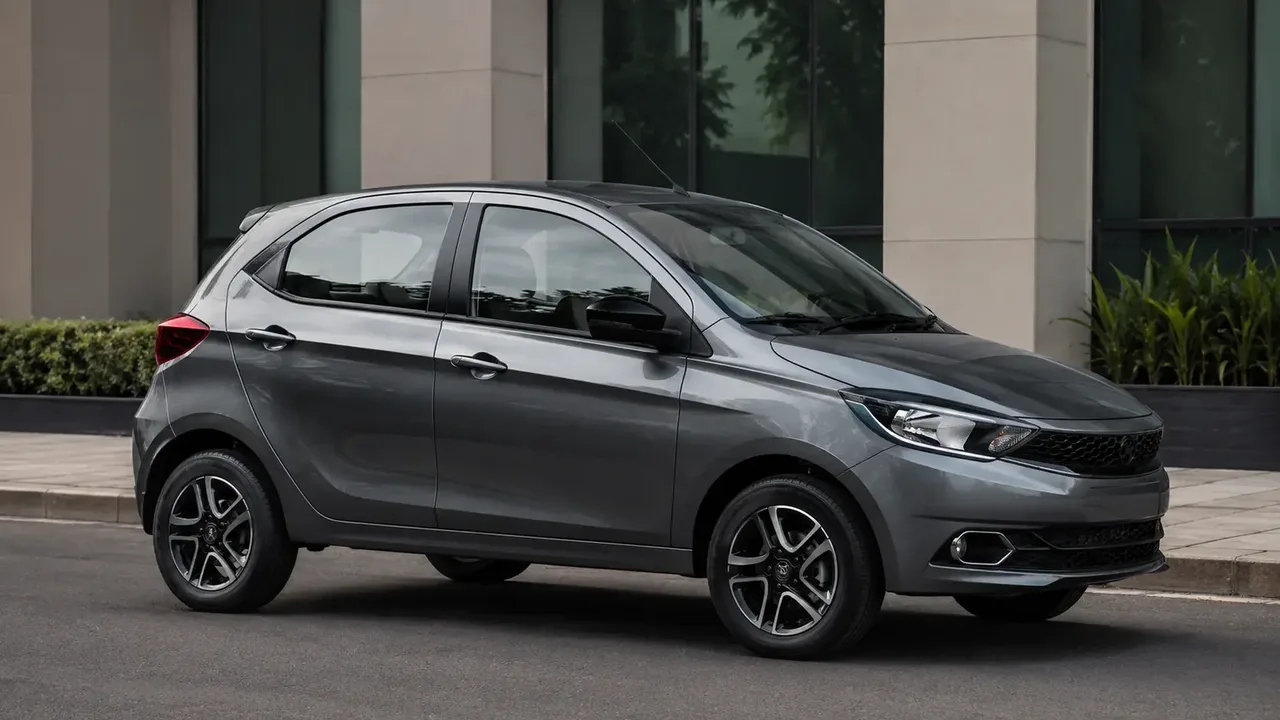
The 2026 facelift is the most consequential update in the Tiago's long life. The entry price now reads ₹4.69 lakh for petrol, ₹5.79 lakh for CNG and ₹6.99 lakh for the updated Tiago EV — and the equipment list reads like a car a segment above: six airbags, ESP, a 360-degree camera, tyre-pressure monitoring and a 10.25-inch touchscreen with wireless CarPlay and Android Auto.
In a class where rivals still charge extra for basic safety kit, Tata has simply made it standard. That, more than any styling change, is the story.
Three fuels, honestly appraised
The 1.2-litre three-cylinder petrol (86 hp) is the familiar workhorse — adequate in town, breathless on highways, with the gruffness inherent to its layout. The CNG (75.5 hp) now pairs with an AMT and segment-first paddle shifters, a genuine oddity that makes India's cheapest two-pedal CNG car nicer to live with; expect around 26–28 km/kg. The Tiago EV offers 19.2 or 24 kWh packs with claimed ranges of roughly 226–285 km — still the cheapest credible electric hatch from a major manufacturer, and a proven one after years of fleet and private use.
The AMT deserves its usual caveat: it saves your left leg, not your patience. Shifts are slow and the head-nod is real. The CVT-smoothness of pricier autos isn't here.
The honest assessment
The Tiago's appeal is brutally rational: the most safety kit and screen real estate available anywhere near its price, wrapped in a solid-feeling bodyshell derived from Tata's better-rated architecture. The compromises are equally clear — an ageing engine, cabin fit-and-finish that trails Hyundai, and Tata's service consistency lottery. The pre-facelift car's 4-star Global NCAP result no longer formally applies; the facelift's Bharat NCAP score is awaited, though the added structure and standard kit point the right way.
For a first car, a city runabout, or a CNG commuter, it's the value benchmark of 2026.
The questions buyers actually ask
Tiago EV or a used premium hatch? Different answers to different questions. If you have home charging and city-dominant use, the EV's running costs are unbeatable at the price. No charging at home? Stay petrol.
Is the CNG worth the premium over petrol? At typical city mileages, the fuel-cost saving recovers the gap within a couple of years — faster for high-milers. The paddle-shift AMT makes it the rare CNG car that isn't a punishment.
How does it drive vs a Celerio or Grand i10? Heavier-feeling and more planted than the Maruti; less polished inside than the Hyundai. Its case is safety and kit per rupee, not refinement.
Key takeaways
- 2026 facelift: from ₹4.69 lakh with 6 airbags, ESP, 360 camera and 10.25-inch screen standard-fit territory
- CNG AMT with paddle shifters is a segment first; EV from ₹6.99 lakh with up to ~285 km claimed
- Engine is the weak point: 86 hp, three-cylinder gruffness, slow AMT
- Facelift Bharat NCAP result still awaited — the structure and kit are encouraging
- Rivals: Maruti Celerio and WagonR, Hyundai Grand i10 Nios, MG Comet (vs Tiago EV)
Sources & further reading
- Tata Motors launch pricing
- Team-BHP facelift review
- CarWale and ZigWheels variant data, July 2026
Figures, prices and policy details were current at the last-updated date above. Automotive pricing, incentives and regulations change frequently — verify time-sensitive details with the linked primary sources. Read our editorial policy and fact-checking standards.