The question everyone gets wrong
Here's a fact that surprises most people: you never pay a tariff. Not directly. A tariff isn't a tax you hand over at the dealership. It's charged once, at the border, to the importer — often months before the car reaches you.
So why does a tariff raise your price? Understanding that chain — from a duty at the port to a number on the window sticker — is the key to understanding everything else about the tariff era. Let's walk it through, step by step, with no jargon.
Step 1 — The car (or part) arrives at the border
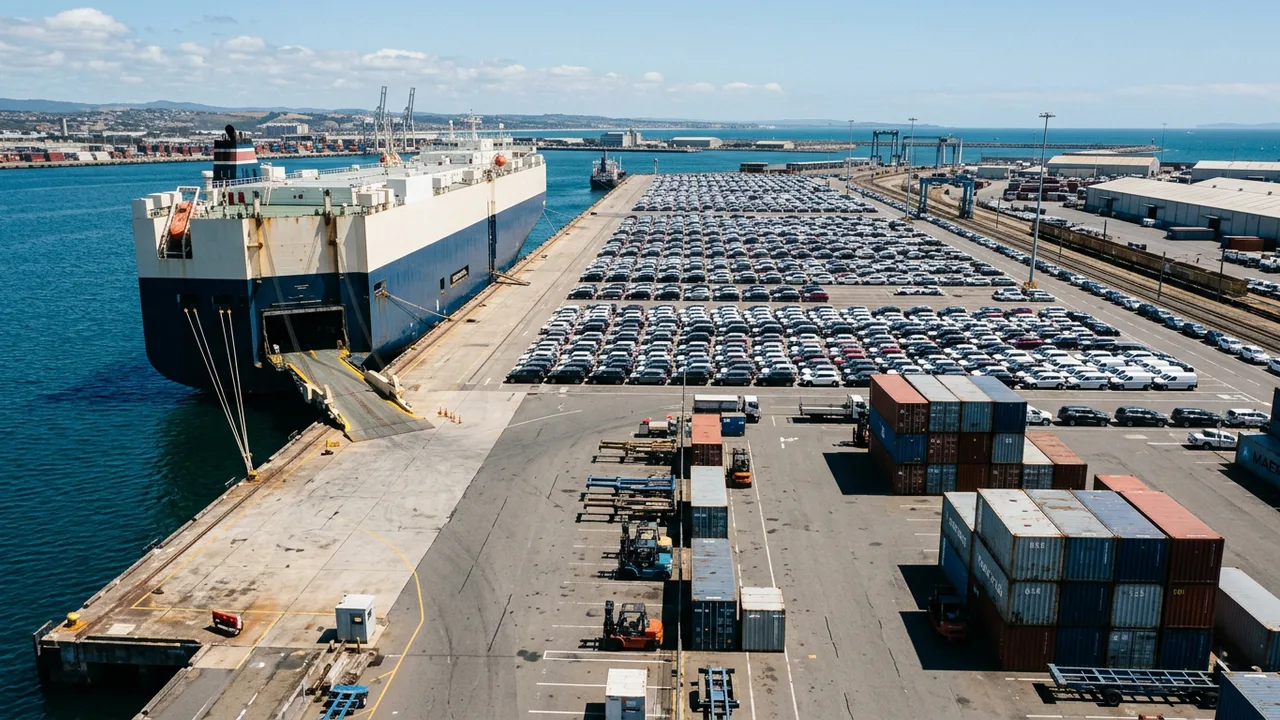
A vehicle or component manufactured abroad arrives at a port of entry. Customs assesses it.
The tariff is calculated as a percentage of the car's value — usually the CIF value (Cost + Insurance + Freight: the car's price plus what it cost to ship and insure it to the border). A 25% tariff on a car with a $30,000 CIF value is a $7,500 charge.
Step 2 — The importer pays the tariff
The importer pays the duty to customs — not the consumer, not the dealer, the importer (usually the manufacturer's national sales arm or an authorised importer).
This is the crucial, counterintuitive fact: the tariff is paid upfront, at the border, by a business — long before any consumer sees the car. Politically, tariffs are often described as being "paid by" the exporting country. They are not. They're paid by the importing business, in the importing country.
Step 3 — The importer now has a more expensive car
The importer has just paid, say, $7,500 in duty on a car. That $7,500 is now part of the importer's cost for that vehicle. The car sitting in the warehouse cost them $7,500 more than an identical domestic car would have.
The business now faces a choice about what to do with that extra cost. This is where the tariff's effect on your price is decided.
Step 4 — The importer decides who absorbs the cost
The importer has three options (which we cover in depth in our absorption analysis):
Pass it on — raise the price so the buyer covers the duty. The tariff flows straight to the sticker.
Absorb it — accept a thinner profit margin, holding the price to stay competitive. The tariff comes out of the manufacturer's pocket.
Split it — pass some, absorb some. The most common real-world outcome.
In competitive markets, some absorption happens (a brand that passes on 100% while rivals absorb loses sales). But historically, in the US, pass-through has been high — the 2018–19 tariffs raised consumer prices nearly one-for-one. So while you don't pay the tariff directly, a large share of it typically reaches you indirectly, baked into the price.
Step 5 — The cost spreads across the whole model line
Here's a subtlety that makes tariffs hard to see. Manufacturers often don't apply the tariff cost visibly to individual cars. Instead they average it across a model line or the whole range, adjusting prices broadly rather than slapping a "tariff surcharge" on one car.
They may also claw it back invisibly — holding the sticker but cutting features (decontenting), reshuffling trims, or switching to cheaper suppliers. The price looks stable; the value quietly drops.
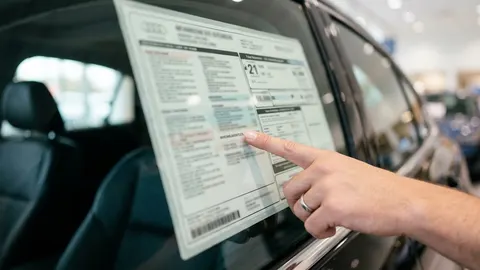
This is why you rarely see "tariff" itemised on a window sticker. The cost is diffused — spread across models, hidden in spec changes, averaged into general price rises that also reflect inflation and other factors. It's there; it's just camouflaged.
Step 6 — The number lands on the window sticker
Months after the duty was paid at the port, you walk into a dealership and see a price. That price contains — invisibly, diffusely, partially absorbed and partially passed on — the tariff that was charged at the border.
You never wrote a cheque for a tariff. But you paid a share of it, embedded in the sticker, without ever seeing the line item.
The parts complication (the sneaky bit)
There's a second, quieter channel. Parts carry tariffs too.
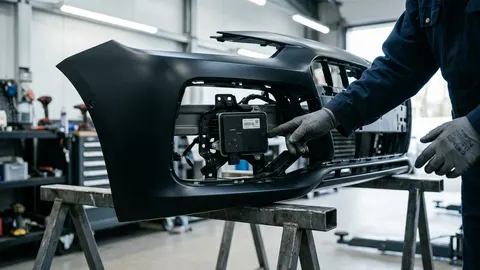
Even a car assembled domestically is built from imported components — engines, transmissions, electronics — each of which paid a tariff at the border. So a "domestic" car still has tariff cost baked into its bill of materials, embedded even deeper and even less visibly than the tariff on a whole imported car.
And it doesn't stop at purchase. When your car needs a repair, the imported replacement parts carry tariffs — which flow into repair bills and, eventually, insurance premiums (see our dedicated piece). The tariff follows the car through its whole life.
Why this matters for how you shop
Understanding the chain gives you real leverage:
1. The tariff is in the price, but invisibly. Don't look for a "tariff line" — it's diffused. Instead, compare year-on-year prices and specs to spot where it's landed.
2. Where a car is built determines its tariff load. A car's origin (and its parts' origins) sets how much tariff is embedded. Ask where the car and its engine are made — the badge won't tell you.
3. Absorption means there's negotiating room. In competitive segments where manufacturers are absorbing tariff cost, there's margin in the deal. An informed buyer can capture some of it.
4. Watch for decontenting. A held price with fewer features is a hidden price rise. Compare this year's spec to last year's.
5. The tariff outlives the purchase. It's in repair bills and insurance too. Factor total cost of ownership, not just the sticker.
The bottom line
A tariff is charged once, at the border, to the importer — as a percentage of the car's value. That business then decides how much to pass on, absorb, or hide. The cost spreads across model lines, hides in spec changes, and lands — diffused and invisible — on the window sticker you see months later. You never pay a tariff directly. But you pay a share of it in the price, in future repairs, and in your insurance. Knowing the chain is what lets you see the cost that's designed not to be seen.
Key takeaways
- A tariff is charged once at the border, to the importer, as a percentage of the car's CIF value — not to the consumer directly
- The importer chooses to pass it on, absorb it, or split it; in the US, pass-through is historically high (~1:1 in 2018–19)
- The cost is diffused across model lines and often hidden via decontenting, so it rarely appears as a visible line item
- Even domestic cars carry embedded parts tariffs in their bill of materials
- The tariff follows the car for life — into repair bills and insurance premiums, not just the purchase price
Sources & further reading
- Congressional Research Service
- Cavallo et al. (2021)
- Fajgelbaum & Khandelwal (2022)
- Tax Foundation
- Cox Automotive
- CEPR. Verified July 2026.
Figures, prices and policy details were current at the last-updated date above. Automotive pricing, incentives and regulations change frequently — verify time-sensitive details with the linked primary sources. Read our editorial policy and fact-checking standards.