First, an honest disclaimer: no car is truly tariff-free
Let's start where most "made in America" lists won't.
There is no such thing as a genuinely tariff-free new car in 2026. Even a vehicle given final assembly in the United States is built from a global parts supply, and imported parts carry a 25% Section 232 tariff. Engines, transmissions, electronics, semiconductors — a significant share of the content in any car crosses a border and gets taxed on the way in.
So this isn't a list of cars with zero tariff. It's a guide to finding the cars with the lowest tariff exposure — which is a real, meaningful difference worth thousands of dollars, but not the same as zero.
The single most important myth to kill: "American brand" means nothing
This is the mistake that costs buyers money.
The brand on the badge tells you almost nothing about where the car is built.
- A Ford or Chevrolet may be assembled in Mexico and carry parts-tariff (and, if non-compliant, full-vehicle-tariff) exposure.
- A Toyota, Honda, Nissan, Subaru or BMW may be assembled in the United States — some of the most American-built vehicles on the road wear "foreign" badges.
- A Tesla is built in the US, but not every model or variant, and its parts are globally sourced.
The question that matters is not "who makes it?" It's "where is this specific vehicle assembled, and does it meet USMCA rules of origin?"
The two things that actually determine tariff exposure
1. Final assembly location.
- US-assembled → escapes the vehicle tariff (still pays parts tariff on imports)
- USMCA-compliant Mexico/Canada → 0% vehicle tariff (conditions apply)
- Non-USMCA-compliant Mexico/Canada, or imported from elsewhere → 25% baseline (or deal rate)
2. Parts content and origin.
- The more US/USMCA-sourced content, the less embedded parts-tariff cost
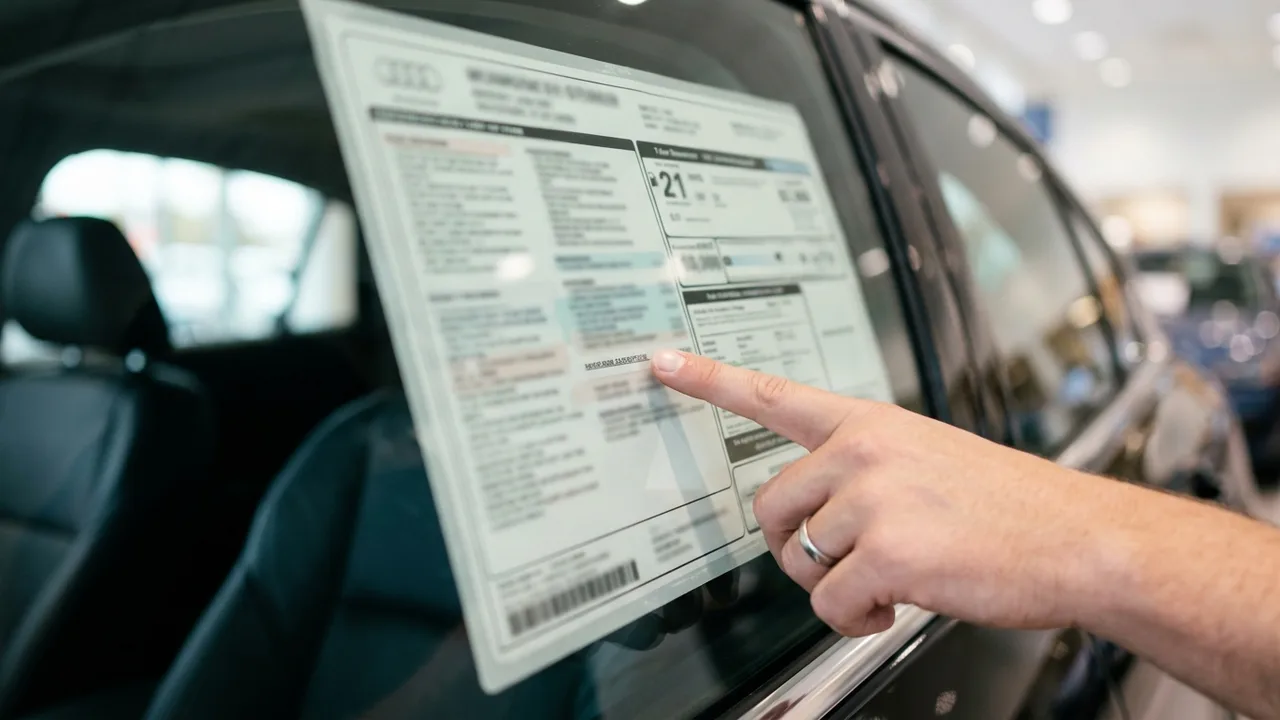
- The AALA (American Automobile Labeling Act) sticker on every new car states the percentage of US/Canadian parts content and the final assembly location — this is a legally-required, free source of exactly the information you need
How to actually check — for any specific car
You don't need a list someone else made. You can check any vehicle yourself, and the information is legally mandated to be available:
1. Read the AALA window sticker (the Monroney label). Every new car must display it. Look for:
- Final assembly point (city, state/country)
- Percentage of US/Canadian parts content
- Engine and transmission origin (listed separately)
2. Check the VIN's first character. The first digit of the VIN indicates the country of assembly:
- 1, 4, 5 = United States
- 2 = Canada
- 3 = Mexico
- J = Japan · K = South Korea · W = Germany · L = China · S = UK
(This tells you assembly location, not USMCA compliance or parts origin — but it's a fast first filter.)
3. Ask the dealer directly: "Is this specific vehicle USMCA-compliant, and where's the engine from?" A good dealer can tell you; USMCA compliance affects their own costs, so they generally know.
The categories with the lowest exposure
Rather than name specific models (which change by model year, trim and plant — and would date this article instantly), here's where to look:
Lowest exposure — US-assembled, high-US-content:
- Several Toyota, Honda, and Subaru models are US-assembled with high domestic content — often more American than nominally "domestic" brands
- Certain Tesla models (US-built, though globally-sourced parts)
- Various Ford, GM, Stellantis trucks and SUVs assembled in US plants
- Look for AALA stickers showing high US/Canadian parts percentages and US final assembly
Low exposure — USMCA-compliant Mexico/Canada:
- Many popular compact and mid-size models assembled in Mexico do meet USMCA rules of origin and qualify for 0% vehicle tariff
- These can be lower total-tariff than a US-assembled car with heavily imported parts
- Verify compliance — don't assume "Mexican-built" means either good or bad without checking
Highest exposure — imported from non-deal countries, or non-compliant:
- Vehicles imported from countries without a bilateral deal (25% baseline)
- Non-USMCA-compliant Mexican/Canadian builds (revert to 25%)
- Deal-country imports (EU/Japan/Korea at 15%, UK at 10%) — lower than baseline, but not zero
The strategy for a tariff-conscious buyer
1. Shortlist by exposure, then choose within it. Decide your budget and body style first, then, among your candidates, favour the ones with US assembly + high US content, or verified USMCA compliance.
2. Read the AALA sticker on the actual car — not a generic spec. Two examples of the "same" model can differ by plant and content. The sticker on the specific unit is what counts.
3. Weigh total tariff, not assembly location alone. A US-assembled car with an imported engine and transmission may carry more embedded parts-tariff than a fully-USMCA-compliant Mexican build. "Made in USA" on final assembly isn't automatically the lowest-tariff choice.
4. Remember the caveats from the rest of this section:
- The USMCA carve-out is under renegotiation — today's 0% compliant car could face tighter rules
- Manufacturers decontent to hide tariff cost — compare spec year-on-year
- Used cars sidestep the new-car tariff entirely (the first owner absorbed it) — often the best value, if you check the VIN for recalls
The bottom line
There's no truly tariff-free new car — but exposure varies enormously, and the difference is worth thousands. The tools to find the low-exposure cars are free and legally mandated: the AALA window sticker and the VIN. Ignore the badge, read the sticker, check the assembly location, ask where the engine's from, and verify USMCA compliance.
"Made in America" is a marketing phrase. "Assembled in the US with high domestic content, or verified USMCA-compliant" is the thing that actually saves you money.
Key takeaways
- No new car is truly tariff-free — even US-assembled cars pay 25% on imported parts
- "American brand" tells you nothing; many US-built cars wear "foreign" badges and vice versa
- The AALA window sticker (final assembly + US/Canadian parts %) and the VIN's first character reveal true exposure
- Lowest exposure: US-assembled high-content cars, or verified USMCA-compliant Mexican/Canadian builds
- Verify USMCA compliance and engine origin per specific vehicle — and remember the carve-out is under renegotiation
Sources & further reading
- American Automobile Labeling Act (AALA) requirements
- NHTSA VIN standards
- Congressional Research Service
- CalcMyTariff. Verified July 2026 — assembly locations vary by model year and plant
- check the specific vehicle.
Figures, prices and policy details were current at the last-updated date above. Automotive pricing, incentives and regulations change frequently — verify time-sensitive details with the linked primary sources. Read our editorial policy and fact-checking standards.