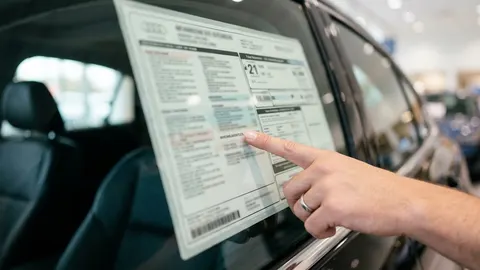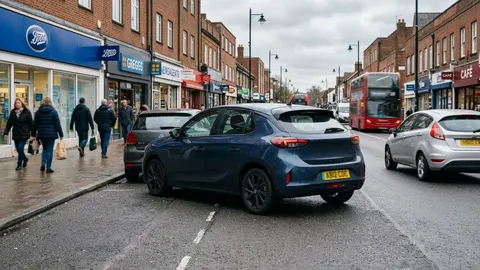
The tariff you didn't know you were paying
Everyone understands that tariffs raise the price of a new car. Far fewer people connect the tariff to two bills that arrive long after the purchase: the repair invoice and the insurance renewal.
But the link is direct, and it's why the 25% parts tariff may end up costing you more over a car's life than the tariff on the car itself.
Repair bills: the direct hit
Here's the chain, and it's short.
Collision and mechanical repairs use parts. A large share of those parts are imported — around 44% of OEM parts used in collision repair are manufactured outside the United States.
Imported auto parts carry the 25% Section 232 tariff. Engines, transmissions, body panels, electronic modules, and many of the specific components a body shop bolts back onto your car after a crash.
So when your car needs those parts, the tariff is in the price. OEM retail parts prices have been rising, with analysts attributing part of the acceleration directly to Section 232 pass-through. A survey found the large majority of well-equipped body shops had already felt direct tariff effects.
The result: the parts on your repair estimate cost more than they did before the tariffs, and a meaningful slice of that increase is the tariff itself, embedded and invisible on the invoice.
Insurance premiums: the indirect hit
Now follow the chain one step further, because this is where it reaches everyone — even people who never crash.
Insurers pay for repairs. When repair costs rise, insurers' payouts rise. And when payouts rise, premiums follow — with a lag of a quarter or two, as insurers absorb the increase before repricing.
The UK data (which we cover in depth in our insurance analysis) illustrates the mechanism cleanly: the average accidental damage claim hit £3,699, up 8% in a single quarter, driven by higher parts prices and vehicle complexity — and analysts warned that premiums, having stabilised, would likely rise again as those repair costs feed through.
The US mechanism is identical. Tariff-inflated parts → higher repair costs → higher insurer payouts → higher premiums at renewal. You pay the tariff on parts you never personally bought, spread across every policyholder in your risk pool.
Why modern cars make this so much worse
The tariff didn't create the repair-cost problem — it poured fuel on an existing fire.
Modern vehicles were already expensive to repair because they're packed with technology:
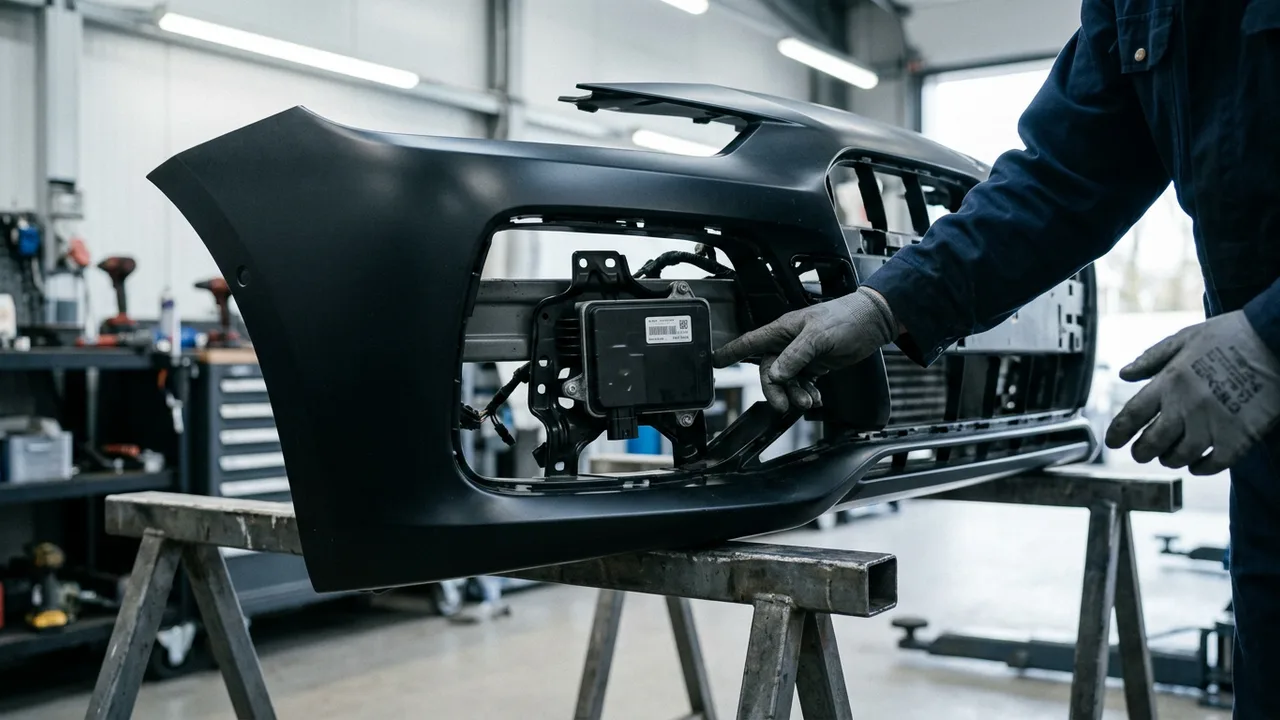
- ADAS sensors and cameras in bumpers, windshields and mirrors — a minor prang can mean replacing and recalibrating an array of sensors. ADAS recalibration can turn a $300 repair into a $1,500 one.
- Complex electronics throughout the vehicle
- Specialised, often single-source parts
Now apply a 25% tariff to the imported share of all that expensive hardware. The tariff and the technology compound each other: an already-costly repair, made costlier still by a duty on the sophisticated imported components that make it costly in the first place.
The double bind for EV owners
EV owners face a specific version of this.
- EV-specific parts — battery modules, power electronics, specialised components — are frequently imported and tariff-exposed
- The battery is the single most expensive component, and battery-related repairs are already eye-watering
- Add the lost $7,500 federal credit and tariff-inflated parts, and the EV ownership cost equation gets meaningfully harder
What you can actually do about it
You can't opt out of the tariff, but you can blunt its effect on your repair and insurance bills:
1. Shop your insurance every single renewal. This is the biggest lever. As repair-cost inflation feeds into premiums, the gap between the cheapest and most expensive quote for the same risk widens. Comparing every year — never auto-renewing — consistently beats the market average.
2. Ask about parts options on repairs. For out-of-warranty, non-safety repairs, aftermarket or recycled/reclaimed OEM parts can sidestep some tariff cost. Discuss this with your shop (and check your policy's stance — some insurers specify parts types). Note the caveat: for safety-critical components, OEM is often the right call regardless.
3. Choose repair-friendly cars. Some vehicles are dramatically cheaper to insure and repair than others. A car's insurance group / risk rating reflects, among other things, its repairability and parts cost. A low-repair-cost car is a lower-tariff-exposure car by extension — factor it into the purchase decision.
4. Maintain to avoid the body shop. The cheapest tariff-inflated repair is the one you don't need. Defensive driving and good maintenance keep you out of the parts-and-labour spiral entirely.
5. Weigh total cost of ownership, not just sticker. A slightly cheaper car with expensive, import-heavy parts can cost more over five years in repairs and insurance than a slightly dearer one that's cheap to fix. The tariff makes this calculus matter more than ever.
The bottom line
The tariff you paid on your car was the visible bill. The tariff embedded in every future repair — and passed through into every future insurance renewal — is the invisible one, and over a car's life it may be larger.
Around 44% of collision-repair parts are imported and tariff-exposed. That cost flows into repair invoices directly and into premiums indirectly, compounded by the sensor-laden complexity of modern cars. You can't avoid it entirely, but you can fight it: shop insurance every renewal, discuss parts options, and buy cars that are cheap to fix.
Key takeaways
- ~44% of OEM collision-repair parts are imported and carry the 25% Section 232 tariff
- Tariff-inflated parts raise repair bills directly, then raise insurance premiums indirectly (with a quarter or two lag)
- The tariff compounds modern cars' existing repair-cost problem — ADAS recalibration alone can turn a $300 job into $1,500
- EV owners face a specific squeeze: tariff-exposed batteries/electronics plus the lost $7,500 credit
- Defences: shop insurance every renewal, discuss parts options, and buy cars that are cheap to repair
Sources & further reading
- Autobody News
- Claims Journal
- IMR survey
- ABI (mechanism parallel)
- Tax Foundation
- Cox Automotive. Verified July 2026.
Figures, prices and policy details were current at the last-updated date above. Automotive pricing, incentives and regulations change frequently — verify time-sensitive details with the linked primary sources. Read our editorial policy and fact-checking standards.