Three markets, three completely different answers
Faced with a flood of cheap, capable Chinese electric cars, the world's major markets made opposite choices:
- The United States: ~100% tariff on Chinese EVs — effectively a ban. BYD, NIO and the rest are locked out.
- The European Union: countervailing duties up to ~45% — a high wall, brand by brand.
- The United Kingdom: nothing. No additional tariff. Just the standard 10% duty that applies to car imports generally.
Britain looked at what its two largest trading partners did, and deliberately went the other way. Understanding why tells you a lot about the UK's whole EV strategy — and about the deals available in British showrooms right now.
What the EU actually did
The EU's response was surgical and brand-specific. After a nine-month anti-subsidy investigation concluded Chinese EV makers received substantial state support, Brussels imposed countervailing duties on top of the standard 10% import duty, effective from late October 2024:
| Manufacturer | Countervailing duty | Total (incl. 10% base) |
|---|---|---|
| Tesla (Shanghai) | 7.8% | 17.8% |
| BYD | 17.0% | 27.0% |
| Geely | 18.8% | 28.8% |
| SAIC (MG) | 35.3% | 45.3% |
| Others (NIO, XPeng, etc.) | 20.7% | 30.7% |
Crucially, these apply to battery electric vehicles only. And the EU is now moving to extend duties to Chinese plug-in hybrids too, having watched Chinese brands pivot straight into that gap.
What Britain did — and why
The UK government confirmed it would not follow with Chinese-EV tariffs. Britain chose to keep its market open. The reasoning was a mix of principle and pragmatism:
1. Post-Brexit trade independence. No longer bound by EU trade policy, the UK could set its own course — and chose a more open-markets stance.
2. The EV transition needs cheap cars. Britain has a ZEV Mandate requiring an aggressive ramp of EV sales (33% in 2026, rising to 80% by 2030). Cheap Chinese EVs help hit those targets. Tariffing them would work directly against the government's own climate policy. As one industry figure put it, UK consumers are increasingly open to Chinese EVs precisely because they're much cheaper than established brands.
3. Consumer benefit. Chinese EVs are typically priced well below comparable European or US models, making them attractive to cost-conscious and first-time EV buyers — exactly the buyers the UK needs to convert.
4. No large domestic mass-market EV industry to protect in the way Germany or France has. The UK's automotive strength is more in premium (JLR) and engines than in the affordable-EV segment Chinese brands target.
What "no tariff" has done to the UK market
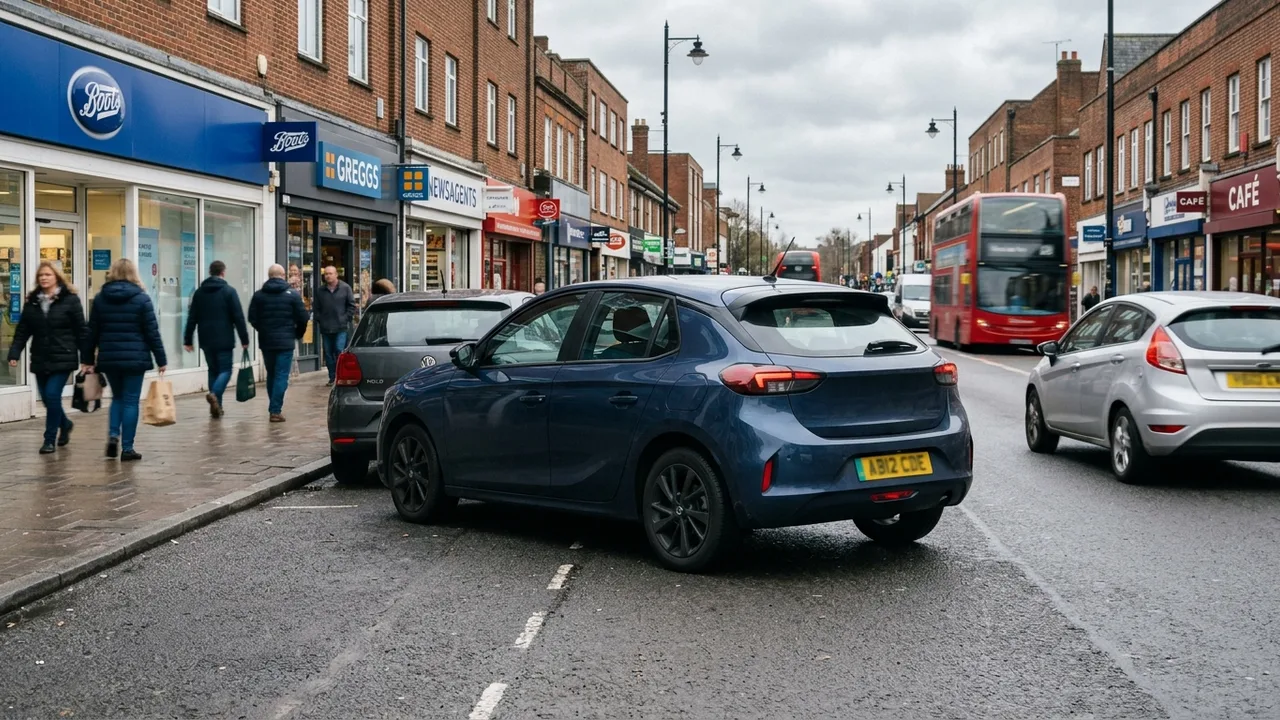
The effect is visible on British roads and forecourts:
- BYD now operates over 40 sales locations in Britain and is launching its luxury Denza sub-brand
- MG (SAIC-owned, with genuine British brand heritage) has been one of the market's fastest-growing names, its low prices hugely popular
- Omoda, Jaecoo, Leapmotor and XPeng have expanded rapidly, with 70+ showrooms and more planned
The concrete consumer stakes are large. When the EU-style tariff was being considered, analysts estimated it could have pushed the BYD Dolphin from ~£26,195 to ~£31,107, and the MG4 from ~£26,995 to as much as ~£36,534. Britain's decision not to tariff kept those cars at their low prices.
The case for the UK's open door
It's working for buyers. Affordable EVs are reaching UK consumers who couldn't otherwise access them — advancing both affordability and the net-zero transition.
It sharpens competition. Cheap, well-equipped Chinese EVs force established brands to compete on price and value, benefiting everyone.
It supports the ZEV Mandate. More affordable EVs means more EV sales means easier compliance with the UK's own binding targets.
The case against — and it's not trivial
The "dumping" concern. Critics argue Chinese makers are selling below cost, subsidised by the state, to capture market share — and that once established, they could squeeze out competitors. The EU's investigation formally concluded state subsidies were involved.
Strategic dependence. Building a national EV fleet on Chinese-manufactured cars raises questions about supply-chain resilience, data security, and long-term industrial strategy — the same concerns that drove the US and EU to act.
The EU's open flank becomes Britain's. With the EU walling off BEVs (and moving on PHEVs), the UK's open market becomes the path of least resistance into the region. There's a real question of whether Britain wants to be the soft entry point for volumes the EU is deliberately restricting.
It could still change. UK policy is not fixed. A future government, or a shift in the US/EU stance, could bring British policy back into line with its neighbours.
What it means for a UK car buyer
1. Right now, Chinese EVs are a genuine value opportunity in Britain in a way they simply aren't in the US or much of the EU. The BYD, MG, Omoda/Jaecoo and Leapmotor line-ups offer a lot of car for the money, tariff-free.
2. Judge them on the merits, not the badge. Several Chinese EVs now score well on safety, warranty and equipment. Others are less proven. Do the normal homework — reviews, warranty terms, servicing network, residual-value forecasts — rather than dismissing or embracing them for their origin.
3. Watch the policy. The open door is a current policy choice, not a permanent feature. If you're buying partly because the price is tariff-free, understand that the tariff-free status reflects a decision that could be revisited. (It won't be applied retroactively to a car you already own — but future pricing could shift.)
4. Residuals are the open question. Rapid market-share growth and uncertain long-term brand strength make used-value forecasting harder for Chinese EVs than for established marques. Factor that into a purchase you plan to sell on.
The bottom line
Britain looked at a 100% US wall and a 45% EU wall, and built no wall at all. For UK buyers, that means access to some of the most affordable capable EVs in the Western world — a genuine, present-tense value opportunity. The trade-offs (dumping concerns, strategic dependence, being the EU's open flank) are real and unresolved, and the policy could change. But as of 2026, the British showroom is the most open door to Chinese EVs in the major Western markets.
Key takeaways
- The US imposed ~100% tariffs on Chinese EVs and the EU up to ~45%; the UK imposed none beyond the standard 10% duty
- Britain's open stance reflects post-Brexit trade independence, its ZEV Mandate's need for cheap EVs, and consumer benefit
- BYD, MG, Omoda/Jaecoo, Leapmotor and XPeng have expanded rapidly in the UK on the back of low, tariff-free prices
- An EU-style tariff could have pushed the MG4 from ~£27,000 toward ~£36,500 — Britain's choice kept prices low
- The trade-offs (dumping, strategic dependence, being the EU's open flank) are real, and the policy could change
Sources & further reading
- What Car?
- Motor Finance Online
- GoodCarBadCar
- Chinese EV Europe
- European Commission
- Reuters
- SMMT. Verified July 2026 — trade policy is subject to change.
Figures, prices and policy details were current at the last-updated date above. Automotive pricing, incentives and regulations change frequently — verify time-sensitive details with the linked primary sources. Read our editorial policy and fact-checking standards.