The complaint is old, and largely justified
British buyers have grumbled for decades that the same car costs more here than on the Continent — "Rip-off Britain," the tabloids call it. For many models, it's true. But the reasons are more prosaic (and more fixable by a savvy buyer) than the conspiracy framing suggests.
There's no single villain. The price gap is the sum of several separate factors, each adding a bit. Here's the full anatomy.
Factor 1 — VAT and how it's displayed
The UK charges 20% VAT on new cars. Several EU countries charge more (Denmark's vehicle taxes are notorious), others less. But the bigger issue is often how price is presented.
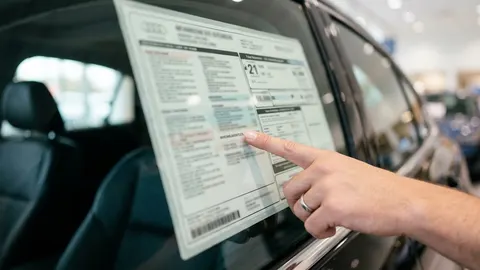
UK prices are quoted VAT-inclusive — the "on the road" price you see is what you pay. In some markets and comparisons, headline prices are quoted differently, making direct comparison misleading. Always compare like-for-like, tax-inclusive, identically-specced cars — a surprising amount of the apparent "gap" evaporates when you do.
Factor 2 — Exchange rates
This is underrated and genuinely significant.
Most cars sold in Britain are priced in a foreign currency at the manufacturer level — euros for European brands, and increasingly other currencies. When sterling is weak against the euro, imported cars cost UK importers more, and that feeds into list prices.
Post-2016, sterling's volatility against the euro has been a persistent upward pressure on UK car prices. A car "designed" to cost €40,000 becomes more or fewer pounds depending purely on the exchange rate on the day the pricing is set — nothing to do with the car itself.
This one moves. In periods of a strong pound, the UK-Europe gap narrows; in weak-sterling periods, it widens. Part of "why UK cars cost more" is simply "because the pound was weak when the price list was set."
Factor 3 — Specification inflation
Here's the one that catches people out in naive comparisons.
UK-market cars are often more highly specified as standard than their base European equivalents. British buyers have, over decades, come to expect more equipment on entry trims — so manufacturers load UK base models with kit that's optional (and separately priced) elsewhere.
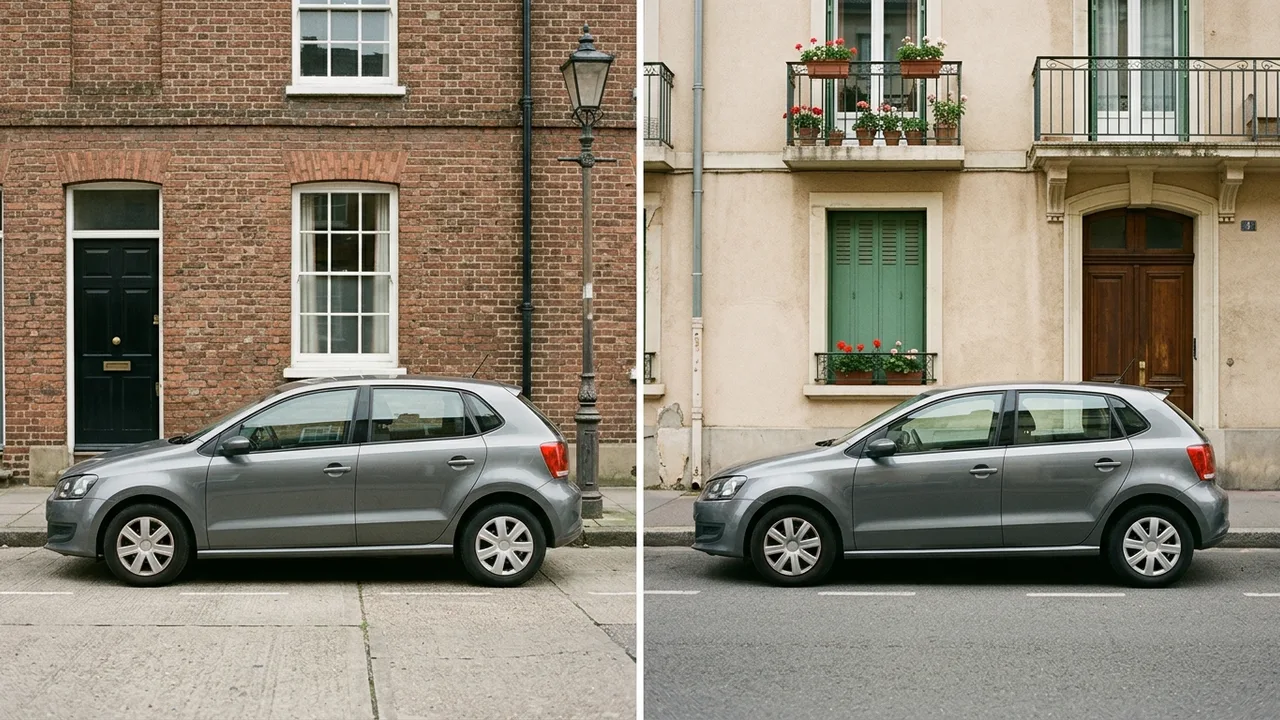
When someone compares "the same car" in the UK and Germany and finds the UK version dearer, they're frequently comparing a better-equipped UK car with a stripped base German one. Add the German options to match, and the gap shrinks or reverses.
Always compare identically-equipped cars. The "same model" is rarely the same car across borders.
Factor 4 — Right-hand drive
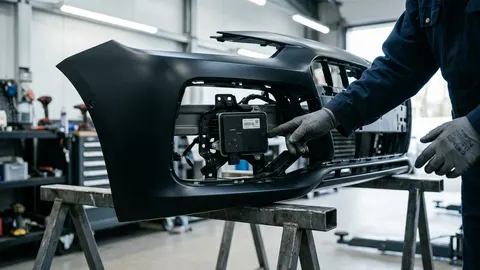
The UK (with Ireland, and outside Europe, Japan, Australia and others) is a right-hand-drive market. RHD is a global minority.
This matters in two ways:
- Smaller production volumes for RHD variants can mean less economy of scale
- The UK is the largest RHD market in Europe, which gives it some clout — but RHD remains a niche configuration globally, and niche can cost more
It's not a huge factor, but it's a real one, and it's structural — nothing a buyer can do about it.
Factor 5 — Market structure and dealer models
How cars are sold differs by country — dealer networks, margins, the shift toward agency sales models (where the manufacturer sets a fixed price and the dealer earns a handling fee rather than a margin).
Agency models, increasingly common, reduce discounting. A market with heavy traditional dealer competition has more room to haggle; an agency market has fixed prices with little give. The UK's shift toward agency selling on some brands has, for some buyers, meant less negotiability — which raises the effective price paid even if the list price is unchanged.
Factor 6 — The post-Brexit layer
Brexit added friction. UK-EU trade in cars is tariff-free only if rules of origin are met (see our dedicated piece), and the added customs administration, paperwork and border friction impose costs somewhere in the chain — costs that ultimately touch prices, even if diffusely.
So how big is the gap, really?
Honestly? Smaller than the "rip-off" framing implies, once you compare properly — but real. When you control for VAT, match the specification exactly, and account for the exchange rate on the pricing date, much of the headline gap narrows. What remains is a genuine premium driven by RHD niche status, market structure, and residual currency/Brexit effects.
The tabloid version ("Britain gets fleeced") overstates it. The complacent version ("there's no real gap") understates it. The truth is a modest, multi-causal premium that a careful buyer can partly neutralise.
What a UK buyer can actually do about it
1. Compare like-for-like, tax-inclusive, identically-specced. Most naive UK-vs-Europe comparisons are apples-to-oranges. Do it properly before concluding you're being ripped off.
2. Time the market against sterling — loosely. You can't perfectly time currency, but be aware that new price lists set during weak-sterling periods bake in higher prices. Buying just after a favourable currency move (when new price lists reflect it) can help.
3. Negotiate hard where you still can. On non-agency brands, UK dealers retain margin to give. On agency brands, focus on the parts still negotiable — finance terms, part-exchange, add-ons.
4. Consider the used market. UK used-car pricing follows its own dynamics, and a nearly-new import or a well-chosen used car sidesteps much of the new-car premium (check the VIN for recalls first, per our recall guides).
5. Don't fall for the personal-import fantasy. Importing a car yourself from Europe to save money almost never works after RHD conversion issues, VAT, registration, and type-approval costs. The apparent saving evaporates.
The bottom line
The same car often does cost a bit more in Britain than in Europe — but it's not a conspiracy, it's an accumulation: VAT presentation, exchange rates, spec inflation, RHD niche status, dealer models, and Brexit friction, each adding a little. The savvy response isn't outrage; it's precise comparison (like-for-like, tax-in, spec-matched) and hard negotiation where the market still allows it.
Key takeaways
- The UK-vs-Europe price gap is real but smaller than "rip-off Britain" framing suggests, and multi-causal
- Key factors: VAT presentation, exchange rates (weak sterling raises prices), spec inflation, RHD niche status, agency sales models, and Brexit friction
- Naive comparisons often pit a well-equipped UK car against a stripped base European one — always compare identically-specced, tax-inclusive
- Agency sales models reduce negotiability, raising the effective price paid
- Defence: compare like-for-like properly, negotiate where you still can, and consider used
Sources & further reading
- SMMT
- HMRC VAT guidance
- What Car?
- industry pricing analysis
- UK-EU Trade and Cooperation Agreement. Verified July 2026.
Figures, prices and policy details were current at the last-updated date above. Automotive pricing, incentives and regulations change frequently — verify time-sensitive details with the linked primary sources. Read our editorial policy and fact-checking standards.