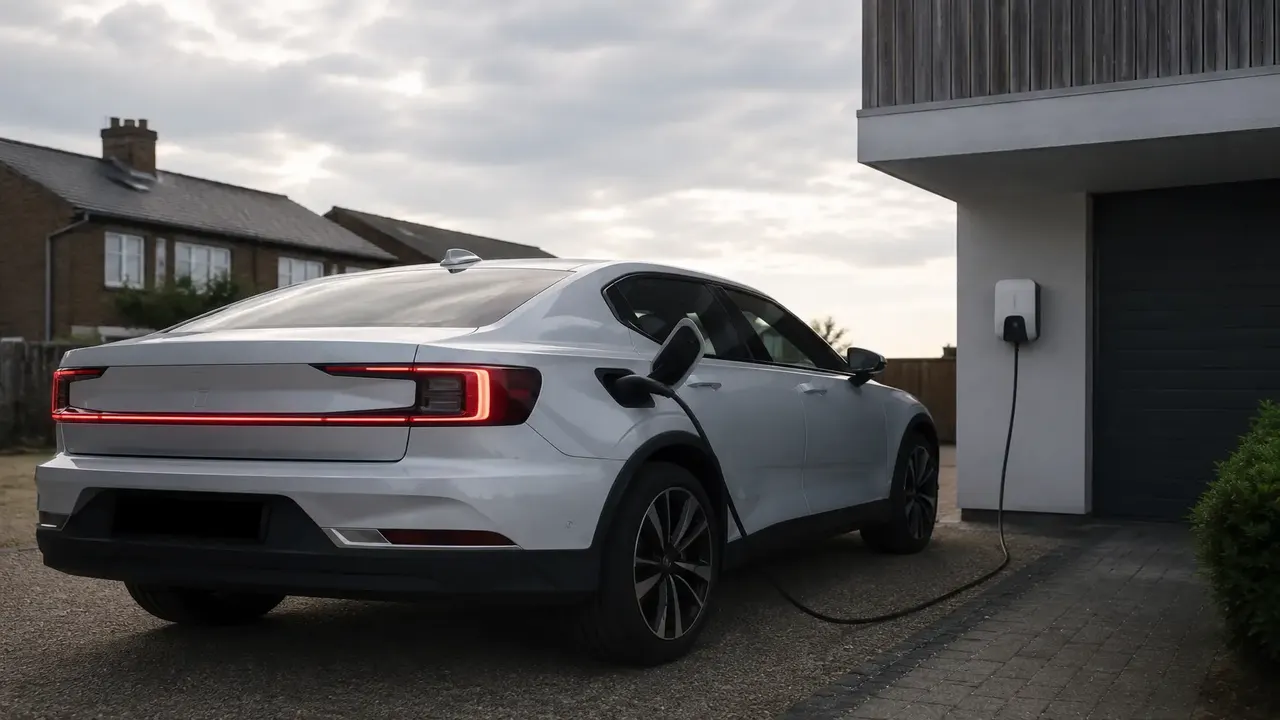
Rapid and ultra-rapid public charging in the UK typically costs 45-85p per kWh, meaning a top-up from 20-80% on a large battery can cost £20-£35 — noticeably more per mile than home charging. Networks like Ionity, InstaVolt, Gridserve, BP Pulse, Osprey and Tesla Supercharger (now open to non-Tesla EVs at many UK sites) dominate motorway and A-road coverage, while slower on-street and destination chargers from networks like Char.gy and Believ serve everyday top-ups in towns.
At a glance
| Charger type | Typical cost & speed |
|---|---|
| Slow on-street/lamppost (up to 7kW) | 20-40p/kWh, 4-8hrs for a full charge |
| Destination/fast (7-22kW) | 30-50p/kWh, 2-4hrs for a meaningful top-up |
| Rapid (50kW) | 45-65p/kWh, 30-60 mins to ~80% |
| Ultra-rapid (100kW+) | 55-85p/kWh, 15-35 mins to ~80% |
The main networks you'll actually use
Motorway services are dominated by a handful of ultra-rapid operators — Gridserve, InstaVolt, Ionity, Osprey and MFG EV Power among them — while Tesla's Supercharger network has opened a growing number of UK sites to all EV brands, often at competitive rates. In towns and cities, on-street and car-park chargers from operators like Char.gy, Believ, and local council-run schemes fill the gap for drivers without a driveway.
Why pricing varies so much
- Charging speed matters most: rapid and ultra-rapid chargers cost more per kWh because they require expensive grid connections and hardware.
- Membership or app-based accounts (rather than pay-as-you-go contactless) often unlock a lower per-kWh rate on the same network.
- Location matters — motorway service station chargers are typically pricier than an equivalent charger in a supermarket car park.
- VAT is charged at 20% on public charging, versus 5% for domestic electricity — a long-standing gap that public charging networks and campaigners have flagged as a fairness issue for drivers without home charging.
Apps and roaming
Most networks require their own app or RFID card, though multi-network apps (such as Zap-Map, Octopus Electroverse and Bonnet) let you pay across several networks from one account and compare live pricing and availability before you arrive. Contactless payment is now mandatory on new rapid and ultra-rapid chargers under UK regulations, so you're no longer forced to download an app just to use a motorway charger.
Avoiding a bad charging stop
- Check live charger status on an app like Zap-Map before detouring — broken or occupied chargers are still common enough to plan around.
- Precondition the battery on the way to a rapid charger (many EVs do this automatically when it's set as the sat-nav destination) — a warm battery charges noticeably faster.
- Charging speed tails off sharply above about 80% — for a quick top-up on a journey, it's usually faster overall to stop twice to 80% than once to 100%.
- Keep a backup network app installed in case your first-choice charger is faulted on arrival.
Advertised 'up to' charging speeds are a ceiling, not a guarantee — actual speed depends on your car's maximum charge rate, battery temperature and state of charge, and can be well below the charger's rated output.
Frequently asked questions
Which is the biggest public EV charging network in the UK?
Why is public EV charging more expensive than home charging?
Can non-Tesla cars use Tesla Superchargers in the UK?
Do I need an app for every charging network?
Is it faster to charge to 100% or stop twice on a long trip?
Sources & further reading
- Zap-Map – UK charging network coverage and pricing
- GOV.UK – electric vehicle charging infrastructure
- Ofgem – VAT and electricity market context
Figures, prices and policy details were current at the last-updated date above. Automotive pricing, incentives and regulations change frequently — verify time-sensitive details with the linked primary sources. Read our editorial policy and fact-checking standards.