Vehicle Overview
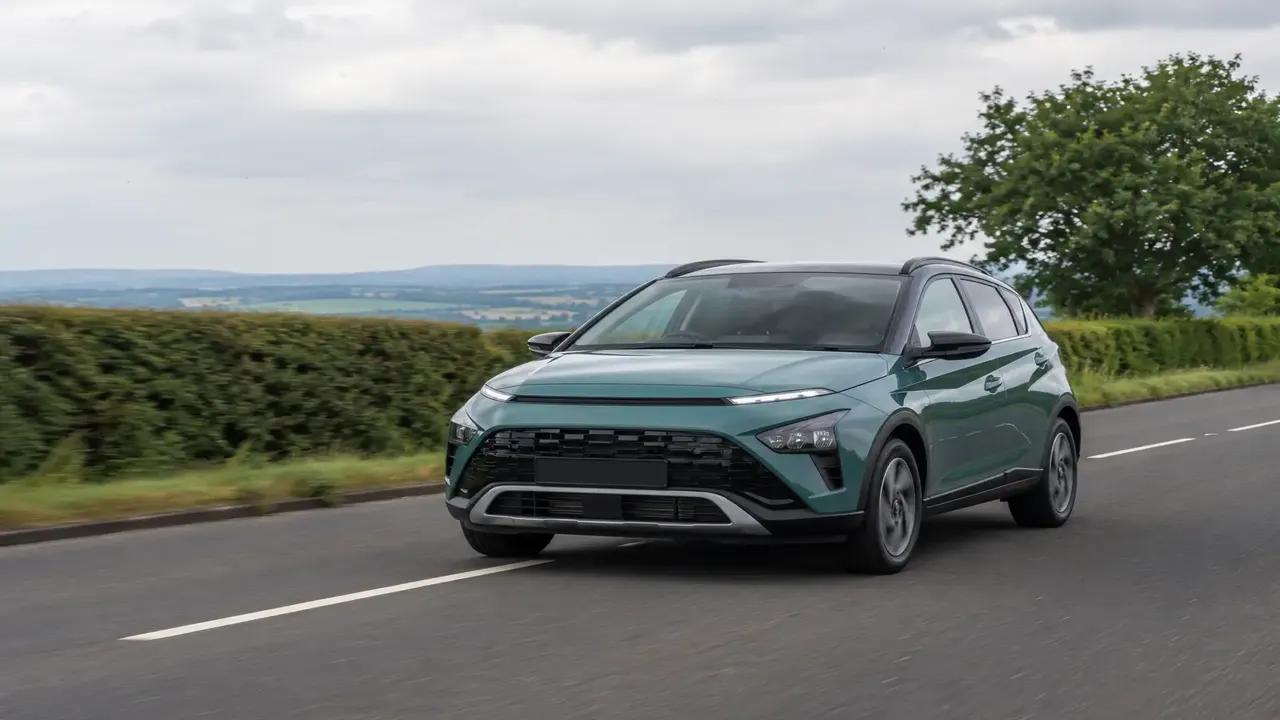
The 2021 Hyundai Bayon is a subcompact crossover SUV built specifically for the European market, slotting below the Kona. It combines a tall ride height, versatile packaging, and Hyundai’s latest design language (“Sensuous Sportiness”) in a compact footprint. The Bayon targets urban buyers who need the practicality and styling of an SUV without upsizing to larger, more expensive models.
| Segment | Subcompact Crossover SUV (B-segment) |
| Body Style | 5-door SUV |
| Model Year | 2021 (first generation) |
| Drivetrain | Front-wheel drive; no AWD option |
Key Specifications
| Specification | 1.0 T-GDi 100 PS | 1.0 T-GDi 120 PS (mild-hybrid) | 1.0 T-GDi 100 PS (mild-hybrid) |
|---|---|---|---|
| Engine | 1.0 L turbocharged I3 | 1.0 L turbocharged I3 | 1.0 L turbocharged I3 |
| Power | 100 PS @ 5,000 rpm | 120 PS @ 6,000 rpm | 100 PS @ 5,000 rpm |
| Torque | 172 Nm @ 1,500–4,000 rpm | 200 Nm @ 2,000–3,500 rpm | 172 Nm @ 1,500–4,000 rpm |
| Transmission | 6-speed manual | 7-speed dual-clutch | 6-speed manual |
| Drivetrain | FWD | FWD | FWD |
| 0–100 km/h | 11.4 s | 9.9 s | 12.0 s |
| Top Speed | 180 km/h | 190 km/h | 175 km/h |
| Fuel Economy (WLTP) | 5.0–5.2 L/100 km | 4.8–5.0 L/100 km | 4.9–5.1 L/100 km |
| CO₂ Emissions | 113–118 g/km | 110–115 g/km | 112–117 g/km |
| Dimensions (L×W×H) | 4,180 × 1,775 × 1,490 mm | Same | Same |
| Wheelbase | 2,580 mm | ||
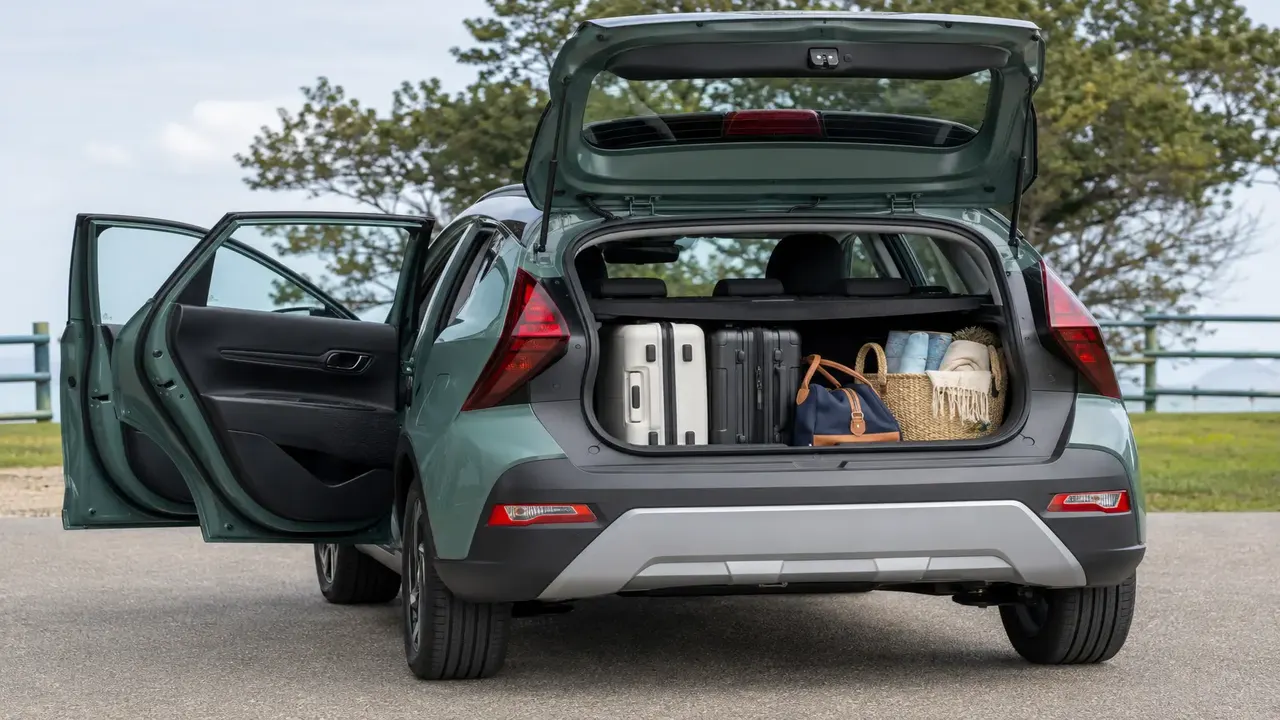
| Boot Capacity | 411 L (seats up) | 411 L | 411 L |
Exterior Design
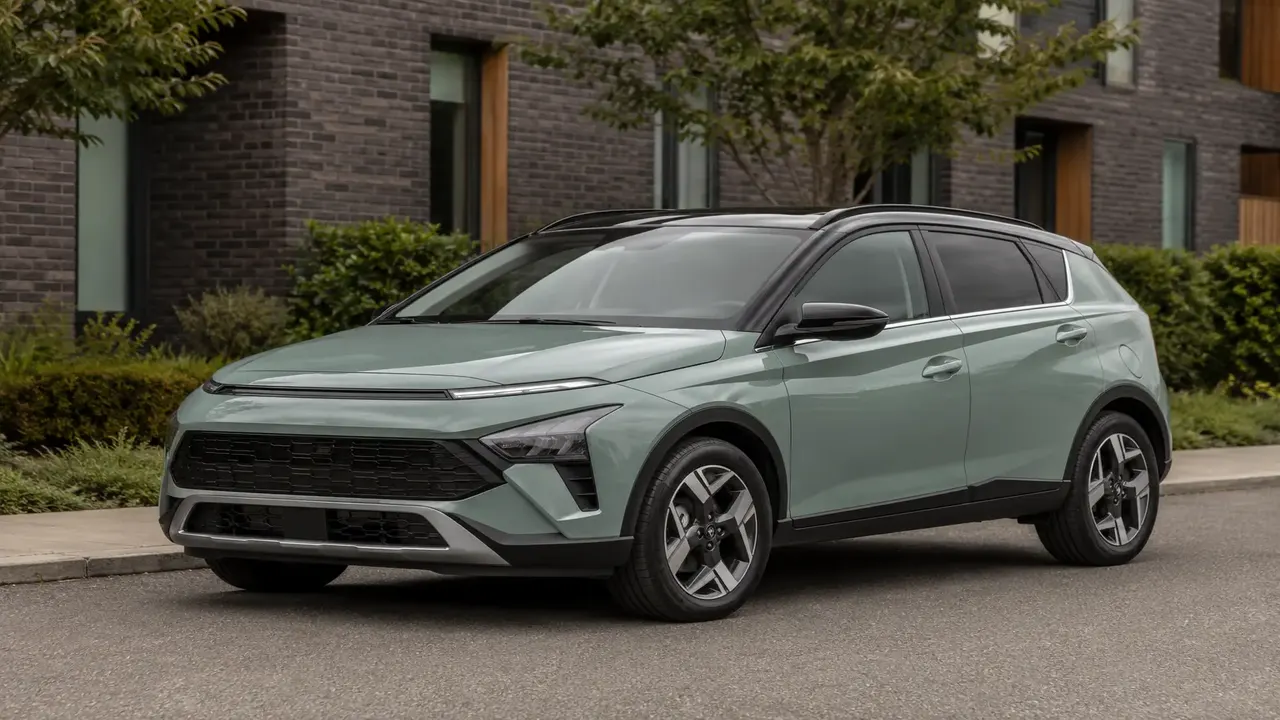
| Sensuous Sportiness Styling | Cascading grille flanked by split-level LED lighting and wide “wing” daytime running lamps. |
| Crossover Cues | Pronounced wheel arches, skid-plate trim front and rear, and available two-tone roof. |
| Wheels | 16″ steel wheels standard; 16″ or 17″ alloys optional on higher trims. |
| Color Palette | Includes Phantom Black, Atlas White, Shimmering Silver, Surfy Blue, and exclusive two-tone combinations. |
Interior, Comfort & Materials
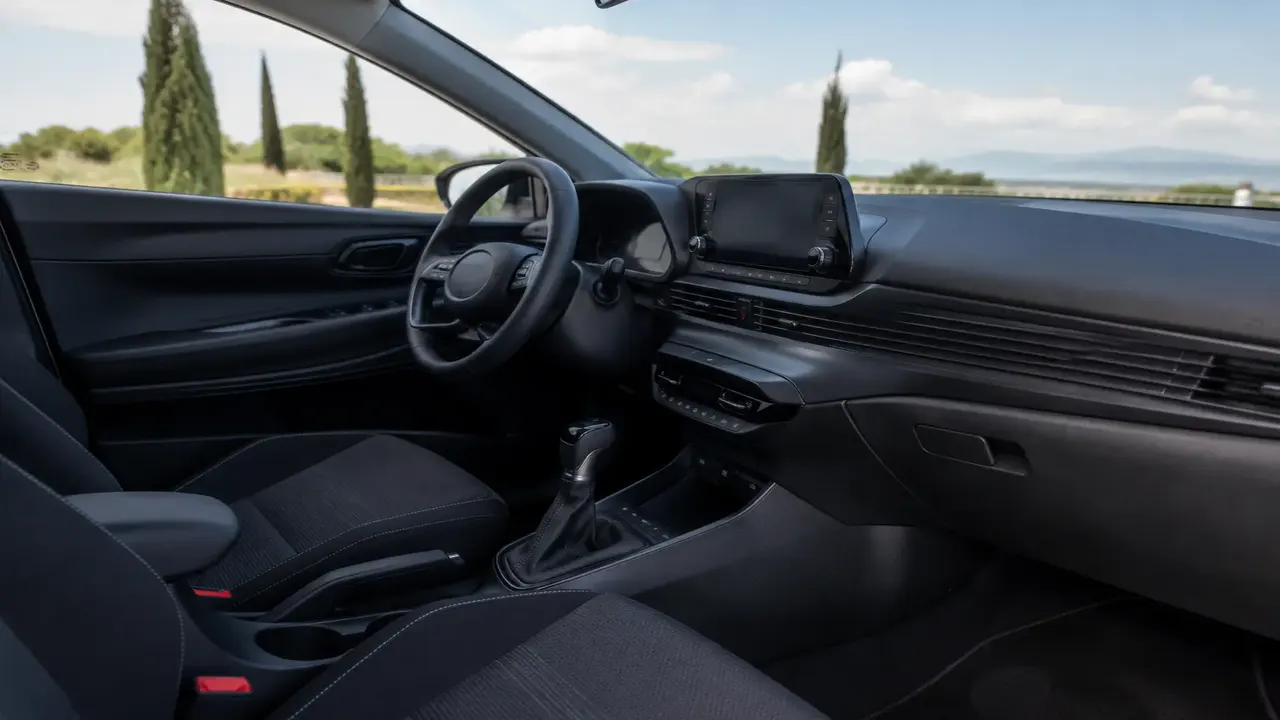
| Cabin Layout | Horizontal dashboard emphasis with floating 8″ touchscreen at its center. |
| Upholstery | Cloth seats in Active and Trend; leatherette on Premium trim, with contrast stitching. |
| Space | Class-leading rear legroom for its segment (up to 1,030 mm) and generous headroom. |
| Storage | Centre console bin, door pockets, under-floor boot compartment, and glovebox. |
Features & Infotainment
| Infotainment | 8″ touchscreen with Apple CarPlay & Android Auto; optional 10.25″ screen with navigation. |
| Digital Instrument Cluster | 4.2″ display on Active/Trend; 10.25″ fully digital on Premium. |
| Connectivity | Bluetooth, multiple USB ports, and optional wireless charging pad. |
| Comfort Tech | Dual-zone climate control, rain-sensing wipers, and heated front seats (Premium). |
Safety & Ratings
| Euro NCAP | Four stars (October 2021), reviewed by Euro NCAP in 2022 and 2023 and again at the May 2024 facelift. Tested as a left-hand-drive Bayon 1.0 T-GDI; the rating covers the 1.0 T-GDI, the 48V mild hybrid and the 1.2 MPI. Category scores: adult occupant 76%, child occupant 82%, vulnerable road users 76%, safety assist 67% (Euro NCAP, checked 2 October 2026). |
Hyundai SmartSense Suite
Forward Collision-Avoidance Assist (AEB) with pedestrian and cyclist detection
Lane Keeping Assist & Lane Following Assist
Blind Spot Collision Warning & Rear Cross-Traffic Alert
Driver Attention Warning
Optional Smart Cruise Control with Stop & Go
Driving Performance
1.0 T-GDi 100 PS: Smooth, linear turbo delivery; light steering for city agility.
1.0 T-GDi 120 PS Hybrid: Sharper throttle response, mild-hybrid provides assist under acceleration.
| Ride & Handling | Independent MacPherson struts front, torsion-beam rear with well-damped compliance and controlled body roll. |
| Manual vs DCT | 6-speed manual feels precise; 7-speed DCT offers quick shifts though occasional low-speed jerks. |
Fuel Efficiency / Emissions
100 PS Manual: ~5.0 L/100 km WLTP (113 g/km CO₂).
120 PS DCT Hybrid: ~4.8 L/100 km WLTP (110 g/km CO₂).
| Real-World | Consistent mid-5 L/100 km in mixed driving for hybrid; ~5.2 L/100 km for manual. |
Practicality & Everyday Usability
| Boot | 411 L under parcel shelf; 1,205 L with rear seats folded (60:40 split). |
| Cabin Storage | Ample door bins, central cubby, and under-floor storage tray for valuables. |
| Visibility & Access | High seating position, large windows, and wide-opening rear tailgate. |
| Urban Friend | 10.3 m turning circle, front/rear parking sensors, and optional rear-view camera. |
Warranty & Maintenance
| Warranty | 5 years / unlimited mileage (vehicle); 8 years / 160,000 km (powertrain). |
| Service Intervals | 15,000 km or 12 months; Hyundai’s prepaid maintenance packs available. |
| Roadside Assist | 5 years / unlimited. |
Price & Value for Money
Starting Price (UK OTR)
1.0 T-GDi 100 PS Active: from £18,000
1.0 T-GDi 120 PS Trend: from £20,000
1.0 T-GDi 120 PS Premium: from £22,000
| Value Proposition | Strong standard equipment and comprehensive warranty undercut many B-segment rivals. |
Comparison with Rivals
| Model | Powertrain | Power / Torque | Boot (L) | Price (From) |
|---|---|---|---|---|
| Hyundai Bayon | 1.0 T-GDi (100–120 PS) | 100–120 PS / 172–200 Nm | 411 | £18–£22 k |
| Toyota Yaris Cross | 1.5 L HEV / 1.0 T | 116 PS / 98 PS | 390 | £21–£25 k |
| Renault Captur | 1.0 T / 1.3 T | 100–130 PS | 422 | £19–£24 k |
| Volkswagen T-Cross | 1.0 T / 1.5 T | 95–150 PS | 455 | £20–£25 k |
Pros & Cons
Pros
Eye-catching, modern styling in a small package
Spacious cabin and versatile boot for class
Comprehensive safety tech standard
Strong warranty and low running costs
Cons
No AWD option in a segment where some rivals offer it
Hybrid only on the higher-powered engine
DCT can be hesitant in stop-start traffic
Ride firm over sharp bumps on larger wheels
Overall Rating
4.1 / 5 stars
True Motion Auto has not independently road-tested this vehicle. Specifications, pricing and performance figures are compiled from manufacturer technical data and published independent tests, and are attributed where quoted. Our score reflects a structured research assessment of specifications, pricing, safety data and owner feedback for the segment — not an independent road test. Read how we review cars.
An attractive, well-equipped subcompact crossover that delivers SUV practicality and Hyundai value in a city-friendly package.
Final Verdict
The 2021 Hyundai Bayon is ideal for urban explorers and small families seeking a stylish crossover with versatile space, advanced safety, and Hyundai’s renowned warranty—all at an accessible price point.
More Hyundai reviews: Hyundai i10 Review, Hyundai i20 Review and Hyundai i30 Review.
Buyer checkpoints
| Buyer checkpoint | True Motion Auto view |
|---|---|
| Best for | Drivers wanting balanced everyday usability. |
| Body style | Car |
| Powertrain focus | Petrol, diesel or hybrid depending on model year and trim |
| UK ownership note | Check insurance group, VED, charging or fuel costs and service-plan pricing before buying. |
| Verdict | Worth shortlisting if its size, running costs and equipment match your daily use. |
Frequently asked questions
Is the Hyundai Bayon good for UK roads?
Should I buy new or used?
What should I check before ordering?
Is it suitable for families?
Specifications, prices and equipment were current at publication and vary by model year, trim and market. Verify final details with a franchised dealer before ordering. Read how we review cars and our editorial policy.