Why "automatic" tells you almost nothing
Two cars wear the same "automatic" badge; one glides seamlessly, the other head-nods through traffic. The difference is architecture, and knowing the four families turns test drives from vibes into diagnosis.
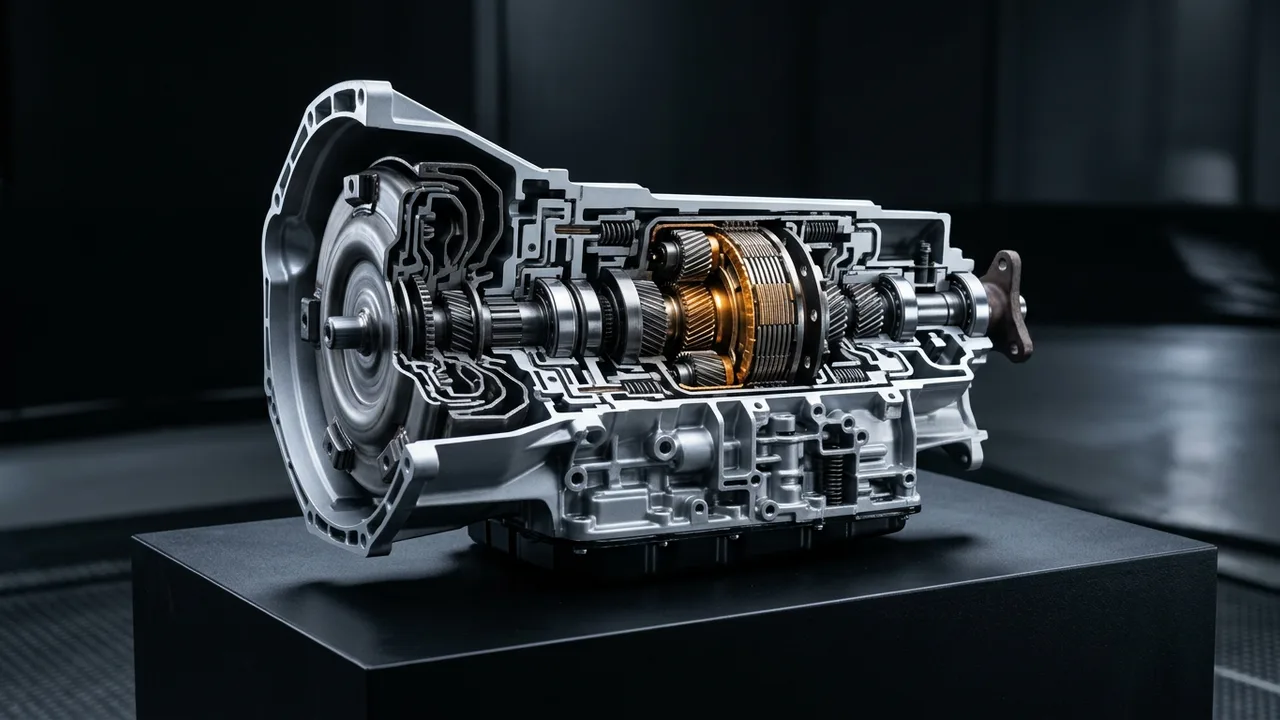
Torque converter (TC): the classic — a fluid coupling feeding a planetary gearset. Modern 6–10-speed TCs lock up early for efficiency and remain the smoothness benchmark: creeping, towing, hill starts, all effortless. Weaknesses are mostly historical; today's units are efficient, durable, and the safe default. Found everywhere from budget-champion 6ATs to luxury flagships.
CVT: belt-or-chain between variable pulleys — infinite ratios, no shifts at all. Peak efficiency in city driving and utterly smooth, but hard acceleration produces the elastic "drone" enthusiasts hate (fake stepped "gears" mask it). Longevity is fine with religious fluid changes — the service interval is the reliability story; Toyota/Honda-school CVTs have strong records, some early rivals didn't.
Dual-clutch (DCT): two automated clutches pre-selecting alternate gears — the fastest shifts and near-manual efficiency, brilliant at speed. The compromise lives at parking pace: low-speed shuffle and heat build-up in crawling traffic, plus a costlier repair profile on some families (dry-clutch small-car units drew the worst records; wet-clutch performance units fare better).
AMT: a manual gearbox with robot arms — the budget automatic (India's traffic-democratiser). Cheapest to buy and run, most honest weakness: slow, noddy shifts. Driven with gentle throttle-lift timing, it's perfectly liveable; expected to feel like a TC, it disappoints nightly.
Matching gearbox to life
Heavy city traffic: TC or CVT — both idle-creep gracefully; DCTs suffer, AMTs test patience. Highway-dominant: DCT's efficiency and snap, or a tall-geared TC. Towing/hills: TC, no contest. Budget-first: AMT with adjusted expectations, or the growing budget-TC class. Driver's cars: DCT (or, whisper it, the manual). Longest ownership: TC or a proven-family CVT — with fluid services done on time, whatever the salesman said about "sealed for life."
The questions buyers actually ask
Are CVTs really unreliable? The good families are proven over millions of taxis. The pattern behind horror stories is almost always skipped fluid changes or an early-generation design.
Why does my DCT judder at walking pace? Clutch-slip management — architecture, not fault, within limits. Test your traffic pattern before buying one.
Is "sealed for life" fluid real? "Life" means the warranty's life. Fluid changes at sensible intervals are the cheapest transmission insurance on any of these.
Key takeaways
- TC = smoothness and durability default; CVT = city efficiency, drone under load
- DCT = fastest shifts, weakest at crawling pace; AMT = cheapest, slowest-witted
- Match to your traffic: creep-heavy commutes punish DCTs, reward TC/CVT
- Fluid service on schedule is the universal reliability lever
- Test drive in traffic and on a slope — the architecture reveals itself in minutes
Sources & further reading
- Transmission-engineering literature
- manufacturer service-interval documentation
- reliability-survey patterns
Figures, prices and policy details were current at the last-updated date above. Automotive pricing, incentives and regulations change frequently — verify time-sensitive details against the primary sources listed below. Read our editorial policy and fact-checking standards.