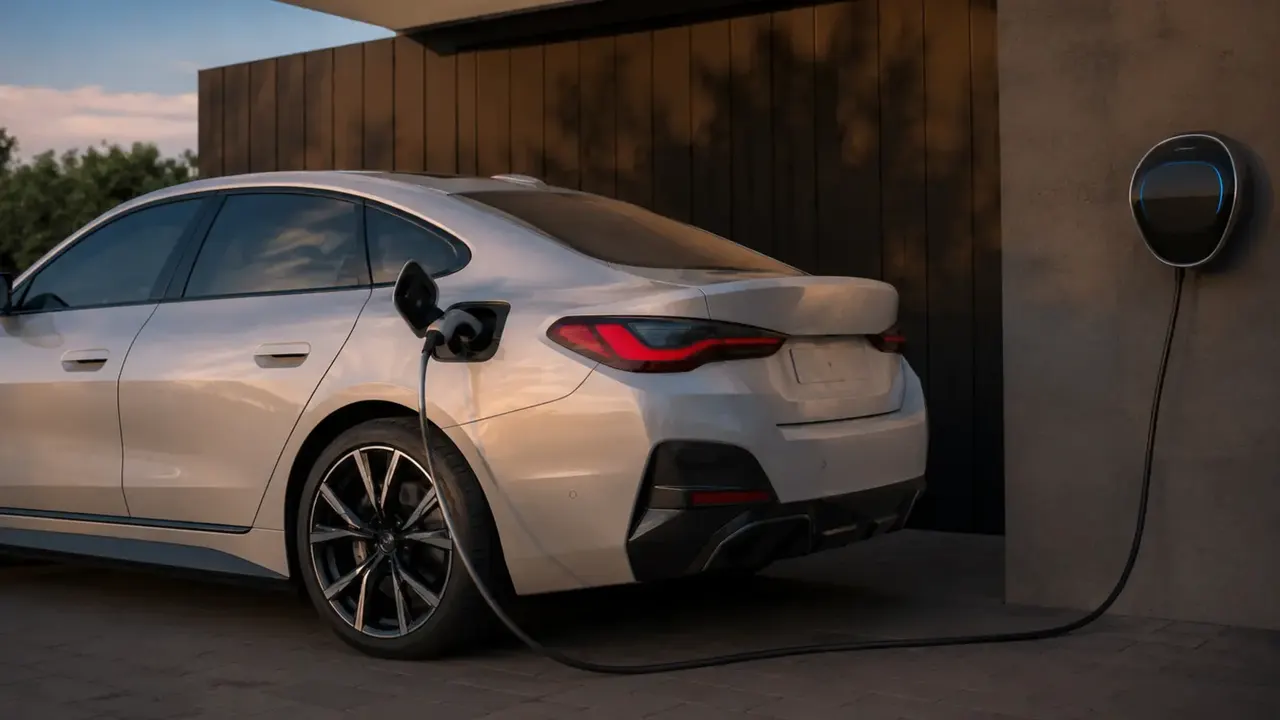
A basic Level 1 charger (standard 120V outlet, included with the car) adds roughly 3-5 miles of range per hour — too slow for most daily needs beyond very short commutes. A Level 2 home charger (240V) adds roughly 20-30 miles of range per hour and typically costs $400-$1,700 for the charger plus $500-$2,000+ for professional electrical installation, depending on your panel capacity and wiring distance. The federal 30C tax credit for home chargers expired for installations after June 30, 2026, so most homeowners installing now will only find state or utility rebates, not a federal credit.
At a glance
| Charging level | Approx. range added per hour | Typical total install cost |
|---|---|---|
| Level 1 (120V, standard outlet) | 3-5 miles/hour | $0 — uses cord included with car |
| Level 2 (240V, dedicated circuit) | 20-30 miles/hour | $900-$3,700 (charger + install) |
| Level 2, existing 240V circuit nearby | 20-30 miles/hour | $400-$1,700 (charger only) |
Level 1 vs. Level 2: what the difference means day to day
Every EV comes with a Level 1 cable that plugs into a standard 120V household outlet. It works, but it's slow — typically adding only 3-5 miles of range per hour, meaning a full charge from near-empty can take 40+ hours. That's fine for drivers with very short daily commutes and overnight charging time to spare, but most owners quickly upgrade to Level 2, which uses a 240V circuit (the same type that powers an electric dryer or oven) to add roughly 20-30 miles of range per hour — enough to fully replenish a typical daily commute overnight, every night.
What a Level 2 home install actually costs
The charger unit itself runs $400-$1,700 depending on brand, smart-charging features (app control, scheduling, energy monitoring) and amperage rating. Installation cost varies far more, depending on how far your electrical panel is from where you park, whether your panel has spare capacity, and local electrician rates: expect $500-$2,000+ for a straightforward install, and potentially more if a panel upgrade is needed to support the added electrical load.
| Install scenario | Typical added cost |
|---|---|
| Panel has spare capacity, short wire run to garage | $500-$1,000 |
| Longer wire run or outdoor mounting | $1,000-$1,800 |
| Panel upgrade required for added capacity | $1,500-$4,000+ |
Incentives: what's actually available in 2026
The federal Alternative Fuel Vehicle Refueling Property Credit (Section 30C), which covered up to 30% of charger and install costs up to $1,000, expired for equipment placed in service after June 30, 2026. If you're installing after that date, you won't qualify federally — check instead for state tax credits and, especially, your electric utility's own rebate program, since many utilities still offer $200-$1,000 rebates for home Level 2 installs to encourage off-peak charging.
Electricity cost to charge at home
Charging cost depends entirely on your local electricity rate and your vehicle's efficiency, but as a rough planning figure, most EVs use about 25-40 kWh per 100 miles. At a US average residential rate in the neighborhood of $0.15-$0.18/kWh, that works out to roughly $4-$7 per 100 miles — usually far cheaper than the equivalent gasoline cost, and cheaper still if your utility offers an off-peak EV rate plan for overnight charging.
Steps to set up home charging
- Check your electrical panel's spare capacity with a licensed electrician before buying a charger.
- Ask your utility whether they offer a Level 2 rebate or an EV-specific off-peak rate plan.
- Choose a charger amperage matched to your vehicle's onboard charger limit — a higher-amp charger than your car can accept adds cost with no benefit.
- Get at least two electrician quotes, since installation cost (not the charger itself) is usually the bigger variable.
- Confirm any local permit requirements — many jurisdictions require an electrical permit for a new 240V circuit.
If you can't install a dedicated charger, Level 1 charging overnight covers many short commutes, and public Level 2/DC fast charging can fill the rest of the gap — see our public charging networks guide for how that compares on cost and convenience.
Frequently asked questions
How much does it cost to install a home EV charger in 2026?
Is there still a tax credit for home EV chargers in 2026?
How much does it cost to charge an EV at home?
Do I need an electrician to install a Level 2 charger?
Sources & further reading
- US DOE Alternative Fuels Data Center — home charging
- IRS — Alternative Fuel Vehicle Refueling Property Credit
Figures, prices and policy details were current at the last-updated date above. Automotive pricing, incentives and regulations change frequently — verify time-sensitive details with the linked primary sources. Read our editorial policy and fact-checking standards.