Note: costs mentioned below are given in US dollars as a general point of reference — actual prices vary by country, currency, and local market.
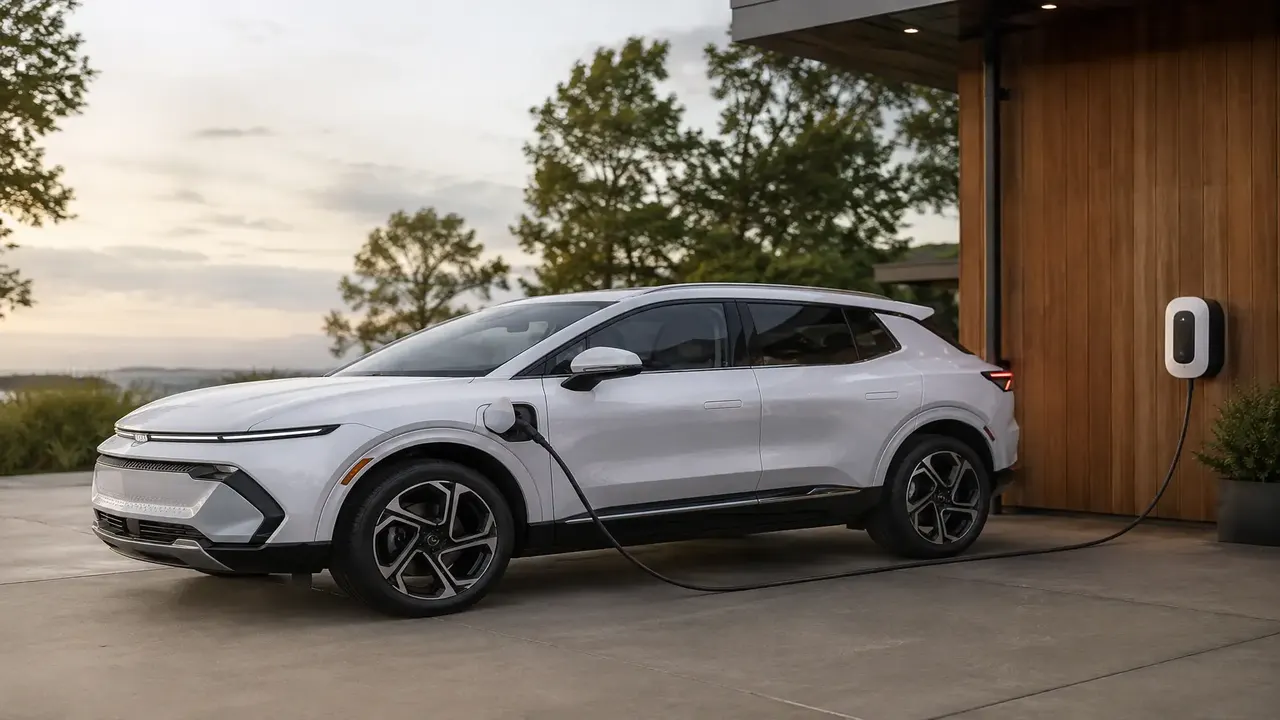
EV charging cables are thick, heavy and expensive to replace (often $150-$500 for a Level 2 cable alone), so keeping them off wet garage floors and out of tight coils extends their life significantly. Wall hooks and brackets cost $15-$40, retractable reels run $60-$150, and simple wrap straps cost $5-$15 — reels are the most convenient for daily use, hooks are the cheapest reliable option.
At a glance
| Organizer type | Convenience | Price band |
|---|---|---|
| Wall hook/bracket | Manual coil and hang | $15-$40 |
| Retractable reel | Pull and auto-retract | $60-$150 |
| Wrap strap/velcro | Portable, cable stays coiled | $5-$15 |
| Wall-mounted holster/caddy | Holds connector + coiled cable | $20-$60 |
Why cable care actually matters
EV charging cables carry far more current than a typical extension cord and use thicker, less flexible conductors as a result. Tight coiling, especially in cold weather when insulation stiffens, stresses the internal wiring at the bend points. Left on a garage floor, cables also pick up grit that works into the insulation over time and are exposed to moisture that accelerates connector corrosion.
The main organizer types
- Wall hooks and brackets — the simplest and cheapest option; you manually coil the cable in wide loops and hang it, keeping it off the ground.
- Retractable reels — mount to a wall or ceiling and let you pull out only the length needed, then auto-retract; most convenient for daily use but the priciest option.
- Wrap straps — a simple velcro or elastic strap that holds a coiled cable together for storage in a trunk or on a smaller hook; the cheapest and most portable choice.
- Wall-mounted holsters/caddies — combine a connector holder with a cable wrap area, often included with home Level 2 chargers or sold as an accessory.
Indoor vs. outdoor organizers
An organizer mounted outdoors — for a pedestal or driveway setup — needs a genuinely weatherproof rating, not just a garage-rated product moved outside. UV exposure also degrades plastic hooks and reels faster outdoors, so metal or UV-stabilized plastic construction matters more for an exterior install.
Mistakes to avoid
Coiling a cable into a tight loop and cinching it hard, especially in cold weather, is one of the most common ways charging cables develop internal wire fatigue and eventually fail. Use wide loops (a foot or more in diameter) and avoid kinking the cable sharply at the connector ends.
Leaving a cable on the ground where it's a tripping hazard is also a real liability concern, particularly in shared driveways or parking areas — an organizer that keeps the cable elevated between uses solves both the wear problem and the safety issue at once.
Do-it-yourself options
A basic wall hook is easy to install with minimal tools and is often the best value — the main upgrade retractable reels offer is convenience (no manual coiling) rather than better cable protection, since a well-coiled cable on a simple hook is just as protected as one on a $150 reel.
Frequently asked questions
Does coiling a charging cable damage it?
What's the best way to store a charging cable outdoors?
Do cable organizers fit any charger cable?
Is a DIY hook as good as a bought organizer?
Do cable organizers help prevent theft?
Sources & further reading
- U.S. Department of Energy — Alternative Fuels Data Center: EV Charging Equipment Care
- UL — Cable and Cord Safety Standards
Figures, prices and policy details were current at the last-updated date above. Automotive pricing, incentives and regulations change frequently — verify time-sensitive details with the linked primary sources. Read our editorial policy and fact-checking standards.