Note: costs mentioned below are given in US dollars as a general point of reference — actual prices vary by country, currency, and local market.
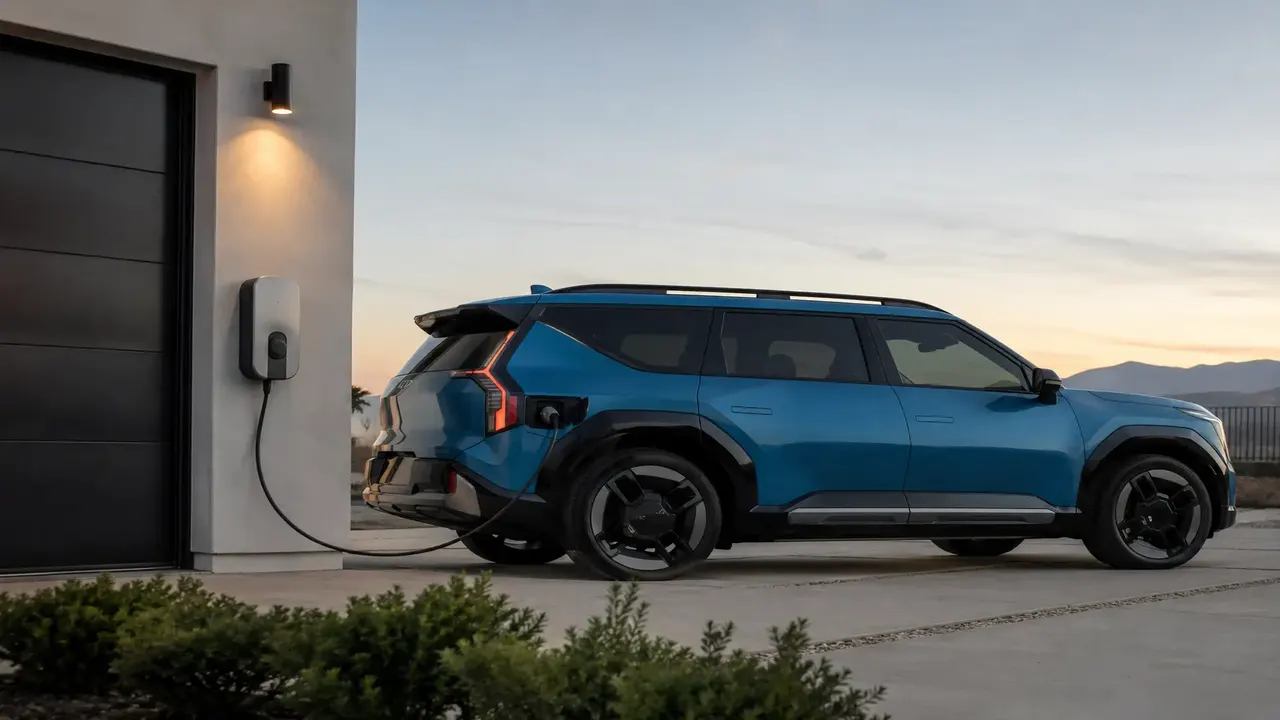
A J1772-to-NACS adapter lets a vehicle with a NACS charging port (Tesla models, and newer NACS-native EVs from other automakers) plug into the far larger existing base of J1772 Level 1/2 AC charging stations and home EVSEs. These are AC-only, physically simple adapters — Tesla has shipped one with its vehicles for years — and cost $15-$50 from OEM or reputable third-party brands. They do not work for DC fast charging, which uses a different adapter entirely.
At a glance
| Feature | Detail |
|---|---|
| Charging type supported | AC only — Level 1 and Level 2 |
| Typical price | $15-$50 |
| Who needs one | NACS-port EVs charging at legacy J1772 stations/home chargers |
| Certification to check | UL 2594 (AC adapter safety) |
Which direction this adapter goes
This adapter has a J1772 plug on one end (to insert into a J1772 charging station or home EVSE cable) and a NACS-shaped socket on the other (to receive the vehicle's NACS charging port). In plain terms: it lets a Tesla or other NACS-native EV plug into the huge existing network of J1772 AC stations and home chargers that predate the NACS transition.
Why it's still essential in 2026
Even as new EV models shift to native NACS ports, the installed base of J1772 AC charging stations — public Level 2 stations at workplaces, retail lots, apartment complexes and many home installations — vastly outnumbers newer NACS-native public AC infrastructure. Nearly every NACS-equipped vehicle ships with or can buy this adapter for exactly that reason.
AC-only: no DC fast charging
This adapter only carries AC charging pins, so it works for slower Level 1/2 charging but cannot be used at J1772-based DC fast chargers (which use the separate CCS standard with additional DC pins). Drivers needing DC fast charging at a CCS station need a different adapter entirely — see CCS charging adapters for that case.
What to look for when buying one
- OEM or automaker-branded — Tesla and other automakers sell their own version, generally the safest bet for fit and durability.
- UL 2594 certification — the relevant safety standard for AC EV charging adapters.
- Amperage rating — confirm it supports at least 32A if you plan to use it at higher-powered J1772 Level 2 stations, or charging will be capped.
- Compact, glovebox-friendly size — this is meant to be carried at all times as a just-in-case adapter, so bulk matters.
Mistakes to avoid
Cheap unbranded versions sold through third-party marketplaces have occasionally been flagged for loose-fitting pins or inadequate amperage ratings — since this adapter carries meaningful current for hours at a time during Level 2 charging, stick to OEM or well-reviewed, UL-listed brands rather than the lowest-priced option.
Leaving this adapter at home is also a common regret — because it's small and cheap, keeping one permanently in the vehicle (glovebox or trunk) means never being stranded at a J1772-only public charger.
Frequently asked questions
Do Teslas come with a J1772 adapter already?
Can this adapter be used for DC fast charging?
Is this the same as a NACS-to-J1772 adapter?
What amperage should I look for?
Are third-party J1772-to-NACS adapters safe?
Sources & further reading
- SAE International — J3400 (NACS) Standard
- U.S. Department of Energy — Alternative Fuels Data Center: EV Charging Connectors
Figures, prices and policy details were current at the last-updated date above. Automotive pricing, incentives and regulations change frequently — verify time-sensitive details with the linked primary sources. Read our editorial policy and fact-checking standards.