Note: costs mentioned below are given in US dollars as a general point of reference — actual prices vary by country, currency, and local market.
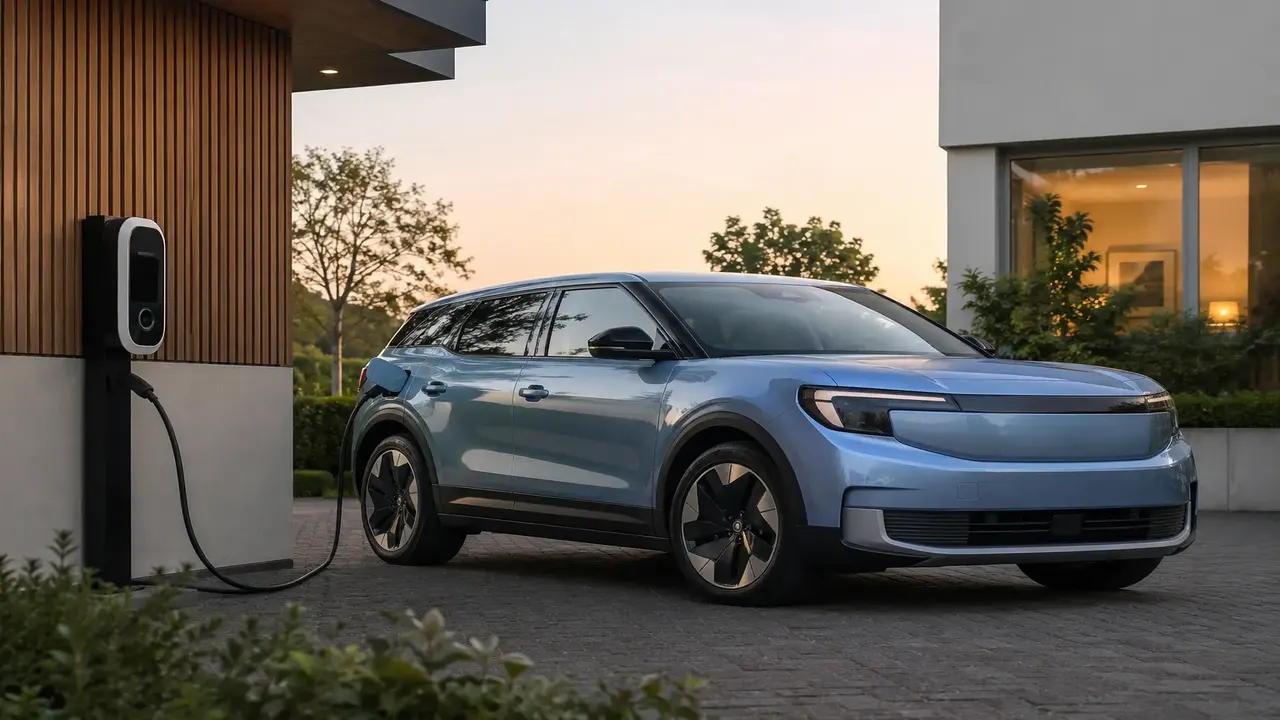
CCS (Combined Charging System) has been the dominant DC fast-charging standard for most non-Tesla EVs in North America and Europe, but with most major automakers shifting new US/Canada models to NACS (Tesla's connector) through 2025-2026, adapters now bridge the gap in both directions. AC-only CCS-side adapters cost $30-$80, while DC fast-charging adapters that let CCS-equipped EVs use NACS Superchargers run $150-$400, since they need a communication chip, not just a physical plug swap. Only buy adapters certified to UL 2252.
At a glance
| Adapter type | Use case | Price band | Certification to check |
|---|---|---|---|
| CCS1-to-NACS (DC) | CCS-equipped EV charging at NACS DC fast chargers | $150-$400 | UL 2252, OEM-approved |
| NACS-to-CCS1 (DC) | NACS-equipped EV at legacy CCS DC stations | $150-$400 | UL 2252, OEM-approved |
| AC-only adapters | Home/destination Level 1-2 charging cross-compatibility | $30-$80 | UL 2594 |
What CCS actually is
CCS (Combined Charging System) combines an AC charging plug with two additional DC pins below it, allowing one port to handle both slower AC home charging and fast DC public charging. CCS1 is the North American variant; CCS2 (Combo 2) is used across most of Europe. It has been the default fast-charging standard for the majority of non-Tesla EVs sold since the mid-2010s.
Why adapters became a bigger deal in 2025-2026
Tesla's NACS (North American Charging Standard) connector was opened for other automakers, and most major brands — including Ford, GM, Rivian, Honda, Hyundai and Kia — have shifted new North American models to native NACS ports, with Tesla's extensive Supercharger network now openly available to other brands. That leaves millions of existing CCS-equipped EVs on the road needing adapters to reach Superchargers, while new NACS-native vehicles need adapters to reach the large existing base of CCS public stations.
AC adapters vs. DC fast-charging adapters
The complexity — and price — jumps sharply between AC and DC adapters. AC-only adapters just need to physically route pins between plug standards. DC fast-charging adapters must also relay real-time communication between the vehicle and charger to negotiate voltage, current and safety shutoffs, which requires an embedded chip and is why certified DC adapters cost several times more than a basic AC adapter.
What to check before buying
- OEM-approved or automaker-endorsed — vehicle manufacturers publish lists of adapters confirmed compatible with their DC fast-charging systems.
- UL 2252 certification for DC adapters — the safety standard covering EV conductive charging adapters.
- Maximum amperage/power rating — make sure it matches or exceeds your vehicle's fast-charging capability, or charging will be artificially capped.
- Weatherproofing — public chargers get used outdoors in all conditions.
Mistakes to avoid
Uncertified, unbranded DC adapters sold through marketplace listings have been flagged repeatedly for safety issues, since a poorly made DC adapter can fail to properly manage the high current and voltage of fast charging. Stick to OEM or automaker-approved adapters for DC fast charging — the AC-only market is lower-stakes but still worth buying UL-listed.
Some Tesla Supercharger locations include a built-in adapter (sometimes called a 'Magic Dock') so CCS-equipped vehicles don't need to carry their own — but coverage isn't universal, so travelers relying on Superchargers with a CCS-equipped EV should still carry a personal adapter as a backup.
Frequently asked questions
Do I need a CCS adapter if I'm buying a new EV in 2026?
Can I fast-charge a Tesla at a CCS station with an adapter?
Are DC fast-charging adapters safe?
Why do DC adapters cost so much more than AC adapters?
Will CCS become obsolete in North America?
Sources & further reading
- U.S. Department of Energy — Alternative Fuels Data Center: EV Charging Connectors
- SAE International — J3400 (NACS) Standard
Figures, prices and policy details were current at the last-updated date above. Automotive pricing, incentives and regulations change frequently — verify time-sensitive details with the linked primary sources. Read our editorial policy and fact-checking standards.