Note: costs mentioned below are given in US dollars as a general point of reference — actual prices vary by country, currency, and local market.
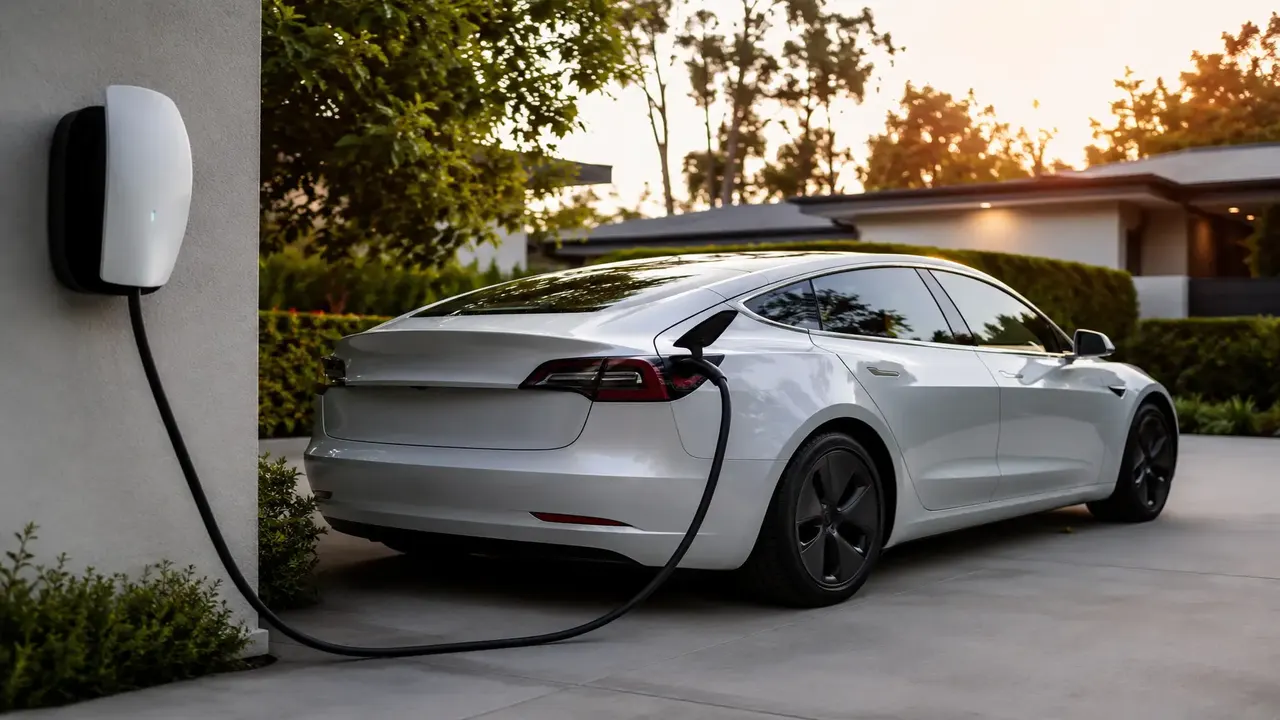
A NACS-to-J1772 adapter lets a vehicle with a J1772 or CCS port (most non-Tesla EVs built before the 2025-2026 NACS transition) plug into Tesla Destination Chargers or Superchargers, which use the NACS connector. AC-only versions (for Tesla Destination/Wall Chargers) cost $30-$80; DC fast-charging versions for Supercharger access cost $150-$400 and require OEM or automaker approval since they must communicate charging parameters, not just adapt the plug shape.
At a glance
| Adapter version | Use case | Price band |
|---|---|---|
| AC-only NACS-to-J1772 | Tesla Destination/Wall Chargers (Level 2) | $30-$80 |
| DC fast-charging NACS-to-CCS1/J1772 | Tesla Superchargers (DC fast charging) | $150-$400 |
Why legacy EVs need this adapter
Most non-Tesla EVs sold before the 2025-2026 NACS transition were built with J1772 (AC) and CCS1 (DC fast charging) ports. Tesla's charging network — both slower Destination Chargers and its extensive DC Supercharger network — uses the NACS connector. This adapter physically and electronically bridges that gap, and its opening to non-Tesla brands has meaningfully expanded fast-charging options for owners of older EVs.
AC vs. DC: a big price and complexity gap
The AC-only version is comparatively simple and inexpensive, since it only needs to route charging pins between plug shapes for slower Level 2 charging at Tesla Destination or Wall Chargers. The DC fast-charging version is far more involved: it must relay real-time communication between the vehicle and the Supercharger to negotiate voltage, current and safety parameters, which requires embedded electronics — explaining the roughly 3-5x price difference.
Some Superchargers already have adapters built in
Certain Supercharger stalls include a permanently attached adapter (sometimes called a 'Magic Dock') specifically so CCS-equipped vehicles can charge without the driver needing to carry their own. Coverage isn't at every stall or location, though, so anyone relying on Superchargers regularly should still carry a personal adapter as a backup.
What to check before buying
- OEM or automaker-approved — most manufacturers publish an approved adapter list for DC fast charging; using an unapproved adapter can risk denied warranty claims if something goes wrong.
- UL 2252 certification for DC versions — the relevant safety standard for EV conductive charging adapters.
- Maximum power rating — confirm it matches your vehicle's DC fast-charging capability so you're not artificially capped.
- Supercharger network compatibility — some networks only work with specific adapter models validated for their software.
Mistakes to avoid
Buying an uncertified, no-name DC fast-charging adapter is a genuine safety concern — the adapter must correctly manage very high current and voltage, and poor manufacturing has been linked to real charging faults. For DC fast charging specifically, stick to your automaker's approved adapter list rather than the cheapest option you can find online.
- Buying the wrong direction adapter — this is for J1772/CCS vehicles reaching NACS chargers, not the reverse; double-check before ordering
- Choosing an uncertified DC adapter to save money — an adapter without UL 2252 certification and automaker approval is a genuine fire and equipment-damage risk at fast-charging power levels
- Assuming Supercharger access alone means full compatibility — some networks or stalls restrict which adapter models they'll authorize, so confirm on the automaker's approved list first
- Leaving the adapter permanently attached and exposed to weather in the charge port — grit and moisture buildup shortens its life and can affect the electrical connection
- Skipping the vehicle's power-rating check — an adapter rated below your car's DC fast-charging capability will bottleneck charging speed even if it technically fits
Frequently asked questions
Can any EV use a Tesla Supercharger with this adapter?
Why are DC versions of this adapter so much more expensive?
Do I need my own adapter, or does the Supercharger provide one?
Is it safe to use an uncertified DC adapter?
What's the difference between this and a J1772-to-NACS adapter?
Sources & further reading
- SAE International — J3400 (NACS) Standard
- U.S. Department of Energy — Alternative Fuels Data Center: EV Charging Connectors
Figures, prices and policy details were current at the last-updated date above. Automotive pricing, incentives and regulations change frequently — verify time-sensitive details with the linked primary sources. Read our editorial policy and fact-checking standards.