The 20% nobody claims
Two identical cars, two drivers, same route: the gap between them is routinely 15–25% in fuel consumption. That gap is technique — free, learnable, and larger than anything a bottle from the accessories shelf will ever deliver. Here is what actually moves the km/l needle, ranked honestly, India-first.
Tier 1: the habits that pay every single day
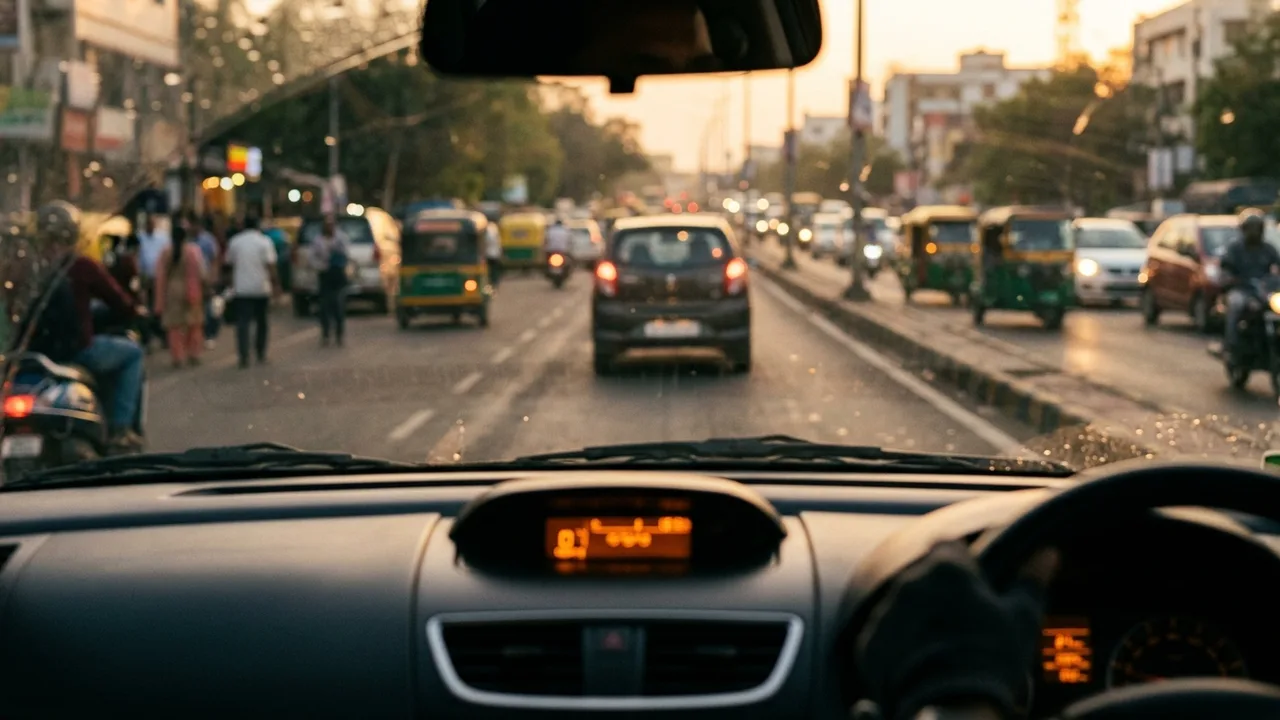
1. Read traffic two hundred metres ahead. Fuel dies at the brake pedal. Every unnecessary stop throws away the energy you paid to build; anticipation — lifting early for the red light, rolling to keep momentum, leaving a gap that absorbs traffic waves — converts braking events into coasting. This single skill separates the 14 km/l driver from the 18 km/l driver in the same hatchback.
2. Smooth throttle, early upshifts. Accelerate briskly to speed, then hold — lugging along at crawling revs and flooring it in panic are both thirstier than clean, moderate acceleration. In manuals, shift around 1,800–2,200 rpm in petrols (slightly lower in diesels); most Indian cars' gearshift indicators are calibrated for exactly this. In automatics, a steady, light foot lets the box reach tall gears sooner.
3. Kill the idle. Idling burns roughly a litre per hour for nothing. At signals longer than 30–45 seconds — and Indian signals advertise their length — switch off, unless you're in start-stop-equipped traffic where the system does it for you. Skip the "warm-up" ritual too: modern fuel-injected engines want to be driven gently from cold, not idled on the driveway.
4. Hold 80–100 on the highway. Aerodynamic drag rises with the square of speed: the same car that returns 20 km/l at 90 km/h may manage 15 at 120. The expressway sweet spot for almost every Indian car sits between 80 and 100 km/h in top gear. Cruise control, where fitted, out-disciplines a human ankle.
Tier 2: the maintenance multipliers
5. Tyre pressure, fortnightly, cold. Under-inflation by even 4–5 psi costs 3–5% economy and eats tyre shoulders. Check cold (before driving, not at the highway pump after an hour), fill to the driver's-door placard figure, and add the manufacturer's loaded-car figure for family trips. Nitrogen is fine; discipline matters more than gas choice.
6. Service on time, with the right oil. A choked air filter, tired plugs or degraded oil quietly tax every kilometre. Use the grade the manual specifies — modern engines are designed for thin 0W/5W oils, and "thicker is better" folklore actively hurts both economy and wear.
7. Shed the dead weight and the roof clutter. Fifty kilos of boot junk costs measurable fuel in stop-start running; an empty roof rack or carrier costs aerodynamics at speed. The accessories that announce adventure are billing you monthly.
8. AC strategy, not AC abstinence. Below ~60 km/h, windows-down beats AC; above it, open windows drag worse than the compressor. In city crawl, recirculation mode and a sane 24°C setting cut compressor load. Parking in shade halves the cool-down burn.
The folklore that doesn't work
- Fuel additives and "mileage boosters": no credible evidence at Indian pump-fuel quality; save the money.
- Overinflating tyres for economy: trades grip, braking and tyre life for a rounding-error gain. Placard pressure, no more.
- Coasting in neutral downhill: modern injection cuts fuel entirely on closed-throttle overrun in gear — neutral coasting actually burns more, and removes engine braking. Leave it in gear.
- Premium fuel in a regular-fuel car: octane is knock resistance, not energy. If the manual doesn't ask, the pump can't help.
Measure it or it didn't happen
Reset the trip computer weekly, or better, do one honest tank-to-tank calculation monthly (litres filled ÷ km run). Technique changes show up within two tanks — and the feedback loop is what makes the habits stick.
The questions drivers actually ask
Does bunny-hopping between lanes save time or fuel? Neither, measurably: lane-weaving buys seconds per commute while costing continuous accelerate-brake cycles — the exact pattern that murders mileage. The steady lane with the longest sightline is the economical one.
AC off with windows down on the highway — the eternal debate? Above roughly 60 km/h, open windows cost more through drag than the compressor does through the belt. Highway: windows up, AC on, recirculation after cool-down. City crawl: windows are free.
Do bigger alloys reduce mileage? Yes, twice over — wider, lower-profile tyres add rolling resistance and the fashionable sizes add unsprung weight. The placard-size wheel with a quality fuel-efficient tyre is worth a genuine 1–2 km/l against the accessory-shop upgrade, and your suspension will thank you on every speed breaker.
Key takeaways
- Anticipating traffic and minimising braking is the single biggest fuel skill — worth 15–25% alone
- Shift early, cruise 80–100 on highways, and switch off at long signals
- Cold-checked placard tyre pressures and on-time servicing are the maintenance multipliers
- AC below 60 km/h costs more than windows; above it, the reverse — use recirculation in traffic
- Skip additives, overinflation and neutral-coasting folklore; measure tank-to-tank instead
Sources & further reading
- Engine-management overrun fuel-cut documentation
- tyre-industry rolling-resistance data
- ARAI test-cycle vs real-world consumption analyses
- True Motion Auto economy-run methodology
Figures, prices and policy details were current at the last-updated date above. Automotive pricing, incentives and regulations change frequently — verify time-sensitive details against the primary sources listed below. Read our editorial policy and fact-checking standards.