Reliability, Indian definition
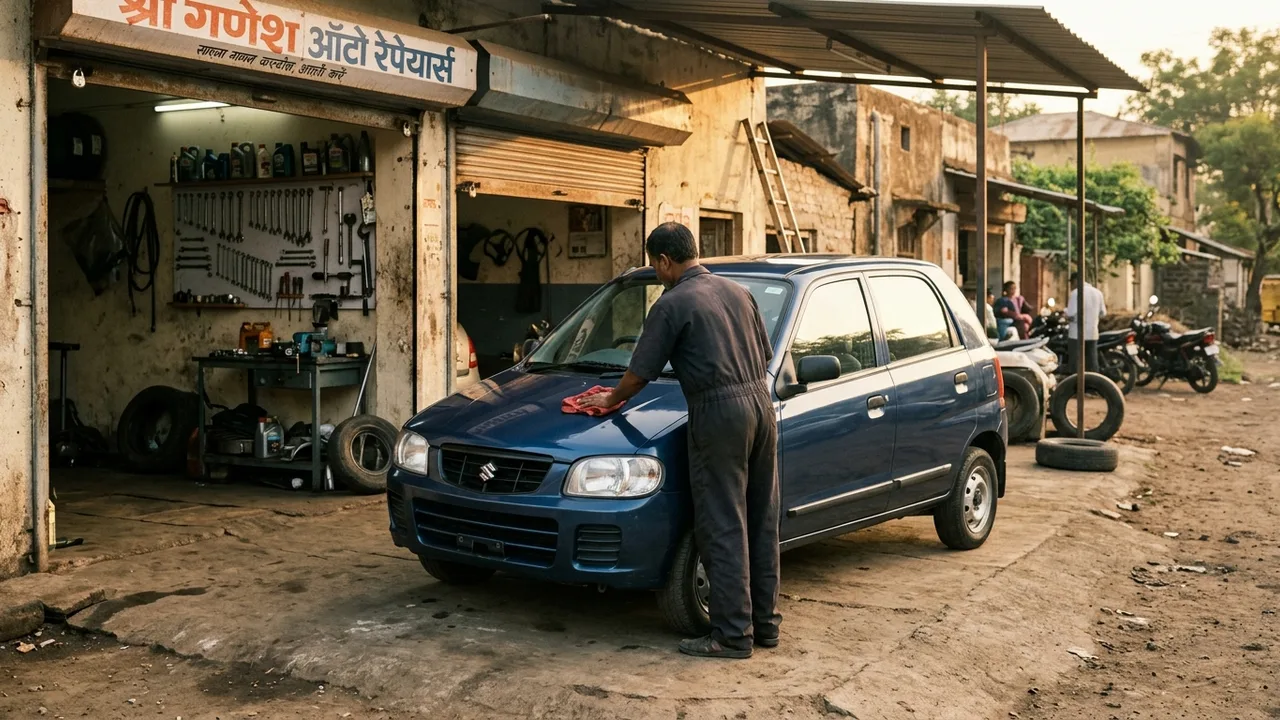
A car that is dependable in Munich can be fragile in Madurai. Indian reliability is its own discipline: 45-degree summers, monsoon flooding, fuel quality that varies by pump, stop-start traffic that never lets engines breathe, and speed breakers that audition every suspension component daily. Add the ownership reality — cars kept eight to twelve years, often serviced outside dealer networks after warranty — and the definition sharpens: a reliable car in India is one that is simple, heat-proof, parts-cheap and fixable in every district town.
That definition, more than any survey, explains the brands that dominate.
The dependability hierarchy
Maruti Suzuki — the ecosystem advantage. The WagonR, Swift, Dzire, Baleno, Brezza and Ertiga are not the most sophisticated cars in their classes; they are the most survivable. Under-stressed petrol engines (the K-series is a two-decade evolution), light kerb weights that spare brakes and suspension, and the decisive weapon: a service point in effectively every tehsil, with parts prices that make repair decisions trivial. Resale markets price this in — which is itself reliability data with money on the line.
Toyota — the benchmark for the long haul. The Innova's reputation is national folklore earned honestly: taxi fleets routinely cross 300,000 km on original engines. The Innova Crysta/HyCross, Fortuner and even the rebadged Glanza/Urban Cruiser twins inherit conservative engineering and a dealer culture ranked among the best in owner-satisfaction studies. You pay upfront; the car repays in decades.
Hyundai — polish with proof. The i20, Venue, Creta and Verna combine modern features with mature engines and one of the largest service networks after Maruti. Hyundai's reliability record in India is strong across two decades; its main "cost" is that feature density (screens, sensors, sunroofs) adds the failure categories simple cars don't carry.
Honda — the engine that outlives the car. The City's i-VTEC petrol is among the most durable engines ever sold here. Honda's thinner network is the honest caveat — dependable car, less dependable geography.
Kia — Hyundai hardware, watch the spec. Seltos and Sonet share proven group mechanicals; early DCT units in heavy traffic showed the heat sensitivity dual-clutches suffer worldwide. The torque-converter and iMT options are the durability-first picks.
Mahindra and Tata — tough bones, uneven electronics. Both build genuinely rugged structures (their crash records are a separate credit), and both have improved sharply; owner surveys still report more niggles — sensors, infotainment, fit-finish — than the Japanese-Korean set. The mechanicals endure; the irritations are real but rarely stranding.
The India-specific failure patterns
- Heat kills batteries and DCT clutches. Expect 3–4 year battery life, and prefer torque-converter/CVT/iMT autos if your city is a furnace with traffic.
- Monsoon is an electrical audit. Water finds aftermarket wiring, poorly sealed accessories and low-mounted intakes. Stock cars survive floods that modified ones don't.
- Short-trip diesels clog. DPF-era diesels need highway runs; a city-only diesel is a future service bill in any brand.
- Speed breakers write suspension history. Lighter cars and taller sidewalls last; 17-inch low-profile fashion doesn't. Suspension refresh at 60,000–80,000 km is maintenance, not failure.
Buying reliability in practice
- Network before nameplate if you live outside the metros — a brilliant car with a 200-km service trip is not brilliant.
- Choose the boring powertrain: the naturally aspirated petrol, the torque-converter auto, the long-running engine family over the just-launched one.
- Skip first-year models; India's real-world validation happens on customers.
- Service history rules the used market — a full-history Maruti at higher mileage beats a gap-history premium badge every time.
The questions buyers actually ask
Are turbo-petrols reliable in Indian conditions? The mature ones (Hyundai-Kia's 1.0, VW Group's TSI family) have proven themselves with disciplined oil-change owners. The risks concentrate in skipped synthetic-oil services and endless idling in heat — buy a turbo if you'll service it like it matters.
Is authorised service worth it after warranty? For complex cars, largely yes; for the simple Japanese set, a competent FNG (friendly neighbourhood garage) with genuine parts serves fine — keep bills to protect resale. The hybrid and EV exceptions: high-voltage work stays with the authorised network.
Do extended warranties make sense here? On feature-dense cars (big screens, sunroofs, ADAS), the manufacturer-backed extension frequently pays for itself with one repair. On a base-spec Maruti, the money often does better in a maintenance fund. Match the cover to the complexity you bought.
Key takeaways
- Maruti and Toyota lead Indian reliability through simplicity, heat-proof engineering and unmatched service reach
- Hyundai-Kia deliver dependable modernity; prefer their non-DCT automatics in hot, congested cities
- Tata and Mahindra offer rugged mechanicals with more electronic niggles — improving, not yet Japanese-grade
- India's climate makes batteries, DCTs and city-bound diesels the predictable weak points
- Network density and boring powertrains are the two most reliable "features" you can specify
Sources & further reading
- India owner-satisfaction and after-sales studies (J.D. Power India-methodology successors, brand surveys), 2023–2026
- taxi and fleet longevity records
- True Motion Auto India service-cost tracking
Figures, prices and policy details were current at the last-updated date above. Automotive pricing, incentives and regulations change frequently — verify time-sensitive details with the linked primary sources. Read our editorial policy and fact-checking standards.