🏆 THE RESULT
1st — Ford Puma · the most complete and by far the most enjoyable, and the MegaBox makes it punch above its size
2nd — Kia Sportage · excellence through completeness, with a 7-year warranty and no real weaknesses
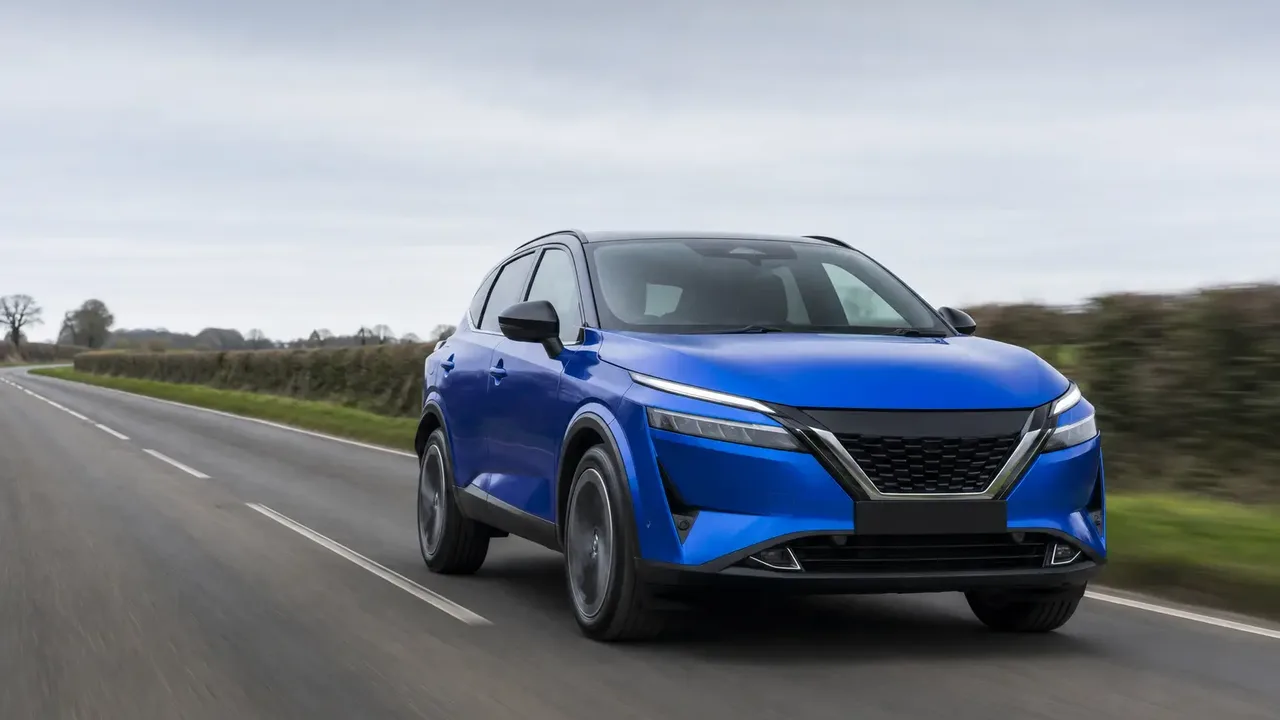
3rd — Nissan Qashqai · Britain's default family crossover, polished and refined, but outshone at both ends
A size mismatch runs through this test — the Puma is a segment smaller. We've ranked on how well each answers its own brief, and explained where size should decide your choice.
Three of Britain's favourites, honestly assessed
These three cars regularly appear near the top of Britain's sales charts, and they're cross-shopped constantly despite not being the same size. That's worth stating plainly at the outset: the Ford Puma is a segment smaller than the Qashqai and Sportage, and if you need family-SUV space, that settles the question before we start.
But an enormous number of British buyers are genuinely deciding between "small SUV" and "family SUV," which is exactly why this comparison exists — and why the ranking below is paired with unusually explicit size guidance.
Ford Puma vs. Nissan Qashqai vs. Kia Sportage: the numbers
| Ford Puma | Kia Sportage | Nissan Qashqai | |
|---|---|---|---|
| Size | compact SUV | family SUV | family SUV |
| Powertrains | mild-hybrid petrol; Gen-E electric | petrol, mild-hybrid, full hybrid, PHEV | petrol, e-Power hybrid |
| Party trick | MegaBox flexible boot well | breadth of powertrains | e-Power's EV-like drive |
| Warranty | standard | 7 years (class-leading) | standard |
| Driving | clearly best | competent, comfortable | polished, refined |
| Space | compact | most | generous |
| Status | one of Britain's best-sellers | family-SUV benchmark | Britain's default crossover |
3rd place — Nissan Qashqai
The car that invented this segment in Britain, and still a genuinely good one — but it's squeezed from both directions.
What it does well:
- Polish and refinement. The Qashqai is a quietly accomplished thing — composed, well-damped, easy to drive and undemanding to live with. It's the definition of a car that does nothing wrong.
- The e-Power hybrid is genuinely clever. Nissan's series-hybrid system drives the wheels electrically at all times, with the petrol engine acting as a generator — delivering an EV-like driving feel without any charging requirement. For buyers who want electric smoothness without a plug, it's a smart answer. (It's the same principle as the Ram Ramcharger's EREV format, scaled down.)
- Generous space and sensible family practicality.
- Deep familiarity. Britain knows and trusts the Qashqai, and the dealer network is extensive.
Why it finishes third:
- Squeezed at both ends. The Sportage matches or beats it on space, equipment and warranty; the Puma comprehensively beats it on driving enjoyment. The Qashqai leads on nothing in particular.
- No standout advantage. Being good at everything without excelling anywhere is a reasonable strategy for a best-seller, but it doesn't win comparison tests.
- Value. The Sportage's 7-year warranty is a substantial, quantifiable advantage the Qashqai can't match.
Buy the Qashqai if: you want a polished, refined, familiar family crossover and you're drawn to the e-Power hybrid's electric feel without charging. It's a genuinely good car — just one that no longer leads its class.
2nd place — Kia Sportage
Excellence through completeness, and the safest family choice here.
Our rated review scored it 8.5/10, and the reasoning holds.
What it does best:
- No real weaknesses. The Sportage is spacious, well-made, generously equipped, efficient and keenly priced. It doesn't excel wildly at any one thing; it's simply excellent everywhere — which for a family SUV is exactly the right shape of competence.
- The best powertrain range here, including strong full-hybrid and plug-in hybrid options. In a market increasingly decided by running costs, that breadth matters.
- A class-leading 7-year warranty. This is a genuine differentiator — real financial protection, and it supports residuals too.
- Class-leading space among these three, with a genuinely usable boot.
- Distinctive, confident styling in a segment that can be anonymous.
Why it doesn't win:
- It's competent rather than engaging to drive. Comfortable and composed, but there's no joy in it — and the Puma demonstrates that a practical SUV needn't be dull.
- No single wow factor. Its strength is completeness, which is less exciting than it is sensible.
Buy the Sportage if: you need genuine family-SUV space, you want the reassurance of a 7-year warranty, and you value a complete, low-risk all-rounder. For most family buyers in this test, this is the sensible answer — and if you need the space, it's the right one regardless of where it finished.
🏆 1st place — Ford Puma
It wins because it's the only one here that's genuinely enjoyable — and because the MegaBox means you give up less than you'd think.
Our rated review scored it 8.5/10, and this comparison clarifies exactly why it tops Britain's sales charts.
Why it takes the win:
1. It's genuinely fun to drive, and nothing else here is close. The Puma inherits Ford's small-car chassis excellence — sharp, agile, engaging handling with a keen, eager feel. In a segment full of competent-but-numb crossovers, it's the one that makes you smile. That's rare, and it's the single biggest differentiator in this test.
2. The MegaBox changes the practicality equation. The deep, cleanable, drained under-floor storage well is a properly clever piece of packaging. You can stand tall items upright, or hose it out after muddy or wet loads. It makes the Puma far more useful than its dimensions suggest — and, as our boot-measurement testing argues, it's exactly the kind of feature that quoted litres completely fail to capture.
3. Keen pricing and low running costs. Competitively priced, efficient with mild-hybrid petrol power, and cheap to run — a substantial part of its mass appeal.
4. Easy to live with. Sensibly sized for British roads and parking, well-equipped, with familiar and user-friendly controls.
5. The Gen-E extends the formula. A fully electric Puma brings the same character to an EV powertrain — though cross-shop its range and price against dedicated small EVs like the Renault 5.
Where it's beatable — and this matters:
- It's a segment smaller. Rear space and boot capacity are genuinely more compact than the Sportage's or Qashqai's. If you regularly carry adults in the back or large loads, this decides it and the Puma loses.
- Interior quality is good, not premium — some harder plastics.
- Rivals match it on paper. The Puma's advantage is on the road, and a spec comparison won't show it.
The bottom line
The Puma wins because it's the most complete and by far the most enjoyable car here, and because the MegaBox means choosing it costs you less practicality than the size difference implies. In a segment defined by sensible dullness, it remembers that a car should be pleasant to drive.
The Sportage is a very close second and the right answer if you need family-SUV space — excellent everywhere, backed by a 7-year warranty, with no real weaknesses.
The Qashqai finishes third as a genuinely good car that's simply been outflanked: outshone on driving by the Puma and on completeness and warranty by the Sportage.
Let size decide first. If you need the space, this is a two-horse race and the Sportage wins it. If you don't, the Puma is the most enjoyable car in Britain's best-selling segment — and that's worth a great deal on every journey.
Key takeaways
- Winner: Ford Puma — the only genuinely enjoyable car here, with the clever MegaBox making it far more practical than its size suggests
- Kia Sportage (2nd) is excellent everywhere with no real weaknesses, class-leading space among these three, and a 7-year warranty
- Nissan Qashqai (3rd) is polished and refined with a clever e-Power hybrid, but is outflanked on driving by the Puma and completeness by the Sportage
- Size should decide first: the Puma is a segment smaller, so if you need genuine family-SUV space, the Sportage wins regardless of the podium
- The Puma's advantage is on the road rather than the spec sheet — rivals match it on paper and rarely on a good B-road
Sources & further reading
- manufacturer specifications
- UK sales data. Verified July 2026.
Figures, prices and policy details were current at the last-updated date above. Automotive pricing, incentives and regulations change frequently — verify time-sensitive details against the primary sources listed below. Read our editorial policy and fact-checking standards.