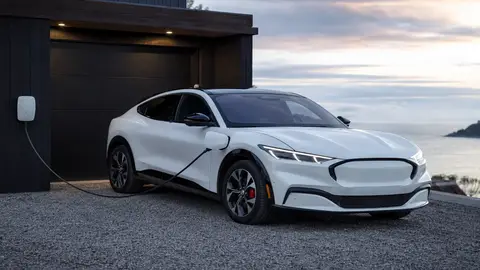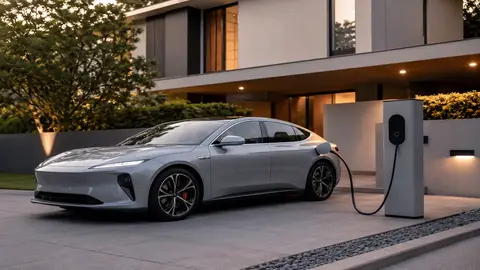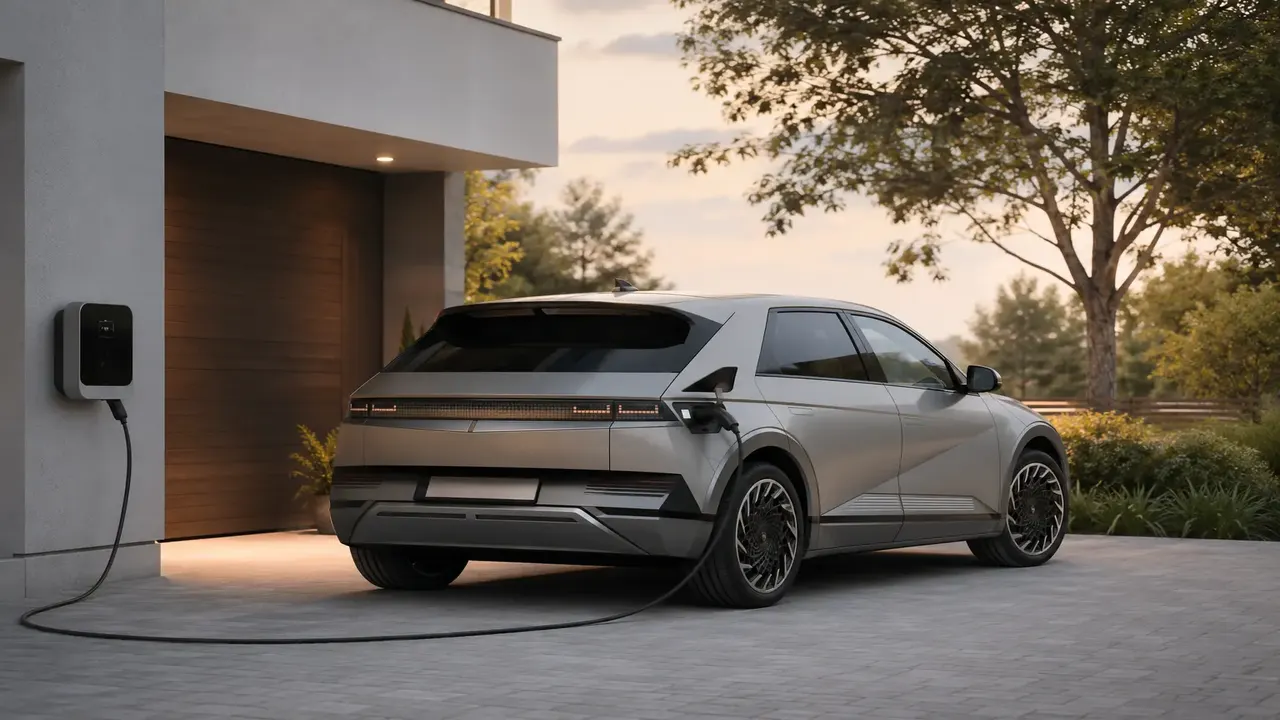
The big automakers are pursuing strikingly different EV paths. Toyota is hedging with hybrids while promising solid-state EVs around 2027–2028 and targeting roughly 1.5 million BEVs a year by 2026. Tesla is doubling down on software, autonomy and lower-cost models. Hyundai-Kia has built one of the strongest mainstream EV line-ups (Ioniq, EV3/EV9). Tata dominates India's EV market and is launching the Sierra EV. VW plans around 30 EVs by 2030 with ~$70bn invested. Note that several makers have softened or delayed targets as demand cooled — plans change.
Automaker EV strategies at a glance
| Automaker | Headline EV plan | Approach | Watch for |
|---|---|---|---|
| Toyota | ~1.5m BEVs/yr by 2026; solid-state ~2027-28 | Hybrid-first hedge | Solid-state battery rollout |
| Tesla | Lower-cost models, autonomy, software | Software-led, vertically integrated | Robotaxi, affordable model |
| Hyundai-Kia | Broad Ioniq/EV line-up | Mainstream EV leader | New affordable models |
| Tata Motors | India EV leader; Sierra EV | Affordable, home-market focus | Sierra EV, new platforms |
| Volkswagen | ~30 EVs by 2030; ~$70bn | Scale across brands | ID. range, solid-state ~2030 |
Why the roadmaps diverge
There is no single industry plan for going electric. Each automaker is balancing its home market, its existing strengths, regulation and the recent cooling of EV demand in some regions. The result is a spectrum: some are all-in on battery-electric, others are hedging hard with hybrids, and several have quietly pushed back once-firm targets. Reading these roadmaps tells you not just what each company will build, but how confident it is about the pace of the transition.
Toyota: the cautious hedger
Toyota has long been sceptical of an all-at-once EV switch, and its strategy reflects that. The company is targeting roughly 1.5 million battery-electric vehicles a year by 2026 and has committed major investment to EVs and battery production — but it is simultaneously leaning hard on hybrids, expecting a large share of its US sales to be hybrid. Its biggest EV bet is technological: Toyota has publicly committed to solid-state batteries around 2027–2028, claiming long range and rapid charging. If that delivers, it could reset the company's position; if it slips, Toyota's hybrid hedge buys time.
Tesla: software, autonomy and cost
Tesla's roadmap is less about adding models and more about software, self-driving ambitions and driving down cost. The company has wound back some older models (the Model S and X are no longer mainstream sellers) while pushing autonomy and a lower-cost vehicle strategy to broaden its reach. Tesla's strengths — its charging network, over-the-air software and manufacturing efficiency — remain central, even as rivals close the gap on hardware. Its trajectory now hinges heavily on autonomy and affordability.
Hyundai-Kia: the mainstream EV leader
Hyundai and its Kia affiliate have arguably executed the cleanest mainstream EV strategy. The Ioniq 5 and 6, plus Kia's EV3, EV6 and EV9, give the group a broad, well-reviewed line-up spanning compact to large, with fast 800-volt charging on many models. Hyundai-Kia has consistently won safety and quality awards, and continues to push toward more affordable models. Among legacy makers, it is one of the few treating EVs as a core, profitable business rather than a hedge.
Tata Motors: India's EV champion
Tata dominates India's nascent EV market, with models like the Nexon EV, Tiago EV and Punch EV anchoring affordable electrification in the world's third-largest car market. Its roadmap centres on India-appropriate, value-focused EVs and new dedicated platforms, with the Sierra EV among its headline launches. Tata's strategy matters globally because India is a crucial growth front for EVs, and Tata is showing how to electrify a price-sensitive mass market.
Volkswagen: scale across many brands
VW has committed enormous resources — on the order of $70 billion — to electrification, with plans for around 30 EV models by 2030 across its brands and solid-state battery production targeted for roughly 2030. The ID. family forms the backbone in Europe, and the group is investing in cheaper entry models to broaden the market. VW's challenge has been software and execution rather than ambition; its roadmap is vast, but delivery and profitability are the real tests.
Several automakers have softened, delayed or restructured their EV targets as demand cooled in some markets, the US federal tax credit ended on 30 September 2025, and tariffs raised costs. Treat any specific date, volume or model count as a stated intention rather than a guarantee — these roadmaps are revised regularly.
What it means for buyers
- Toyota buyers get a strong hybrid range now and a wait-and-see EV path; solid-state is the one to watch.
- Tesla buyers benefit from software and charging, with cost and autonomy the key future variables.
- Hyundai-Kia buyers have one of the broadest, best-reviewed mainstream EV line-ups today.
- Tata buyers (India) get the most affordable, widely supported EVs in the market.
- VW buyers get scale and a wide range, with software maturity worth checking model by model.
Frequently asked questions
Which automaker has the best EV strategy?
Is Toyota behind on EVs?
When will solid-state batteries arrive?
Why are automakers changing their EV plans?
Which automaker leads EVs in India?
Sources & further reading
- GreenCars — Toyota Updates Electrification Strategy
- Autoblog — Every Major Automaker's EV Roadmap
- IEA — Global EV Outlook 2026: Trends in electric cars
Figures, prices and policy details were current at the last-updated date above. Automotive pricing, incentives and regulations change frequently — verify time-sensitive details with the linked primary sources. Read our editorial policy and fact-checking standards.