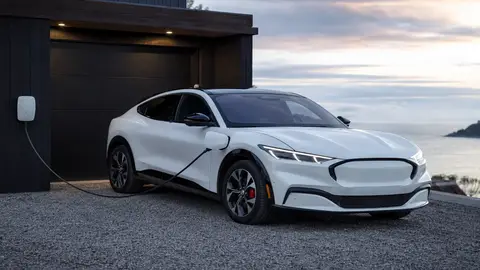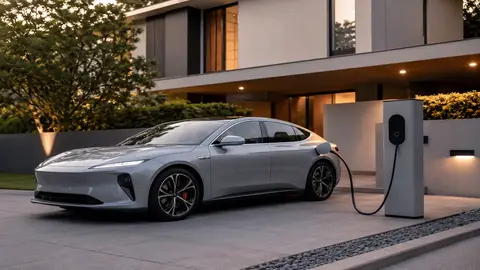
Chinese automakers are the biggest force in the global EV market. BYD overtook Tesla as the world's largest EV maker, China holds over 50% EV share at home, and brands like BYD, MG (SAIC), Geely, Chery, Xpeng and Leapmotor are pushing aggressively into Europe and emerging markets. They face headwinds: the EU applies tariffs of up to ~35% on Chinese-built EVs, and US tariffs effectively shut them out of America. The response is local factories — BYD's Hungary plant and SAIC's planned Spain site — to build inside target markets. Figures move fast in this space.
Chinese EVs going global at a glance
| Topic | Detail | Why it matters |
|---|---|---|
| Market leader | BYD overtook Tesla as world's largest EV maker | Scale and cost advantage |
| Home market | China >50% EV share; ~16m EVs sold 2025 | Huge base to export from |
| EU position | BEVs ~19.7% share; Chinese brands rising | Main battleground abroad |
| EU tariffs | Up to ~35.3% on Chinese-built EVs | Pushes local production |
| US position | High tariffs effectively block imports | Largely closed market |
How China came to lead the EV world
China spent more than a decade building the world's deepest EV supply chain — from lithium refining and battery cells to motors and software. The result is a domestic market where electric and plug-in hybrid vehicles now make up more than half of new car sales, and a group of manufacturers that can build competitive EVs at prices Western rivals struggle to match. In a symbolic milestone, BYD overtook Tesla to become the world's largest maker of electric vehicles.
With growth at home slowing and a fierce domestic price war squeezing margins, these companies are looking abroad, where profits are often higher. Exports have surged — BYD alone shipped well over 100,000 cars in a single recent month.
The brands to know
- BYD: the giant. Builds its own batteries, spans budget to luxury (via sub-brands), and is rolling out factories outside China.
- MG (SAIC): a former British brand now Chinese-owned, and one of the best-selling Chinese marques in Europe thanks to familiar branding.
- Geely: owns or part-owns Volvo, Polestar, Lotus and Zeekr, giving it global reach through established names.
- Chery, Xpeng, Leapmotor, Nio: newer exporters expanding into Europe, the Middle East, Southeast Asia, Latin America and Australia.
Europe: the main battleground
Europe is where the Chinese push is most visible. Battery-electric vehicles have climbed to roughly a fifth of EU new-car sales, and Chinese brands — including Chinese-owned European marques like MG and Volvo — are taking a growing share. Even after tariffs, many Chinese EVs remain competitively priced against European rivals.
Since late 2024 the EU has applied extra duties on top of the standard 10% car import tariff, taking total tariffs on some Chinese-built EVs to around 35%. Rather than retreat, makers are building inside Europe: BYD opened a plant in Hungary, and SAIC plans an EU factory in Spain. Building locally sidesteps import tariffs, creates jobs and softens political resistance. The EU and China have also discussed minimum-price arrangements as an alternative to tariffs.
The United States: effectively closed
The US is a different story. Steep tariffs — layered on top of broader trade measures — make importing Chinese-built EVs commercially unviable, so American buyers see almost none of these cars. That insulates US automakers from direct Chinese price competition, but it also means the US market misses out on some of the cheapest electric cars in the world. For now, the Chinese global expansion is largely a story about Europe, Latin America, the Middle East, Southeast Asia and Australia rather than North America.
What it means for buyers
- More choice and lower prices in open markets, as Chinese models undercut established rivals.
- Faster feature rollout: Chinese EVs often lead on screens, software and battery tech at a given price.
- Questions to weigh: dealer networks, servicing, spare-parts supply, software-update commitments and resale value for newer brands.
- Policy risk: tariffs and trade rules can change pricing and availability quickly, especially in Europe.
India and emerging markets
In India, Chinese brands operate mostly through partnerships and local assembly given policy sensitivities — MG (under SAIC, with JSW involvement) is the most prominent, while BYD sells in smaller numbers. Across Southeast Asia, the Middle East and Latin America, Chinese EVs are gaining ground fast, often becoming the value benchmark. As these markets electrify, Chinese makers are frequently first movers on affordable models.
The bottom line
Chinese EV brands have moved from domestic champions to global challengers in a remarkably short time. Where they are allowed to compete, they reshape pricing and force incumbents to respond. Where tariffs block them, they build local factories or wait. Either way, they are now a central force in how the global EV market evolves — and the specifics shift month to month, so check current figures and local availability before buying.
Frequently asked questions
Is BYD bigger than Tesla now?
Why can't I buy Chinese EVs in the United States?
Are Chinese EVs cheaper because they're lower quality?
How high are EU tariffs on Chinese EVs?
Which Chinese EV brands sell internationally?
Sources & further reading
- Euronews — BYD overtakes Tesla as China reshapes the global EV race
- IEA — Global EV Outlook 2026: Manufacturing and trade
- Automotive News — BYD weighs further Europe expansion in 2026
Figures, prices and policy details were current at the last-updated date above. Automotive pricing, incentives and regulations change frequently — verify time-sensitive details with the linked primary sources. Read our editorial policy and fact-checking standards.