The road that remade America
June 29, 2026 marked the interstate highway system 70th anniversary — seventy years to the day since President Dwight D. Eisenhower signed the Federal-Aid Highway Act on June 29, 1956, authorizing 41,000 miles of interstate highways. The Federal Highway Administration ran official commemoration pages and events, the Library of Congress staged a pop-up exhibit of rare historical Interstate documents, and states began receiving new "Freedom 250" commemorative signs and flags to hang along the routes themselves. For a network of concrete and rebar, that is a lot of birthday cake.
It earned it. The 1956 Act launched what was, at the time, the largest public works project in US history, and the system it funded rewired how Americans live, shop, commute and — most relevant here — drive. The interstate did not just move traffic faster. It built modern American car culture — and quietly dismantled the older, slower version that came before it.
What Eisenhower actually signed
The Federal-Aid Highway Act authorized 41,000 miles of limited-access, high-speed highways — a single connected network rather than a patchwork of state routes. Per the FHWA, nothing in American public works history had matched its scale at the time of signing.
What the Act really bought was consistency. Before the interstates, a long drive meant two-lane roads that changed character at every county line — through towns, past stop lights, at whatever speed the local geometry allowed. The interstate replaced all of that with a standard product: wide lanes, gentle curves, no cross-traffic, the same experience in Nevada as in New Jersey. Boring, by design. Transformative, in effect.
Built the road trip, broke the boulevard
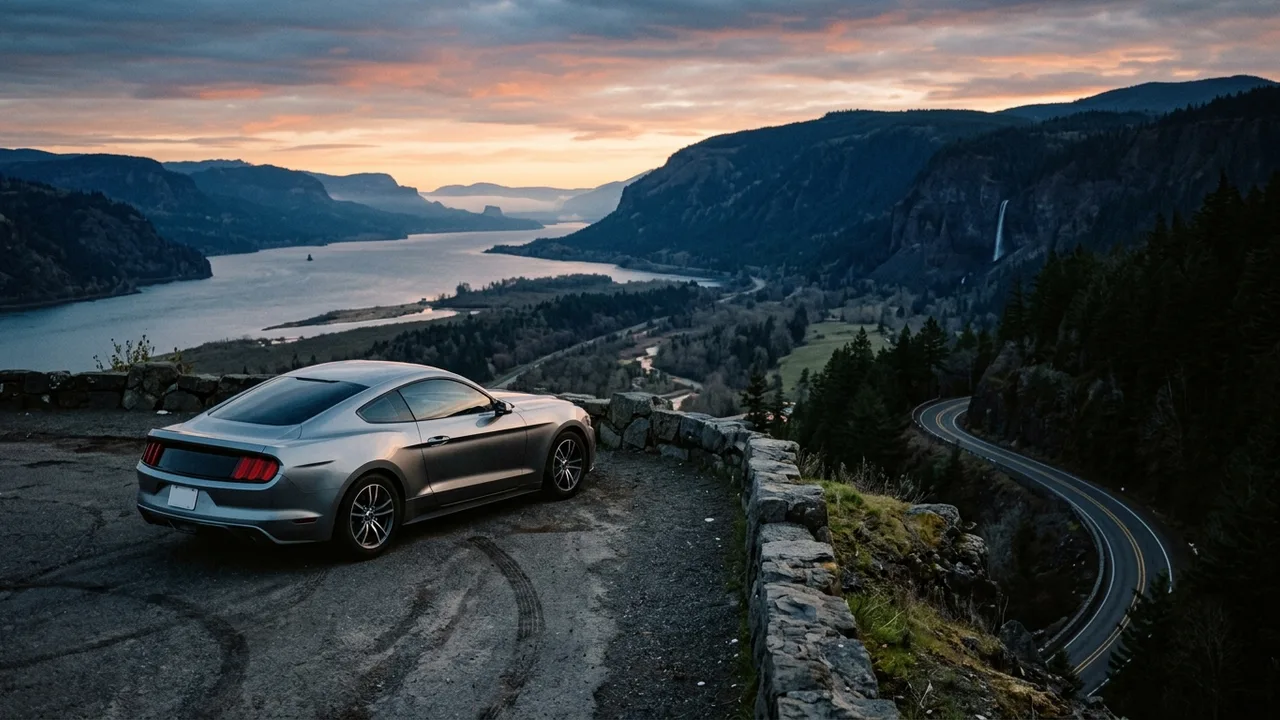
Give the interstate its due first. Cheap, fast, predictable long-distance driving turned the American road trip from an endurance event into a mass-market pastime. It shaped the cars, too: Detroit spent decades optimizing for effortless high-speed cruising — a lineage running from the V8 land yachts straight through to today's EVs plotting a coast-to-coast run on NACS Superchargers.
The bill came due elsewhere. The same efficiency that made the interstate great made the roads it replaced optional, and optional things get skipped. Towns built around two-lane through-traffic watched it vanish onto the bypass, and the slower culture of main streets, motor courts and roadside neon faded with it. Route 66 is the famous casualty — preserved today mostly as nostalgia, as we found chasing Route 66 in the last V8s.
How the 70th anniversary is being marked
The commemoration is unusually visible for a highway birthday, largely because it overlaps with a bigger one: America's 250th, also in 2026. The new "Freedom 250" signage and flags unveiled for the anniversary explicitly tie the two milestones together, and states can install them along their Interstate corridors — so the celebration is happening on the road itself, not just in press releases.
Beyond the signs, the FHWA maintains dedicated commemoration pages and events at highways.dot.gov, and the Library of Congress marked the date with its pop-up exhibit of rare planning-era Interstate documents, per Spectrum News. As of mid-2026, this is the closest thing the American road network has had to a national retrospective.
The honest assessment
The interstate system is the best and worst thing to happen to American driving, and both are true at once. Best: it delivered mobility at continental scale and underwrote the car culture this site exists to cover. Worst: it flattened regional character into an endless ribbon of sameness and hollowed out the towns the old roads fed. The honest read on the 70th anniversary is that the trade was probably worth it — but it was a trade, and the commemorative signage will not mention what was given up. That part you have to go find on the old alignments, where it is still, faintly, there.
The questions buyers actually ask
Where can I see the Freedom 250 anniversary signs? Along Interstate corridors in states that choose to install them. They were unveiled for state use, so coverage will vary rather than being universal.
Is there an official way to follow the commemoration? Yes. The FHWA runs official 70th-anniversary commemoration pages and events at highways.dot.gov, and the Library of Congress staged a pop-up exhibit of rare Interstate documents.
What is the best way to experience pre-interstate America by car? Drive the old alignments. Surviving stretches of Route 66 and other bypassed two-lane routes still parallel the interstates in places — slower, rougher and considerably more interesting.
Key takeaways
- Eisenhower signed the Federal-Aid Highway Act on June 29, 1956, authorizing 41,000 miles of interstates — the largest US public works project of its time.
- The 70th anniversary fell on June 29, 2026, marked by official FHWA commemoration pages and events.
- New "Freedom 250" signs and flags tie the milestone to America's 250th and are being offered to states for Interstate installation.
- The Library of Congress marked the date with a pop-up exhibit of rare historical Interstate documents.
- The system built modern road-trip culture while hollowing out the two-lane world — Route 66 included — that preceded it.
Sources & further reading
- FHWA commemoration pages (highways.dot.gov), History.com background, Spectrum News reporting, Library of Congress exhibit, June 2026
Figures, prices and policy details were current at the last-updated date above. Automotive pricing, incentives and regulations change frequently — verify time-sensitive details against the primary sources listed below. Read our editorial policy and fact-checking standards.