The war is over. The cleanup is not.
The format fight is settled. Tesla's connector — published as an open standard in November 2022, ratified by SAE International as J3400 and renamed the North American Charging Standard (NACS) — has won. Ford, GM, Rivian, Hyundai, Kia, BMW, Toyota, Honda, Acura, Nissan, Mercedes-Benz, Volvo, Polestar, Lucid, Genesis, JLR, Subaru, Stellantis, and even Audi, Porsche and Volkswagen appear on Tesla's supported list. Superchargers make up roughly three out of four DC fast chargers in North America.
CCS, the standard everyone-who-wasn't-Tesla used for a decade, lost.
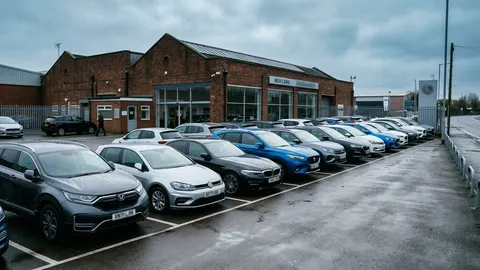
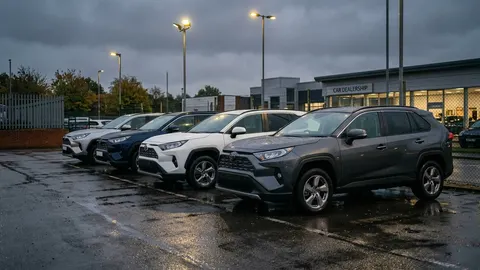
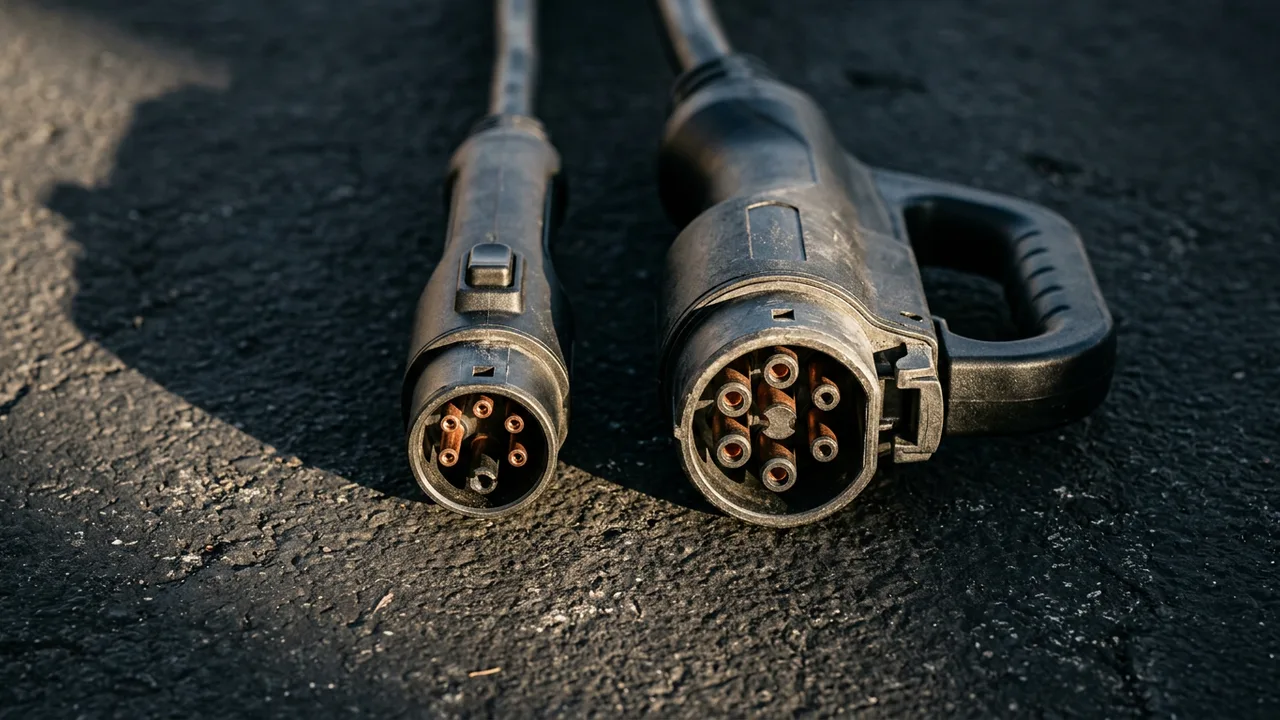
And yet: most new non-Tesla EVs delivered for the 2026 model year still ship with a CCS port. Federally funded NEVI stations are still required to include CCS connectors. Most new public chargers deploy dual CCS+NACS cables.
Welcome to the messy middle.
Why the transition is so slow
Signing onto NACS as a brand is not the same as shipping a car with the plug built into it. Vehicle programmes are locked years in advance; a charge port is a body, wiring, software and homologation change. So the industry is transitioning model by model, not brand by brand.
The result is that in 2026 there are two kinds of EV on American roads, and which one you have determines your entire charging life:
Native NACS. The port is built in. You pull up to a Supercharger and plug in. No adapter, no fuss. Examples on sale now include Rivian's R1 line, the Cadillac Optiq, Hyundai's Ioniq models, and the Kia EV6 and EV9.
CCS + adapter. Your car has a CCS1 port. To use a Supercharger you need an automaker-approved NACS-to-CCS1 adapter, and your vehicle must be enabled by its manufacturer — a physical adapter alone does not grant access. Some brands supplied these free; Ford's complimentary programme ran to mid-2025, and Genesis still offers one on request to GV60/GV70/GV80 owners. Otherwise, quality UL-listed adapters run roughly $150–$230.
Some manufacturers are hedging visibly: the 2026 Nissan Leaf offers two charge ports.
The three things that catch people out
1. Not every Supercharger is open to you. Only V3 and V4 Superchargers are open to non-Tesla vehicles. Automaker announcements often trumpet access to "more than 20,000 stalls" — but there are roughly 38,000 Supercharger stalls in the US. Check the Tesla app's "Charge Your Non-Tesla" function, or PlugShare, before you plan a route around one.
2. Your charging speed may be throttled. Older V3 Superchargers top out around 250kW and were designed around 400V architecture. If you drive an 800V car — a Hyundai Ioniq 5, a Kia EV6, a Porsche — you may charge slower at a V3 Supercharger than at a good CCS station. The V4 Superchargers, delivering up to 500kW, fix this. Until they are widespread, "Supercharger access" is not automatically "faster charging" for 800V cars.
3. The parking is wrong. Supercharger stalls were laid out for Tesla's rear-driver-side charge port. If your car's port is at the front or on the other side, you may need to park across two stalls. On a busy weekend this is, at minimum, socially awkward.
Is CCS dying?
Not quickly, and not entirely. Three things keep it alive:
- NEVI requirements. All federally funded charging stations must include CCS connectors.
- Installed base. Millions of CCS vehicles are on American roads and will be for a decade.
- Dual-cable hardware. Most new chargers are being installed with both connectors, which is the pragmatic solution.
The realistic outcome is coexistence for years, with CCS gradually becoming the legacy standard rather than a dead one. The genuine downside for CCS-only owners is that the newest, highest-power NACS-only stations will not be accessible.
What this actually means when you buy a car
Two questions to ask the dealer before you sign, and neither is on the window sticker:
"Does this specific trim ship with a native NACS port, or a CCS port plus an adapter?" Both work. Native is more convenient day to day and slightly better for resale. Trim-level specs have been updated repeatedly during this rollout — confirm what is on the lot, not what a review said six months ago.
"Is the included adapter the automaker's own unit, or third-party?" Official adapters come with better warranty and support coverage. Buy UL-listed, rated for 500A / 1,000V, from an established brand.
And one thing worth internalising: the connector does not determine charging speed. The charger and the vehicle do. A NACS port is not inherently faster than CCS. What NACS buys you is access — to the largest, most reliable fast-charging network on the continent, with a claimed 99.95% uptime.
The bigger picture
The NACS transition is the closest thing the American EV market has to a genuine piece of good news in 2026. In a year when the federal tax credit vanished, EV share halved and automakers pulled back on investment, the charging experience quietly got substantially better for almost everyone.
That matters, because charging anxiety — not range anxiety — is what actually stops people buying EVs. The single largest reason non-Tesla owners historically had a worse EV experience was that they were locked out of the best network. That lock is coming off.
It just isn't off yet.
Key takeaways
- NACS (SAE J3400) has been adopted by essentially every major automaker
- Most 2026-model-year non-Tesla EVs still ship with CCS ports and use adapters
- Only V3 and V4 Superchargers are open to non-Tesla vehicles
- 800V cars may charge slower at older V3 Superchargers than at good CCS stations
- CCS is not disappearing — NEVI funding requires it, and most new chargers are dual-cable
Sources & further reading
- SAE International J3400
- Tesla NACS supported-brands list
- US News
- GreenCars
- Lectron EV
- Stellantis NACS announcement (November 2025)
Figures, prices and policy details were current at the last-updated date above. Automotive pricing, incentives and regulations change frequently — verify time-sensitive details against the primary sources listed below. Read our editorial policy and fact-checking standards.